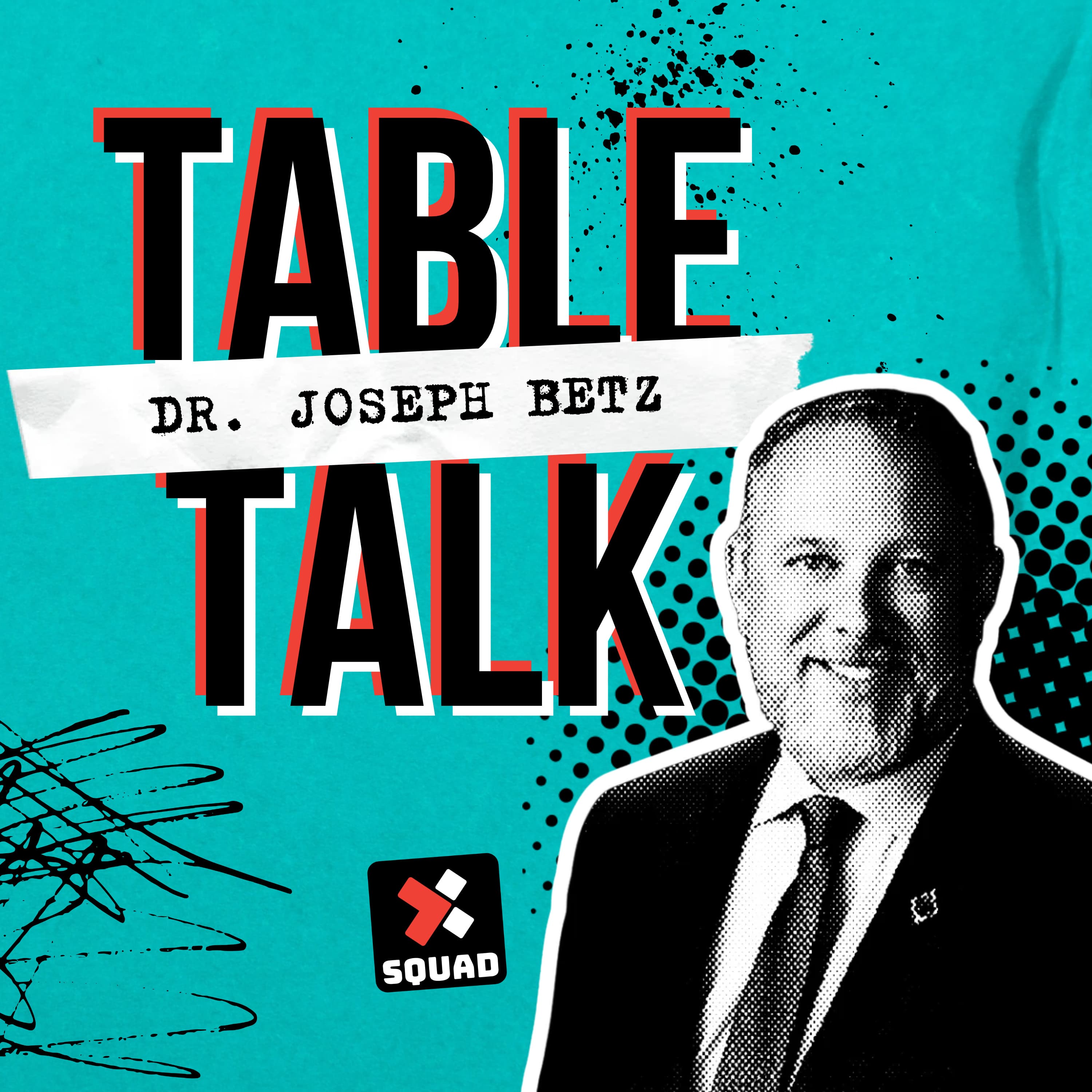
Synopsis
Dr. Joe Betz, president of the ICA, joins Dr. Steve Tullius and Pacha Hornaday to discuss his path into chiropractic, the identity crisis facing the profession, and why subluxation detection and correction should remain central to that identity. The conversation covers the divide between researchers and practicing chiropractors, efforts to expand Medicare access, and how associations can unite despite philosophical differences. It offers practicing chiropractors a clear look at the political and cultural forces shaping the profession's future.
Dr. Joe Betz shares how his journey from chiropractic student to president of the International Chiropractors Association (ICA) shaped his commitment to protecting chiropractic’s identity and advancing the profession through service. He identifies the lack of a clear professional identity as one of chiropractic’s greatest barriers, arguing that vertebral subluxation detection and correction must remain central to what makes chiropractic distinct. The conversation examines professional division, collaboration between organizations, Medicare advocacy, and the challenge of finding common ground without compromising foundational principles.
Key takeaways
- 1
Subluxation as the Profession's Core Identity
Dr. Betz argues the ICA believes chiropractic identity should center on subluxation detection and correction, not a watered down or divided message.
- 2
The Researcher Versus Practitioner Divide
Dr. Betz explains that the split in chiropractic is far more pronounced among researchers than among everyday practicing chiropractors.
- 3
Finding 90 Percent Common Ground
Despite differences, the hosts and Dr. Betz agree chiropractic organizations can collaborate on the large majority of issues they share.
In this episode
Jump straight to any moment.
If you liked this episode, be sure to check out
Episode 44
From Smile to Spine: The Missing Link in Whole Body Wellness with Dr. Gary Glassman
Episode 40
Awaking the Bigness Within with Dr. Wade Port
Episode 39
The Self-Expression Subluxation with Dr. Melissa Longo
Episode 38
The Heart of Chiropractic with Dr. Marc Surprenant
Episode 35
Are You on Purpose with the Purpose of Chiropractic with Dr. Christopher Kent
Full transcript
Made by speech recognition, with names corrected. It may contain errors, so check quotes against the audio. Spot a mistake? Tell us.
0:00Dr. Betz's Journey to ICA President
Show intro 0:04
Every doc wants to make a bigger impact. What's getting in your way? You're tuned into the subluxation squad podcast. One squad, one mission. Chiropractic for all.
Dr. Steve Tullius 0:16
Hey, everybody. Welcome to episode 42 of the Subluxation Squad. I'm Dr. Steve Tullius here in Austin, and I help chiropractors really get clarity around their own beliefs and be able to transfer that belief to rooms of people. I'm here, as always with Pacha Hornaday, co host and founder of this podcast and platform. How are you doing, Pacha?
Pacha Hornaday 0:38
I'm doing great. Good to see you again. We're getting back to back episodes this week. Yeah. I'm Pacha Hornaday. I'm a brand strategist and identity designer for chiropractors. And I'm coming to you from a small village outside of Barcelona.
Dr. Steve Tullius 0:54
Awesome. Good to see you again. Now, I'm really excited today to have a guest who has done a ton in the profession, is currently helping to lead the profession in multiple ways, and that's Dr. Joe Betz. Dr. Joe, thanks for being with us today. Really appreciate you being here. And we know you're traveling right now, so thanks for taking the time to be with us.
Read the full transcript (8,230 more words, 10 more chapters)Hide the rest of the transcript
Dr. Joe Betz 1:14
I am excited to be on. Thank you for having me.
Dr. Steve Tullius 1:17
Absolutely. Now, for those that don't know you, you're the president of the ica. And, you know, there's a whole lot of other things that you're going to do a much better job of telling people about yourself. So that's. We'd love to hear you share with people that may not know you, who you are and your love for chiropractic and how you got into this thing and maybe how you got to be the president of the ica.
Dr. Joe Betz 1:39
Yeah, yeah, that sounds good. Yeah. So my. I guess my journey into chiropractic wasn't a lot like other chiropractors my age. I've been in practice now and been a chiropractor for over 25 years. And a lot of people from my generation started chiropractic because they had an experience themselves or they had a family member in chiropractic. And they're continuing to carry the torch for their family. And that wasn't really my situation. My situation was different. I knew I was going to go into a healthcare profession. I didn't really know exactly which profession and where I was going to go.
I was an undergraduate at the University of Pittsburgh and studying biology, and I started to do medical research after kind of carpet or after undergraduate school. And I knew research in a lab wasn't for me. Sitting around these tables and benches inside of a lab by myself for 12 hours a day wasn't healthy for my brain and my soul. So I knew I needed to get into patient care and management and helping people and helping create more health for folks.
And I had a friend that went to chiropractic school and I went and visited him down at Life University and I fell in love with, with the, the passion that the students had at the campus when I went and visited. It was contagious, I guess and, and I immediately gravitated and started reading more and learning more about chiropractic after I went and visited him. And within six months I was applying and I was at Life University the next year and have been excited that I made that decision. And I thank this doctor all the time. He's a good friend of mine and I don't think I would have ended up as a chiropractor if I hadn't done that.
So that was my background, getting into chiropractic and the ica. You know, when I went to Life University I became an ICA student member right away. I remember one of the, one of the instructors the first year, it was Dr. Vijay Harmon I believe, if I remember right. And he ingrained in us how important it was to be part of the ICA and support your profession. And it's, it's the one organization that helps protect and promote chiropractic as a subluxation based profession following the principles of chiropractic.
And so I joined as a student ICA member and one of my mentors when I was a student became the Technique system that I studied which was chiropractic biophysics. And Dr. Don Harrison Deeds. Many people know Deed Harrison and now, but his father was the founder of the Technique and I studied under him and he was a passionate ICA member also and he ingrained in us the importance of supporting the profession, giving back and serving the profession and doing so through service to organizations like the ica. And so when I graduated school I went to Idaho and I was still a member obviously.
And students, a lot of people don't know this, but when students join the ICA it's a nominal cost $50 and it includes their, their entire student career and, and their first year out of college. And so, excuse me, so when I went to, to Idaho I got a ballot emailed to me in the mail and it, and it basically was blank. And they said we don't have anybody to serve. Do you want to nominate somebody? You can nominate yourself. So I wrote my name in and, and that was me becoming the representative assembly person for, for Idaho. And probably several years after serving in that capacity, I was brought up onto the board of directors.
I was doing guidelines for the ICA back then, shortly after graduation, writing, because my background in research, I was writing guidelines and, and this was done under the tutelage of Don Harrison again. And so I kind of quickly ascended into the ranks of the board of directors. So I've actually been on the board of directors for I think it's been about 17 years on the ICA. I always joke that we now have term limits because of people like me. 17 years is too long to be on a board. It really is. They, they, they need to turn over. You need young, healthy minds. But I was a young, healthy, you know, minded person coming in.
So I was the youngest board member on the ICA at the time. When I came on, I was the youngest one ever. So I blame it on that. That's why I was there. Been on the board so long. But I've been the president of the ICA for a little over a year now and that service has been extremely valuable in my career. I've also done a lot of other boards. I sat on my Idaho association board, my state association, a board for representing the profession and doctors. And I work my way up and served as president of that. I also currently sit on the licensing board in the state of Idaho.
It's been an interesting, you know, role to serve there because the goal of the board is to protect the public. And so, you know, you separate yourself from your normal practice life and the welfare of the profession. And you switch hats and you put on the hat of protecting the welfare of the public. And so that's been a really interesting dynamic too. And I'm obviously involved heavily in research and chiropractic biophysics research as well with Deed Harrison now. And I'm actually on break this week teaching. We're teaching a week long conference in Boise, Idaho and Dr. Jason Yeager and I flew out.
He's on our board of directors for the ICA. And we flew out to Washington D.C. and we've, we've been at the Maha summit yesterday and we have meetings today. Actually right after this I'll be disconnecting and heading down to Capitol Hill and we have meetings with legislators today. So it's been a, it's a whirlwind doing all this stuff, but it's for the betterment of the profession and ultimately the betterment of creating more access to chiropractic care for the public.
Dr. Steve Tullius 7:46
Awesome. Yeah. Thank, number one, thank you for your service. I really want to dive into that in a moment, how we create that culture of service and advocacy. I've been involved in chiropractic politics for a very long time as well. And it's interesting that the way you got on is similar to the way I got on into this thing. I was in California, California Chiropractic association member. And I, I was told there was a meeting happening. We got together, had dinner, and our district was going to go dark because we hadn't been meeting.
And so at the end of that meeting, I left as the president and I was told that the president doesn't do anything. The vice president does all the work, which was not true. And it got me into this chiropractic politics world and I was, I was a noob, right? I didn't know anything. And what was really surprising and scary to me was that in this same organization, on this leaders list email, there was leaders on there saying that subluxation was not real, that we were pseudo scientific zealots, and that, you know, this should be removed from our lexicon.
And as anyone who was passionate about something, yet not a master in the awareness of what it even was yet, because I was a new grad who went to a school where subluxation was laughed at, I reacted instead of responded, you know, responding and. But it really created this awareness that we had this massive divide. So I'm just curious, in your experience, did you know that there was this massive divide when you went to Lifeview or when did you first get exposed to that and what was it like for you when you experienced that?
9:38The Divide Between Researchers and Practicing Chiropractors
Dr. Joe Betz 9:54
Yeah, I definitely did not know going into it, especially not having. Maybe if I had family that were chiropractors and I was second or third generation, I would be aware of that type of problem in the profession. And I saw, I didn't know about that going into school for sure. I obviously learned about it while I was at school and it was, you know, it's odd to learn about that. I think when you're starting school with kind of a blank slate and you go in and you hear professors and teachers and other chiropractors, you know, talking about the divide in chiropractic.
And it probably takes a couple years in school to fully grasp what anybody's even talking about. And I think I had most of my exposure to it in research, in my involvement with cbp. And doing the research with cbp, because that thought process is prevalent. Nowhere is it stronger than in the world of research and researchers. The, you know, the subluxation deniers, as they're obviously called, that that mindset is very strong in the research world in chiropractic academia. And so we as researchers in cbp, we're obviously subluxation focused. And so we were constantly meeting up with that in the literature.
So the way that that lays out in the literature is, you know, we write articles that are establishing, you know, the reliability of assessing a patient on X ray, for example, and then they're writing letters to the editor, you know, critiquing and criticizing our approach and the data and the results and the findings and everything. And so that battle still continues in the literature today. And so that was my exposure to it. And then as I got into the state politics, I started to realize that I think that position is much stronger held in research than it is in the average practicing chiropractor.
Most of the average practicing chiropractors, there's very different philosophies and arts that chiropractors utilize in their daily practice. And so. But they don't, you know, hate each other, I guess you could say. We, like the academicians do and the researchers do. There's a truly, like, deep, vile behavior at that higher level in the research world. But we don't see that in the daily practicing chiropractors. And so when I was with the Idaho association, we only have one association in the state of Idaho, So you're broadly representing everybody across the profession in your state that's a member.
Very, very varying philosophies of chiropractic and practice styles and everything. And you learn to talk to the other people that are thinking differently than you, and you find that they're not bad people. They're not trying to destroy the profession. They were just brought into it with a different mindset, a different philosophy. And they're just trying to help the people that are coming into their office, just like I do. And so that commonality created kind of a bond for me and opened my mind that people who think differently, you know, within the profession aren't the enemy. They think differently, and that's okay.
We can embrace those differences as long as, you know, we're kind of drawing some kind of a common line in the sand. And so that's kind of been my evolution in learning that and experiencing it in the different roles that I've been in.
Dr. Steve Tullius 13:36
Yeah, you know, I've been Through those evolutions myself, you and I have not always seen eye to eye on things. And even still, we don't always agree on everything yet. We have phone calls, we're united in the Maha movement, which I think is one of the greatest things that's happened for the profession to bring all these groups together and, you know, having these conversations with Pacha, because Pacha's then what we call an insider outsider or an outsider insider because she's not a chiropractor. And I apologize. I'd love to hear your thoughts as you're, as you're listening to Dr. Betts here. What's going through your mind?
14:15Discovering Subluxation Focused Chiropractic Later On
Pacha Hornaday 14:17
You know, I was telling Steve before our call that I'm still learning to keep all the letter soups, the Alphabet soups, like, clear in my head. Because whenever he comes up with the ICA and ISO and whatever, I was like, wait, who is this again? So, like, that's how outside I am still trying to understand all this. But then he said, you know, like, you're confused. I, you can imagine that chiropractors, you know, that are joining the profession coming out of school, that they're confused too. Like, you know, there's all these different organizations.
Everybody claims they have the answers and they're the right ones, you know, where like, or they might not even be aware that there is a divide. Like you guys were saying. When I learned about chiropractic, I learned it from Steve. He was my very first chiropractor. And then every chiropractor I had since then, they were all very much the fixation focused chiropractors. So I didn't know there was like something, something else. So when I learned about that, I was like, wait, what? How does, you know, does not. So I can imagine a doctor, you know, discovering that, being like, wait, now what?
So I guess my question would be, you know, as the ica, as the president and as the organization, like representing the organization, like, what do you see? What do you see as the biggest subluxation in the profession? Because that's kind of what the podcast is about. And then what does the ICA specifically do on, like, about removing that subluxation or trying to remove it?
15:31ICA's Identity Stance and Medicare Advocacy
Dr. Joe Betz 16:01
Yeah, you know, I think, and I talked about this last week I did a, we do a weekly video for, that goes out to our members via email. But we also have been sharing it on our, on our Facebook group Facebook page. But I, and I talked about this. I think it was last week, the week before. But I think one of the biggest problems with the profession. And this is really one of the barriers for the profession to advance and grow in the future is our identity. And, and it's, I think everybody in the profession and leadership roles accepts that as being the biggest problem.
And, you know, our position in the ica, our mission statement is to protect and promote chiropractic throughout the world as a distinct profession predicated upon its unique philosophy, science and art of subluxation, detection and correction. That's our mission statement verbatim. And, you know, we live and breathe that mission. At ica, we believe that the identity of oppression should be centered around subluxation detection and correction. And that's what we should be primarily recognized for and focused on.
But at the same time, ica, for example, has policy statements that define the practice of chiropractic as including other things that doctors do in their practice. But it's not at the center and the core of what we are as a profession and what we do for the public. And so I think we as a profession need to embrace what makes us truly unique and different. And that is the science, art and philosophy of subluxation detection and correction. It should be at the center of what we do, and it's the center of what we stand for at the ICA and what we're constantly advocating for. We're in Washington now. I was at the MAHA summit meeting yesterday.
You mentioned maha, Steve. It's a great opportunity for the profession. And I'll be meeting with Congressman later this afternoon. Advocating for Medicare change to try to create access for seniors. And part of the Medicare, the Medicare bill that we've kind of been working with ACA on is their existing, the existing Medicare language that's currently in HR539 to break down some barriers of access for chiropractic. But we've got to make sure that the bill has amendments to it that help preserve, you know, several things.
One, we want chiropractors to be able to opt out of Medicare and be able to have the freedom to be able to privately contract with their patients directly. So if a patient and a doctor don't want to go through Medicare, they don't have to. They can just. The patient can feel free to decline Medicare billing and the doctor can decline or can accept that patient. Right now, we don't have that freedom. That's one of the things that we're trying to, trying to obtain. And with, with Medicare also, I mean, one of the important things with regard to subluxation is that we make sure that's Preserved.
Right now we know the only thing that Medicare covers is the adjustment of the spine, the correct subluxation. They don't cover the exam or the X rays to identify it, but they cover the adjustment of the spine to correct the subluxation. So we're obviously advocating for things like the exam and the X ray to be covered services. That's the barrier for a Medicare patient to get an adjustment. Right now they don't cover those services but they're required to be performed, which means the Medicare patient has to pay for those out of pocket and it creates a financial barrier for them to get adjusted.
So these are things, an example of what we're trying to do. We want to make sure that's preserved, the correction of the supplication is preserved as a covered service in Medicare. It's not somehow swept under the rug and then later eliminated through regulation. So we're here standing with others across profession to help make sure these things happen.
Dr. Steve Tullius 19:43
Yeah, absolutely. And thank you for those efforts. I've been involved in the Maha movement and seeing the coming together of the ACA and the ICA to have these conversations. And going back to what you stated earlier, it really highlights the commonalities. Yes, we have a lot of differences in different ways, but we have core values. Right. And vertebral subluxation should be that centered core value. There's also drugless and non surgical which also there's some amendments to try to really make sure that that is stated that Medicare won't reimburse for any type of services that a state scope might allow.
You mentioned that a line in the sand. Is that the line? What, what's the line for you and, or for the ica?
Dr. Joe Betz 20:37
I mean that, that is the line, the line in the sand is, is, is drugs and surgery. And we also, you know, within the, the model of the, the amendments that were in agreement on. And so everybody knows, the listener knows, the aca, the ICA and Maha action. We signed a memorandum of understanding that we would work forward on this Medicare legislation with, you know, kind of defining and outlining the parameters, what we all agree to and where we would go and what we would do and what Maha didn't want to get into supporting this.
If we all of a sudden at the 12th hour stab each other in the back and, and do something that we said we wouldn't do. And so we have the signed agreement that we're not going to do that. And I believe all three parties will honor that agreement. And within that MOU is the fact that we don't believe Medicare services should
Dr. Steve Tullius 21:36
be
Dr. Joe Betz 21:39
covering drugs, surgery and obstetrics for chiropractic, because we have to remember in Oregon, obstetrics delivery of babies and such is. And episiotomies are services that chiropractors are legally allowed to perform under their scope of practice with certain certifications and training. So that dramatically increases the cost of Medicare, it increases risk to doctors and really opens up the. Massive financial burden, you know, that Medicare is already carrying for healthcare. So that was a, that was one that, it's kind of that line in the sand that there's absolutely no way we'll ever cross.
And, and you know, when we discussed that with the aca, they were, you know, very much supportive. They're like, yeah, we get that, we understand that and that makes sense. And so, and then when we talked about making sure the subluxation, correction of supplication is included in coverage for Medicare, they're like, yeah, of course. And so that's how simple the conversation was, to be honest with you. It's not like we had long drawn out debates locked in rooms for 12 hours. It was literally quick and easy. And it's one of those things, you know, Dr.
Steve, that you, you've experienced this, this, you know, shift in mindset like you described. And I've experienced it too. I used to, I just assume that everybody at the ACA was opposed to this or opposed to that. I've come to learn that there's a spectrum and the majority of, I think chiropractors across profession would support where we're standing right now. And that's where we tried to come together and say, okay, this is what we're willing to do. This is where I think the middle ground is going to be. And we agreed quite quickly on it really. So we kind of knew where we had to be.
We knew drugs and surgery were going to be something that was a non starter and they understood our purpose of existence is protection of subluxation, detection and correction and chiropractic. So they were good with that, we were good with that. Maha is great with that. And so that's how we're able to move forward altogether.
22:49Can Chiropractic Associations Work Together
Pacha Hornaday 23:59
Wait, that sounds, that sounds nice. Like, what exactly is the problem? So if everybody agrees, like drugs and surgery are a no go and suppluxation is the foundation of chiropractic, and as a chiropractor, you can do other things. As long as we're not doing drugs and surgery, you can do decompression and whatever functional medicine if you want to. As long as chiropractic stays chiropractic. So what's the actual problem?
Dr. Joe Betz 24:29
That's a good question. I mean, and I think if everybody thinks exactly that way, I think the profession can work together on a lot of things. And, you know, in our discourse about Medicare, with ACA and maha, I mean, we ended up coming, and Steve knows this, we come up with a long list of things that we can work together on and support. And that list, that list will take years to get done.
I mean, we have years and years and years of work to do to expose, better introduce and expose the public to chiropractic and change things and regulatory changes within the healthcare system, both at the federal level and then even the private insurance level. So there's so many things for us to work on. We started to realize we don't even need to discuss our differences and what we disagree on because we're such a small profession and we have so many, so many things to accomplish that we barely will have time to do it. If we get any of these things accomplished in my tenure as president, I'll be happy to get one of them finished.
And we have about 10 of them that we're working on. And so it's one of those things where I've never even like, Dr. Chris Anderson is the president of the ACA, and I've honestly become, I would say, good friends with Chris. He's just a great human. He loves chiropractic, he loves helping patients. And, you know, we've worked together on so many things. We've never once, in the hundreds of hours we spent meeting and talking over the last 12 months, we've never once discussed our differences. And really, where we disagree, we just haven't even come across it. And we don't need to.
We have so many, so much common ground that, you know, binds us together and helping get more people under chiropractic care and get more people into chiropractic offices. And we share that goal. And so that's why a lot of times, you know, everybody wants to talk about how we're so different and where we disagree and why we disagree and harp on those things. There's just no need to. It's literally 10% of everything that we can talk about, we may disagree on, 90% we agree on. And so we have a lot of work to do. And hopefully we'll keep moving forward beyond Chris and I's 10 years as presidents.
The organizations will continue to collaborate whenever possible on areas of common ground and Obviously, we want to work across the whole profession. And, you know, Maha's kind of given us a foundation or framework to try to help do that too. The MAHA Chiropractic Hub was formed and founded and we have a lot of organizations represented at the Mohawk Hybridic Hub. And that's been kind of instrumental in bringing the profession together. So I think it's like this perfect timing and this perfect storm to get so much done.
And, you know, we could certainly focus on our differences and I could get red in the face and yell and scream about certain people or researchers or, you know, points of view and projects that are happening in the profession, but it doesn't really get us anywhere to do that. I'd rather work with the 90% that want to row the boat together.
Dr. Steve Tullius 27:39
Yeah. And thank you for taking that stance and advancing all those objectives. Pacha, to. I think about this all the time. This is something I'm passionate about too. Moving us forward, increasing utilization in a subluxation focused model. You know, dealing with enrollment crisis in chiropractic colleges across the country, the cost of education. There's, you know, like, what's holding us back? And I see that we are starting to one, we're all talking, we're having conversations. We're not yelling, which is great. We're understanding our common values. I think we could state the line in the sand collectively.
I think that's part of the problem personally. And I'll have Dr. Anderson on the show too. I think he's great. I really enjoyed talking to him. But I think contradictions end up causing major challenges with trust. And Montana is an example of that. Where ICA showed up, IFCO showed up, lots of organizations showed up, college presidents showed up to fight this bill to expand scope into drugs and surgery. But ACA was noticeably absent. And their position is that that's a state issue. I personally believe that's not a position that is, and I'm not going to ask you to comment on this, Joe. I believe that we don't address that, though.
There's a constant elephant in the room and we're not actually united. And in order to have identity, we have to have a true, true agreement around who we are. So you mentioned that we need a cohesive identity. It's pretty clear what ICA stands for, and I stand behind that as well. What's the next step in healing the like, maybe some of these wounds in the profession so that we can all trust and, and all move forward.
29:47Unity Around the Adjustment as Core Identity
Dr. Joe Betz 29:55
What do you see? I, you know, I honestly think if if people can, can watch Chris and I, you know, work together and it's not like, I mean, Chris is, is not an anti subluxation, you know, denier, whatever phrase you want to use. I think if people can see that the average chiropractic leader, the majority of the chiropractic leaders are accepting of the diversity and embrace the diversity in the profession. Except like you mentioned, Steve, when you came into the profession in California, how there was, you know, this subluxation hatred and I've seen that too.
And it is out there and there are leaders that take those stances, but it's not the majority of leaders in the profession that feel that way. And so if we can get the people who are accepting of the diversity in the profession from the straight pure sublimation based provider up to, you know, chiropractic scope of practice, minus drugs and surgery, if we can come together and say, okay, we're accepting of the breadth of what people are doing, but the core identity of the profession is the adjustment. It's what we were founded on.
It's the only thing that makes us unique from, from all these other services that providers are utilizing across the world. We've got to embrace that. And I think if we can get enough of the leaders in the profession to take that stance, the people who are at the extreme ends of the profession, their voices would be drowned out and we would be able to move forward with, of a cohesive unity. But that unity isn't. Everybody has to be the same. That unity is around diversity and it's accepting. But again, we have that core principle that we embrace. And I think the majority of the profession is accepting of that.
But it's like national politics. I think when the more I get into chiropractic politics, I just think of national politics. The majority of Americans aren't extreme right wing or extreme left wing. They're kind of in the middle somewhere. And some of those, some of that crosses right and left and, and Rs and Ds depending upon the specific topic. And that's where most people sit in. Chiropractic's the same way. I think most chiropractors averaging chiropractor, the average practicing chiropractor doesn't have that passion that, that extreme feeling on either end of the spectrum. They sit in the middle.
And as a profession we need to accept that, embrace it and move the entire profession forward together instead of just trying to move one ideology forward.
Dr. Steve Tullius 32:43
Well, and that's the, and I agree with you. Right. And I think there's another commonality, like, with a huge human element that we don't always bring up. And I bring this one up because it highlights also what I believe is our moral obligation as leaders and as chiropractors, knowing what we know about how detrimental subluxation is to a developing nervous system. And that's this. You know, at the last Maha meeting, the Cairo Hub, I asked the group, I said, how many of you, before you came here this week checked your families and checked your children? And the hands go up, right?
No matter where they're at in the spectrum, they all recognize that their families deserve this service, and they wouldn't dream of not checking them. And that's a core fundamental challenge I think we need to really put out. There is. I don't see our branding for a branding perspective and a scope perspective. I don't see us championing that message as strongly collectively as I think we need to. And so I'm curious what your thoughts are around that. I know the ICA is for that. Absolutely. I'm just curious from a collective perspective, what can we do differently or better there?
32:54Revisiting the Chiropractic Identity Statement
Pacha Hornaday 34:14
Well, can I jump in for a second? Because that's exactly what I was thinking when you were talking about, about the identity of the profession. Like, I would call that the brand strategy. That's like, you know, who are we? Like, why are we. Why do we even exist? What's our purpose? Right? Who do we serve? And how are we different from the other options those people have, right? And that includes your vision, like, what you see the future would look like, and core values and things like that.
So, like, I'm asking myself, like, you know, when I, when I came into this, that, that's, you know, I started working with chiropractors and I worked with, with them on those things, like, who are you? Why are you a chiropractor? You know, what are you trying to achieve here? Who do you help specifically? And I kept hearing, you know, the same message over and over underneath, right? So I took all those messages and kind of said, okay, like, this sounds to me like this is what chiropractic is, because that's what, you know, all the people that I've worked with, they have, like, their own stories and, you know, they have different patients.
They help depending on where they're located and if they're pediatric chiropractors or whatever. But there is, like, a foundational piece that kept repeating itself. So I pulled that together. And for me, that's like, what the chiropractic identity looks like. To a certain degree. So like, why not? Or maybe it is. Maybe there is a document of some sort. Like when we're creating a country or any organization, you come up with a document where everybody is like, okay, this is who we are and this is what we agree on we are and what we're about. Like, why doesn't this exist for chiropractic?
Where everybody says, okay, this is the foundation, this is our philosophy, these are our core values. And everybody signs off on it, the aca, and you can layer your own stuff on top of it, but this is the foundational piece that we were talking about. Like we're all agreeing on this and then we take it from there into our own directions.
Dr. Joe Betz 36:16
I think there was a good attempt at that. I know Steve knows this, but the association of Chiropractic Colleges, the acc, back to the acronyms, the Alphabet soups and chiropractic. But the association of Chiropractic Colleges came out with a position statement for chiropractic or identity statement. I forget how they worded it. In 1997, that was my first year of chiropractic school. I've been a chiropractor now for a long time and nothing new that extensive has come about since then. But all the schools signed onto it, all the national associations and organizations signed onto it.
And it served as a good identity template for the profession. It was inclusive of subluxation, it was inclusive of chiropractic impacting health and wellness. And I still think it stands today as a. I mean, it could be reworded to be a little more contemporary, but it stands as a good foundation, I think, for the profession. But I do think it needs to be revisited and it needs to be re analyzed and reconsidered and support for it needs to be re announced or something similar to it. I think it would be a problem. We should be doing that for sure.
Pacha Hornaday 37:28
Who should be doing that?
Dr. Joe Betz 37:29
I'm wondering who should be doing it. I think the national organizations could do it. I think the acc, the association of Chiropractic Colleges, is so deeply embroiled in the changes in education, especially student loan funding that's coming up that it's not going to be on their radar anytime soon. But it could be something that we revisit as national organizations. And everybody needs to be involved and needs being crafted in such a way where we can make that 80 to 90% of the profession, whatever it is, satisfied with it. There's going to be ends of the spectrum that won't be satisfied. The Word subluxation is in there.
There's going to be people who won't take it, won't accept it, and that's okay. They're in that minority and they can, you know, choose not to support it. And then if it includes, you know, anything other than adjustment of the spine to correct the subluxation, then anything other than that, then there are going to be people who don't support it and that's okay. They don't have to. But again, the majority, the 80% or so majority of the profession will. And I think that's where the ACC was brilliant in what they came up with back then. But it would be a very important project, I think.
And we've seen some organizations try to, you know, do that and come up with these identity statements and they're so watered down, they're so bland. It could apply to practitioners from a variety of different professions, not just us. And they made no sense for the chiropractic profession. And, and it's because they didn't want to, I think, offend anybody and they, so they kept it bland and plain and non specific and not identifying.
Dr. Steve Tullius 39:12
Yeah, it was, yeah, I agree. That was, it's. And I'd have to go back and look at it, obviously looked at it many times and it was a, a great document in many ways. The challenge was enforcement. You know, there's no ability to enforce it, institutions signed it and then years later using very different, you know, actions that would violate that document. And so the thing that I saw this at that time was a lack of legal leadership willing to stand up and say, no, this is outside of our agreement.
And that's what I'm hoping for in the future, that that line in the sand is, and I'm not saying this is ICA because ICA showed up at Montana and other places where the line in the sand is being violated. I just feel like in order for an agreement to mean anything, there has to be a feedback mechanism, you know, to let people know, hey guys, this is not what we agree with. What you're doing is now outside the, the identity of the profession and what the majority. You know, again, there's no like legal ramifications, but strong statements, you know, from the profession that we do not agree with this. This is not okay.
I'm hoping that we can come together, have that diversity and acceptance and also really protect those core values. That's what I'm hoping will lead to a stronger future for us.
Dr. Joe Betz 40:51
I'm right there with you. I would love to see More groups step up when that is happening and be comfortable stepping on toes, if you will, when things like that happen in Montana. And so it's something that we obviously will always be there, and other groups and individuals will always be there. And oftentimes that's enough to win the battle, but we should be winning it more broadly across the profession. I think the majority of the organizations know where the majority of the profession's mindset is at, and we need more organizations willing to step up and take those positions.
Dr. Steve Tullius 41:31
Absolutely. I'm really grateful for you, Joe. In many ways. I've gotten to know you even more through this call. And just your heart of service is obviously something that we wish that there was more of. And for that, for a young doc, or maybe a doc who's been in practice a long time, what's the first step? How do they get more employees involved and get their voice and heard and their actions put to work?
41:33Building Grassroots Support for the Profession
Dr. Joe Betz 42:04
You know, I get asked question, that kind of question quite frequently. And what I think the average chiropractor needs to do is first of all, in your practice, take care of your patients and represent chiropractic proudly and create an army of supporters for the profession through. Through your patients and advocates like Pacha here. So we have people who are in the public ready to stand up and advocate for chiropractic when we need action taken and we need certain advocacy positions supported by the public. That's number one.
And number two, I think people need to find an organization, association that they can support what that organization stands for, and they need to join, they need to be members. That's the bare basic minimum. And if every chiropractor did that, the profession would be in an entirely different place right now. We wouldn't be having these struggles that we have every day. The organization leaders on boards, it's all volunteer service. You know that, Steve. And not a lot of the profession knows that. I mean, it's 100% volunteer service.
I like, for example, at the ICA, I probably put in 20 to 30 hours a week volunteering time for the ICA and traveling and writing and doing all those things that leaders have to do. And not everybody in practice needs to do that. I have a unique skill set where I can. I have two practices. I practice full time, and I'm in my practice. I'll be my practice. Well, I'll be. I'll be my practice Thursday, tomorrow when I'm getting home tonight, but I'll be in my practice tomorrow, and I'll be serving patients and adjusting and.
But I have a capacity to be able to do all these things, and it took decades for me to be able to gain the knowledge and confidence and to be able to serve in this way. Not everybody needs to do that, but everybody needs to be a member and support the organizations that are helping protect the profession and move the profession forward.
Dr. Steve Tullius 44:18
Absolutely. Pacha, what do you think? Should we move on to the rapid fire round?
Pacha Hornaday 44:24
Let's do that.
Dr. Steve Tullius 44:25
Awesome. You want to go first?
44:30The Book and Idea That Shaped Him
Pacha Hornaday 44:30
All right, let's see. What's a book or idea that rewired your brain the most?
Dr. Joe Betz 44:38
Oh, boy. It's hard to say. You know, it's funny because I, I don't. I don't read a lot of books, like. Like novels, so to speak. I, I read a lot of research. I spent all my reading time. I know I'm a loser, but I spent all my time nerd.
Pacha Hornaday 44:53
I would say nerd.
Dr. Joe Betz 44:55
There you go. I am definitely a spine geek. And, and, and so I read research papers, but I've come across research papers that, that, you know, completely change my mindset from a science point of view and chiropractic at times where new things are being discovered. And, you know, there was an article last week that came out about the human brain essentially being two different organs. And Steve, you probably saw this maybe across social media, but there's things that come out in science and research that affect me, and it's on a regular basis. I don't know if there's actually one specific one I could, I could recall, though.
Dr. Steve Tullius 45:34
A lot of times we ask people what. What they have in their environment on their desk that you would tell a story about themselves. You're in a hotel room right now, so imagine that's not there, but what's something back home on your desk that you. That has a story that you'd like to share?
Dr. Joe Betz 45:54
Sitting on my desk, I have a challenge coin that was handed to me by Secretary Kennedy last time I was in town. We had a meeting with him. The ICA had a meeting with him and his staff, and he handed us each one of these challenge coins. And so that holds a lot of meaning and purpose for me because we're trying as chiropractors and as ica, we're trying to be one of the cogs and one of the wheels that helps make America healthy again. And I think we're an extremely important part of that. I don't think America can be healthy again without chiropractic being involved and being an important component in that process.
And so that coin, I set it on my, my desk and it'll probably never leave. It's got a lot of meaning to me.
Dr. Steve Tullius 46:42
Awesome.
Pacha Hornaday 46:44
What's one thing nobody knows about you?
Dr. Joe Betz 46:47
Oh, wow, that's a pretty good one. What does nobody know about me? I mean, something that a lot of people don't know about. I mean, I'm an avid sportsman. I don't do anything outside of chiropractic. I really don't. People say, what are your hobbies? I don't have hobbies. My hobby is reading, research and advocating for the profession. But I love sports, I love football. I live in Boise, so I go to Boise State football games regularly. I'll be at one this weekend coming up. So that's my outlet that probably not too many people know about. Very cool.
Dr. Steve Tullius 47:27
Got some of my old trophies behind me here. Who are three individuals that we should interview next, both inside or outside the profession?
47:32Who to Interview Next in Chiropractic
Dr. Joe Betz 47:40
Boy, you know, I would. You mentioned it earlier, but Chris Anderson from the aca, I think it would be great just to get his perspective on and people could hear the perspective of the ACA president. And I think it helps bridge a gap for people and listeners to hear varying perspectives but respectful discourse about everything in chiropractic. And so I think he would be fantastic. And Deed Harrison would be great. Deed being the president of CBP and it's, you know, the most researched named chiropractic technique system, I think CBP research. I'm on the board of directors for CBP nonprofit the Research foundation.
And oh, I think we're, we're closing in on 400 research papers. And so we're, you know, and all of it is, is subluxation focused and, and the goal is to advance the science of subluxation from a CBP perspective, kind of that global subluxation perspective. And so that would be, would be really great. And third, I think our executive director, Beth Clay, she gets so overlooked for all the work that she does at ica. Her expertise in advocacy and government relations and everything is just amazing. And I know Dr. Steve, you work with her within the MAHA framework. And so you've got to work with Beth now for a while. She's really amazing.
Just such a wealth of knowledge. I was meeting with her before this, this podcast here. She came over to the hotel so we could sit down and meet and run through things. And I must have learned half a dozen dozen different new things that I didn't know just from her knowledge and so outside of chiropractic. So she would be a Great interviewee.
Dr. Steve Tullius 49:29
Yeah, no, I agree with all those and especially Beth, too. I've gotten on weekly calls with her for the last eight months. And what an amazing individual. Her heart is so pure and just in it for such great reasons. So, yes, we should absolutely have her on. So be sure to all pass on, you know, that my thanks and appreciation for her as well. So. Thanks. Thank you. Joe Pacha, do you want to ask the final question?
49:55The Future Growth of Subluxation Focused Chiropractic
Pacha Hornaday 49:58
The final question. We saved the best for last. What does an unsublicated profession look like to you?
Dr. Joe Betz 50:08
Oh, I think. I think the profession can be extremely strong. I think schools would need to be sprouting up everywhere and expanding and building because the demand for becoming chiropractors, you know, grows exponentially. I think the recognition through Maha, for the public to start appreciating natural health and wellness and health coming from within, I think could drive the profession. But obviously, we as a profession need to embrace that first. And we can't just be pigeonholed into being musculoskeletal therapists. And that's something that we have to get past and get over.
And I don't think the majority of the profession, you know, wants us to go that way. So if we can. If we can shed that off of our back, we can move forward together for the good of the health of America. Awesome.
Dr. Steve Tullius 51:03
Thank you so much, Dr. Joe. Appreciate you and all the work you've done, all the service, very few will ever have done as much in that area. So thank you so much and can't wait to have you on again and see you soon. And to our listeners, thanks for listening and everyone, have a great rest of your day.
Pacha Hornaday 51:25
Yeah, I was gonna actually hold on before you go, like, if anybody wants to reach out to you, I don't know if people do that personally or, you know, join the ica. What do you want people to do?
Dr. Joe Betz 51:37
Well, join the ica. And if anybody wants to reach, reach out to me personally. My email is best. I'm more of an emailer than a phone caller, but my email is Dr.joe betsmail.com j, o e B E T Z and I'm happy to answer any questions, handle any concerns, and I love communicating with everybody that's in a profession.
Pacha Hornaday 52:02
Awesome. Well, thank you for being here. It was a pleasure meeting you.
Dr. Joe Betz 52:05
Hey, thank you.
Dr. Steve Tullius 52:06
All right, guys, take care.
Pacha Hornaday 52:07
Bye till next time.
Dr. Joe Betz 52:08
Bye.
Subscribe and review
If this hit, help another chiropractor find the show.
If you love this episode, please take a moment to subscribe and leave a review on Apple Podcasts or Spotify. Your support helps us reach more chiropractors who need these insights. Thanks for tuning into the Squadcast. See you next week.