Synopsis
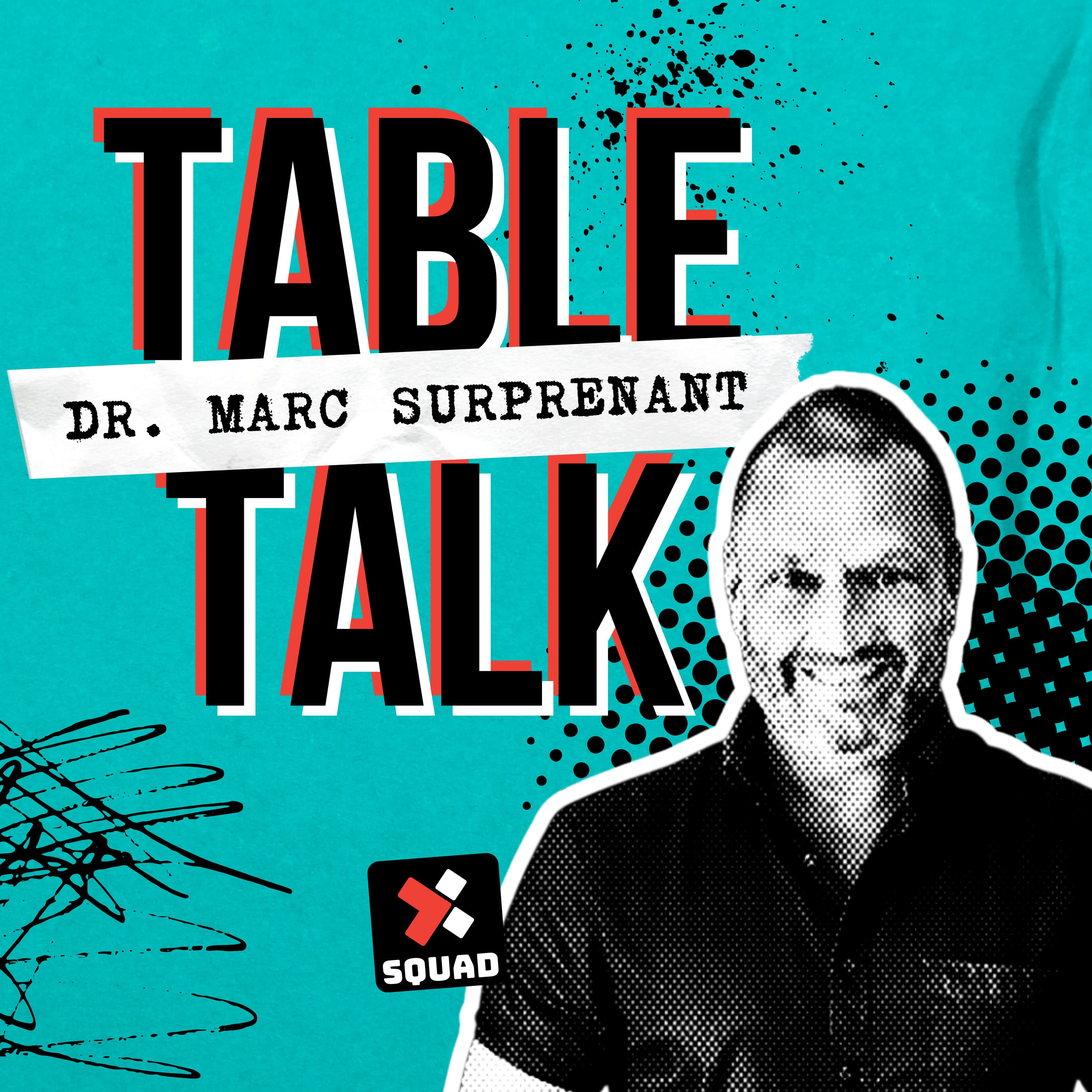
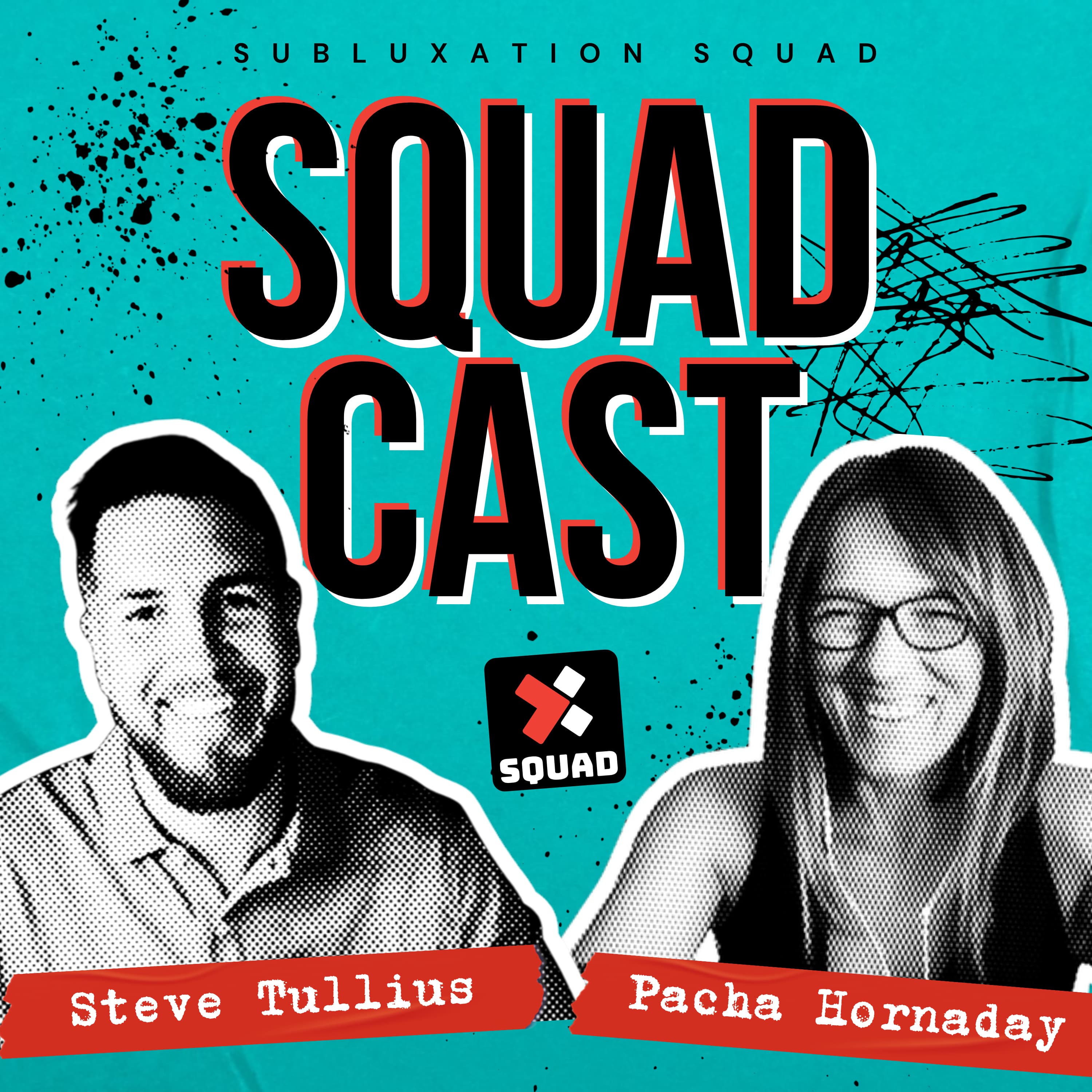
Dr. Steve Tullius and Pacha Hornaday host Dr. Marc Surprenant, a longtime Iowa chiropractor turned coach, for a conversation about reconnecting with the heart and purpose behind subluxation-focused practice. They discuss where the profession loses its passion, why community among chiropractors matters, and how the MAHA movement presents a limited window of opportunity for chiropractic to gain visibility. The episode gives practicing chiropractors practical reasons to reengage with philosophy, patient education, and each other.
Dr. Marc Surprenant shares how his own chiropractic experience led him from pre-med to Palmer, and how early struggles in practice pushed him toward mentorship, philosophy, systems, and eventually coaching other chiropractors. He digs into what it takes to keep the heart of chiropractic alive, from staying connected to the Big Idea and surrounding yourself with other chiropractors to continually nurturing the purpose that brought you into the profession. The discussion also tackles tribalism, professional responsibility, patient communication, and the need to unite around vertebral subluxation without demanding that every chiropractor practice exactly the same way. For Marc, keeping chiropractic’s heart intact means staying connected to your purpose while helping the profession move toward a clearer message and greater unity.
Key takeaways
- 1
Reconnecting With the Heart of Chiropractic
Dr. Surprenant argues that chiropractors lose their passion and effectiveness unless they actively nurture the heart and purpose behind why they got into the profession.
- 2
Community Is Essential for Subluxation-Focused Chiropractors
The hosts and guest agree that uniting locally and nationally around core values like vertebral subluxation is critical, since isolation causes chiropractors to fade or drift from their principles.
- 3
The MAHA Movement Is a Time-Limited Opportunity
Steve stresses that while the Make America Healthy Again movement will outlast any single administration, the current political opportunity for chiropractic visibility will not, so the profession must act now.
In this episode
Jump straight to any moment.
If you liked this episode, be sure to check out
Full transcript
Made by speech recognition, with names corrected. It may contain errors, so check quotes against the audio. Spot a mistake? Tell us.
0:00Introducing Dr. Marc Surprenant and His Chiropractic Journey
Show intro 0:04
Every doc wants to make a bigger impact. What's getting in your way?
You're tuned into the Subluxation Squad podcast.
One squad, one mission. Chiropractic for all.
Pacha Hornaday 0:15
Hi, everybody. Welcome back to the Subluxation Squad podcast. Episode number. What did we say? 38.
Dr. Steve Tullius 0:21
38.
Pacha Hornaday 0:22
So, yeah, welcome back, everybody. If you're watching live, drop us a comment. I hope you. I'm still hoping that somebody's going to join our conversation at some point. Like, this is like my goal. I want this to be like a call in radio show. So if you're, if you're seeing this, if you want to join our conversation live, let us know. We sent you the link. My name is Pacha Hornaday. I'm a brand strategist and identity designer. I work mostly with chiropractors. And I'm coming to you from a little village just outside of Barcelona in Spain. And with me, as always, is my co host, Steve Tullius. How are you today, Steve?
Dr. Steve Tullius 1:01
I'm doing great, as always. This is some of my favorite times getting to chat with you, which is why we decided to do this podcast.
Read the full transcript (9,685 more words, 11 more chapters)Hide the rest of the transcript
Dr. Steve Tullius (continued) 1:01
For those that don't know. We were just talking every week about chiropractic and how to get this thing to the masses. So we figured we should start putting it out there and bring in experts who also have great ideas to take this thing to the masses. I'm here in Austin, Texas, where you can catch me two stepping once a week at least. And I also, in my time, when I'm not dancing, I am helping chiropractors to transfer their certainty to the masses, to rooms full of people. That's how I build my practices. And so I help them through workshops and getting out in the community.
Now, before I introduce a very special guest who I've had the pleasure of really developing a friendship with over the last few months after we met in person at Sherman Lyceum last year. I just wanted to share briefly on last week episode and thank Dr. Craig Little again for jumping on that show. Fantastic interview. Really insightful. Just so much going on in chiropractic education and the profession. So it was really a great episode. If you didn't watch it, make sure you check it out. There was one piece where we had some disagreement on the part four NBC Part four.
And I had shared that the medical profession had removed their equivalent of part four. And he had shared that. No, they had moved it to. They just moved it to the end of their internship. I did some deeper research into that. And Erwin, do your own research. But what appears to be the case is that they did indeed remove the equivalent of part four. Their part two had two parts, and the part that's equivalent to chiropractics Part four, they did indeed remove. And the part that he was referring to was. Has always been there at the end of their internship.
So in essence, their part four equivalent, along with other professions, the osteopaths and other professionals, have also removed equivalent Part four. And I'm an advocate for removing that as well, if you haven't guessed. So, Pacha, it looks like we lost our guest. I'm sure he's going to jump back in. But before, before he does, I'm curious what your thoughts were on last week's episode.
Pacha Hornaday 3:27
Oh, man, you're putting me on the spot now. Well, I was, I thought it was really interesting. I learned a lot. And, you know, when you talk about part two and Part four, I don't really know what it's about. I mean, I have a general idea, but, you know, I'm not so. But yeah, it's. I think it was a really good interview and I really enjoyed listening to both of you kind of go back and forth about it. And I'm hoping that, you know, it moves the profession forward a little bit. You know, like one of our goals is to bring people to the table and talk about things in public and not just, you know, behind closed doors.
So I'm hoping that we kind of took a step with that episode in doing that.
Dr. Steve Tullius 4:04
Yeah, yeah. It's okay for us to disagree. And more than that, it's important that we be civil and we be cordial and collegial. And that's what we're really looking to keep moving the profession towards. So with that, we have our guest back, Dr. Marc Suprana. Thanks so much for joining us. Dr. Marc, you have a long history in the profession and have done a ton, so instead of me sharing anything about you, we'd love for you to share more about yourself, who you are and your passion and love for chiropractic here.
Dr. Marc Surprenant 4:41
Did I make you nervous when I went away?
Dr. Steve Tullius 4:44
No, no, no. We, I, I could talk forever.
Pacha Hornaday 4:47
Me too.
Dr. Marc Surprenant 4:48
My phone, my phone overheated. My phone went to emergency. So I know this is, I know this is so unprofessional, but I, I have four daughters and one of my daughters just went to college last week, so I'm getting ready to travel down there. So I double booked a lot of stuff trying to get out of town today. So I'm doing this unprofessionally from my phone. My phone overheated. So I apologize for that. Steve, you're good.
Dr. Steve Tullius 5:09
You're good. So I think, I think it's apropos because the title of this episode is the Heart of Chiropractic. And, you know, we can't. Personally, I don't think we can have a full heart in chiropractic if we don't make sure our needs and our family's needs are being met. So thanks for being here and thanks for going out there and being a good dad, too.
Dr. Marc Surprenant 5:30
Love it. So I started in chiropractic. So when I went, I graduated 99 Palmer in Iowa. I grew up in Iowa, had asthma allergies. I have that story that I got sent to a chiropractor. My asthma allergies completely went away. Headaches went away, stomach ulcers went away. Stop taking all four medications, and I don't want to breeze over that like it's, it's that simple. But I've told it so many times and a lot of people have heard it, but that's really what brought me to chiropractic because I was 30 year pre med at University of Iowa, and somebody said to me, my academic advisor said, you should go see a chiropractor.
And I was like, I don't have neck pain or back pain. And next thing you know, I'm at Palmer, I'm enrolled. And my first chiropractic experience was actually with a student intern. Guy's name was Robert Muschamp. He's from Canada, had great hair, probably still has great hair. And, and, but, but like, but like, he told me the message. He's like, listen, your body was designed to heal itself. And that's my first experience with chiropractic. I started getting adjusted within, like three weeks, I was starting to come off of all my medications. And so it was fascinating and to see it firsthand.
But I was still not fully bought into chiropractic at that point in time because I had, I played rugby, I played baseball at Palmer. I was on scholarship to play rugby there too. And so I, I kind of just messed around chiropractic school. But finally when I graduated, I got my butt handed to me badly in, in the profession. Like, I was a horrible chiropractor. And I. It was one day, I was bartending three nights a week, make ends meet, and I was staying on a friend's couch. That's how bad I was. And I was working as an independent contractor for a chiropractor. And I met this girl who was a chiropractor who was with getting coached by C.J.
mertz, a guy, you know, Dr. C.J. merz. And. And she said to me, she goes to me one day, she goes, man, you are way too charismatic to suck this bad at being a chiropractor. She goes, you need some kind of processes and systems and put that heart to use. And. And sure enough, I started getting some coaching. I started reading green books, getting around other chiropractors that were passionate, had processes, and things just kind of took off from there. And yeah, that's where I started.
Dr. Steve Tullius 7:41
Nice, nice. Now you went from that and then you built a huge practice and started getting into the coaching world too, and helping others do the same. You want to share maybe just a little bit of the background there so people have a little more context.
Dr. Marc Surprenant 7:57
Yeah. So, you know, you suck pretty bad. So you start to seek out the people in the profession that will help teach you how to do it. And, you know, I did, and I found people, great mentors that helped me learn how to do it. And once I started learning how to do it, they're like, hey, why don't you start to teach some people how to do it? And people start coming to you. And so really, for the last 18 years, been coaching and consulting chiropractors, and I love it. It's.
I honestly feel like that's just as important as being a chiropractor because I feel like if I can help one chiropractor get their stuff together and get focused in on what they want and how to take care of people and how to attract patients and how to educate patients, then I can do that much more through that one chiropractor than I can even with just putting my hands on another spine, which both are super important. I think both are equally important, but that multiplication factor is just so massive.
Dr. Steve Tullius 8:48
Yeah, that was a tough process for me to go through and not feel guilty on the side of no longer providing those adjusted forces and corrective services anymore. And it took me a while to make that transition, to finally be okay, well, to recognize that I could actually help a lot more people by helping more chiropractors and helping people get to those chiropractors. I do have plans to get back into practice, not in full time, but I just. Because I miss it and I just love it so much.
Which is why I am excited to hear you share your thoughts on the question that we always ask everybody, which is, where do you see the biggest subluxations currently in the profession and in practice.
9:20Identifying the Biggest Subluxations in the Profession
Dr. Marc Surprenant 9:35
Man, I love this question. I feel like the biggest, biggest subluxation that we have is as the profession itself, first and foremost, is that we have so many silos in chiropractic. Everybody's got their own thing, and everybody's against everybody else. In fact, you know, I just heard something in my own town about a chiropractor saying something bad about me, and I'm like, is that chiropractic? You know, and. But that. That's also within coaching programs and within. Within. Within our profession. It's within the schools. It's within the. The types of chiropractic that we practice.
Everybody's got their silo and nobody wants to play along with each other. And it's like constantly tearing down each other. And it's this. It's not helpful for the profession, number one. But really, number two, most importantly, it's not. It's not helpful for patients. It's not helpful for the general public. Because then that comes to the problem that. I think that's the problem with the profession, but the problem with us as individuals, as chiropractors is that where are we. Where are we at with public opinion? I mean, still, after all these years, I hate the stat that we keep saying only 10% of.
Only 10% of the population seeing chiropractors. Like, how are we still at 10%? Like, why not 11? Or have we lost 1%? Is it 9? Like, how are we still there? You know, like, what. What do we do? What are we doing wrong here?
Dr. Steve Tullius 11:00
Well, that's. And that's why we asked this question, because. And where are the subluxations? Because if there were no subluxations, we should be thriving. Right. And so Pacha. And this is why Pacha and I work so well together, because Pacha is a branding strategist. Her whole expertise is around helping brands, helping organizations really get clear on who they are so they can share that message, remove the interference between that to express that to the population. So, Pacha, what are your thoughts as Mark's sharing this information?
Pacha Hornaday 11:41
Yeah, I love what you're saying about heart and passion and bringing that back or, you know, making chiropractors aware of it so they can use it to grow their practice. You kind of. You kind of put it next to systems and operations, kind of as if it's all the same thing. But, you know, a lot of people understand systems and operations and why and how that would put their business on a different trajectory. Right? Like, if you get your systems and operations in place, things are going to go smoother, they work better without you. You know, all the, all the good things. Maybe you can go a little bit more into how.
Connecting heart and passion into your practice, bringing that back into it. Like, how does that grow your, your business?
Dr. Marc Surprenant 12:28
Yeah, I feel like that the biggest thing that we're. I don't know, I, I really feel like that at some point in time, as a chiropractor is going through school, something either ignited them to go there or they get some kind of fire while they're at school. But then you come out and the old Mike Tyson statement about once you get punched in the face, like, how do you respond? It's like, it's like that. And like, some people really thrive right when they come out of school. Some people struggle and build slowly and. But at some point in time, you're gonna, it's life. Some point in time you're gonna get punched.
And when that happens, especially in business and I think especially with chiropractic, we get, we get punched and, and we panic. You know, you've got, you still got to pay the, you still got to pay for your mortgage, you still gotta pay for the, the lease. You still do things. And what I've seen is chiropractors start to slip. Really what their purpose for being a chiropractor was they start to slip and do different stuff, weird stuff or other stuff, and some of it's just, you know, I mean, frankly, philosophically, not chiropractic, but they start to slip into that.
Some of it we can argue that, hey, look, as long as you're locating, analyzing and correcting subluxation, like we're, that, that's where we can all come together on that, the same term. But at the same time, if a patient walks into, you know, I'm in this little town in South Carolina right now, Fort Mill, I think there's probably, probably 20 to 30 chiropractors, maybe more here and probably more now. And if I walked into every single office right now or drove to it, I'm not going to see anything similar in any of them. I'm not going to know what I'm going to get in each one of them.
And so I think where it starts is like, if you're confident and you have that passion, you're able to understand that, hey, look, at the core chiropractors, we need to be educating people about subluxation. Locating it, finding it, analyzing it, correcting it. If we can stick there and we can come to a common Ground and all speak that way and not throw rocks over top of the others to the other silos. I think that's a big piece of it here.
Dr. Steve Tullius 14:31
Yeah. I mean, absolutely. You know, the silos and. And I'll use the word tribes and this tribalization of chiropractic, there's so many different tribes, and tribes war all the time, and that's what we've done for a very, very long time. I see a future where we're moving out of that, and I'm excited for that because the reality is, based upon the research, 80% of chiropractors want to retain the term vertebral subluxation.
Dr. Marc Surprenant 15:07
That's awesome.
Dr. Steve Tullius 15:09
And it's that tribalization that is actually causing us to lose ground, because those who no longer want the term subluxation, they're just looking at us like, yeah, let those guys keep fighting as we keep gaining ground. And it's hard to watch. We definitely have to do something very different here.
15:33Losing and Nurturing the Heart of Chiropractic
Pacha Hornaday 15:33
I'm curious about this. Maybe you can enlighten me a little bit as the outsider. So you're talking about tribes, right? Do you include the people that don't want chiropractic be about vertebral subluxation in that tribalism, or are they completely out?
Dr. Steve Tullius 15:56
I'm curious what you think, Mark. What are your thoughts?
Dr. Marc Surprenant 15:58
I would. I would include those people. I mean, anybody that's going to say that they're a chiropractor, but they don't believe in subluxation. I mean, that those people are in there, too, because that. Because at the end of the day, somebody's going to go see them, and it says chiropractor on their wall. But they're not teaching anything about chiropractic. And that's where. That's where I feel like we lose it. And that's where we're heart and passion. I just spoke at Mile High a couple weeks ago, and they put on a great program. I'm gonna give them a shout out. Danny and Rochelle, they do a great job with that. That program, Mile High.
And I just. There's a lot of heart there, and I love it. And I spoke on Thursday night, and I talked about heart, and I was like. It's like. It's like anything else. It's like, if you don't nurture your heart, if you don't pay attention to that relationship with chiropractic, if you don't pay attention with your relationship with your kids, with your spouse, with your church, with your spirituality, if you don't pay attention to those things. It start. You start to fade away from it. And sometimes people go through chiropractic school. They're super passionate because they're in the middle of it.
They, they read the green books, the philosophy, they go to seminars, they do all those things. Then you get out on your own and it's like sometimes you don't nurture that relationship. And that's where you start to lose that fire. One of the quotes I use is CS Lewis talks about it. It's like you don't just. If you believed in Jesus one day, you don't just wake up one day and reason yourself out of believing in Jesus. What happens is there's a slow fade away. You stop reading your Bible, you stop praying, you stop going to church, you stop gathering with other Christians. And when you do those things, you start to.
From the what the main thing is the main thing. And I feel like that's what happens in chiropractic a lot of times, unless people are super intentional about it. You, you have to, you have to nurture that relationship to keep that heart and passion. And the chiropractors that are successful, that are happy, that are loving life and just enjoy the profession are the ones that still have the heart even, you know, 20, 30, 40 years into it.
Pacha Hornaday 17:49
So what do you. So you would suggest then to keep that analogy up that people keep or return to the heart or rediscover the heart for chiropractic by meeting, like going to events to, you know, meet other chiropractors, Keep the energy up. Right. Read the green books. What else, what brings it back?
Dr. Marc Surprenant 18:11
Lyceum at Sherman is a big one that I go to every single year. I just took a, an ACP and a DACP through Sherman this last three years. It was a hundred hours for the acp. It's a academy of chiropractic philosophers. And then I took a diplomate for it. It's DACP. That was 200 hours. And so we had four weekends at Sherman each year. And then we had to be at Lyceum too. Had got to be at Lyceum.
But this was like diving deep with some of the greatest philosophers and going into the principal and like, nothing's brought my fire back more than just being in and immersing myself in that stuff and being around other thinkers and being challenged by, you know, gonna give a shout out to the best philosophy teacher out there in chiropractic. Dr. Decken is amazing at Sherman College and like, just makes you think and, and the program's great. So things like that, getting around seminars, other chiropractors. I have my Rolodex of chiropractors that I talk on a regular basis. You know, Steve and I talk, if not every week, every other week.
You know, it's, I love that because it's like minded people that just keep that fire going for you. That's how I think. And then of course I have to on my own, my self study, my time in the morning when I'm reading my Bible, I also go into the green books as well. Not every morning, but almost every morning I'm reading something about chiropractic.
Dr. Steve Tullius 19:27
So I think this is. That was beautiful, Mark. Now I think we need to define the heart. We're talking about the heart and where it's at. But what is the heart of chiropractic now, man?
19:31Defining the True Heart of Chiropractic Today
Dr. Marc Surprenant 19:43
And I think that for me, okay, so it's probably going to be different for everybody. But I think where I've been and I don't think it's changed that much. My, my heart, my passion, why I do it, my big why is that? And this kind of fits in. Everything in my life is like I want to help people. I want to help people realize the potential that God put inside of them for why they're here on this planet. And so when it's with my girls, like with my daughters, I've got four daughters. I don't know if I said that. I think I said that I have four daughters. They're 23, 21, 18 and 15. All single by the way.
So I'm, I'm just, just putting that out there. They, I will tell you this, is that, that like I, I'm, I, I love them so much and I love them so dearly. But that heart is like, I have to nurture that heart. And so like when it comes to chiropractic too, it's like, it's like I, for my girls, I want the best for them. So when with my patients, I want them functioning at the highest level so they can be the best mom or dad or brother, sister, uncle, whatever it is. When I'm coaching chiropractors, I want them to really realize what God put them down here on this planet for.
So I think that's where my facilitating comes in is that heart comes from when you start to become aligned with the potential that God put in you. That's where, that's where the heart comes in. That's my definition of it.
Pacha Hornaday 21:07
I love that. I totally relate to that from A brand perspective. That's literally where I start with my, with my clients too. Because if you have a really strong why and you remember why you got into this in the first place, everything else will, you know, will follow that. It's going to be a decision, a decision making filter. Right. And it's going to make you a better leader if you have other doctors and, you know, team members. Yeah, I totally, I totally agree.
Dr. Steve Tullius 21:35
So I knew you would be going there too, because of what Mark's describing really is the. Well, Mark's mission. You know, Mark's talking about his mission and also the vision of chiropractic, too. How Mark, you're taking your mission and chiropractic allows you for your mission to be fulfilled. Right now there's a little bit of danger, I think you'll recognize this, is that you're talking about your heart. This is going to be like, it's a different answer for everyone. And that is because that's your mission and that's great.
But then if the heart of chiropractic is different for everyone, the actual heart and pancha, I'd like your take on this because as a brand strategist, the heart would you say, is that the vision, mission or purpose of a brand?
22:13The Heart of a Brand and Its Purpose
Pacha Hornaday 22:28
I think all of them together make up the heart. Like I call the brand essence. Right. You know that, Steve. And for me, it's the heart and soul of the practice. It is your purpose, why you're doing things. It is your vision. Like, where are we going? What do you want to achieve with your practice? And not just like locally, but like, you know, like, generally speaking, you know, like, where are you going? So not just I want to make like this, this much money, but I want to be best known or I want to be known for a certain thing or, you know, whatever it is. And then the mission really is, how are you going to get there?
Like, what am I doing now to get to that vision? And then the fourth thing of the brand essence is your core values. And all those things together make up the heart, I think, because. Because it's also about how you do things. Not just what you're doing, but how you're doing it.
Dr. Steve Tullius 23:17
So I would say that the big idea of chiropractic then is a part of that that anchors the entire.
Pacha Hornaday 23:28
That's the purpose. For me, like, for me, the big idea should be. That should be everybody's purpose. Like, I don't, you know, like, and when I work with my clients, that's actually what comes up a lot like, we. You know, I started pulling that out of them again. This. Why, like, why did they get started with it? And they come with their personal stories, right? But, like, something clicked that led them from, oh, this is my experience to, whoa. I want other people to have this experience, right? That's, like, a huge step that happened. That doesn't happen for everybody. It only happens to people who actually become chiropractors.
Like, you know, like, it almost happened to me. To relate what you guys were saying earlier, I went to Life West and shadowed my friend there who was studying to become a chiropractor. And I was blown away by all the stuff that I was there for a week. I was like, holy cow. This is the impact I want to have. And then the last. On the last day, I saw Bill as that speak, and I was like, whoa, I don't have to be a chiropractor to have an impact. That's what you were saying earlier, Mike. You know, like, I can have an exponential impact if I help chiropractors reach more people. So I can. I already had skills before.
I was like, I don't have to change careers. I can do that.
Dr. Marc Surprenant 24:40
So I love that. Yeah, that's awesome. I. I saw. I saw Bill Esteb speak at Mile High to this last week, Two weeks ago. He's so good. He's so good. He's so funny. He does his delivery. He's done more for chiropractic than. Than some chiropractors have. I just love that guy. So good.
24:58Staying Connected to Chiropractic's Big Idea
Dr. Steve Tullius 24:58
So, Mark, you mentioned all these things like the ACP program, the diplomat program, 200 hours, right? That's not a small thing. That's a big thing. Is it necessary. Is it necessary for chiropractors to build and maintain that level of appreciation and connection to the big idea and to express. To be fully expressed as a chiropractor. Is that necessary, or are there other ways to go about it?
Dr. Marc Surprenant 25:33
I mean, obviously there's many ways. I mean, Palmer has a program like that. I think seminars are good. I think you have to be around people. I think being bathed in the principle and philosophy, like Lyceum or homecomings seminars like Mile High, these things are absolutely necessary. You've got to have it. I think, personally, when I coach somebody, you've got to have 1, 2, 3 of those a year, the big ones, where you're with other chiropractors. And it's really. I love how Danny says this is more about the conversations in the hallway than it is actually what's coming from Stage. It's like, who did you meet? Who did you reconnect with?
Like, this last one, I reconnected with one of my good friends that I went to Palmer with, Ashley Aster, and I hadn't seen and been in a room with him for a long time. We text every now and again, but it's so good, you know, when you get in a room with these people. So I think that's. That's crucial. I think you need to have your daily and weekly rituals as far as, like, hey, am I reading my patient testimonials? Like, I'm gathering patient testimony? Are you even gathering them? First of all, like, like the proof's right in front of you. But when. When you get lazy again, this is CS Lewis, right? When you get lazy, it's that slow fade away.
You don't read your testimonials. You don't. You don't gather testimonials. You're not looking at your reviews. You're not teaching your classes anymore. Like, you. I mean, like, the greatest thing that I do is my doctor's report in my office because that's where I teach a patient from pain and suffering and neck pain, back pain, headaches to take them to. No, no, this is not about that. It's about function, the big idea. Because if you're functioning at a higher level, this is so much bigger than even health. This is so much bigger than the pains. This is so much bigger than health. This is even bigger than just even feeling good.
This is about you functioning at the highest level. This is you being a better dad, a better brother, better sister. This is about you being able to make better decisions, you know, because a shout out to you. We just did our, you know, we did two classes last month with the neurodevelopmental stuff and ADD adhd. And to see the heartbreak of these families that are torn apart because these kids aren't functioning at the highest level, man. It is, it is.
It's motivated me so, like, paying attention to what's going on around you, I think is a big piece because we get stuck when you get into the emotions and things kind of just cruise and you've got processes in place, your office is making money, you're taking your vacations. It's very easy to forget about the. The why you're doing it, and you have to pay attention to that.
Dr. Steve Tullius 27:57
Yeah. I always say there's no shortage of sick people. And not. Not that we treat sick people, but there's no shortage of pain and suffering all around. Us. And every time people talk about, well, they don't have enough new patients, like, well really, I mean, what about your community? Do you feel accountable for your community and getting that message which can feel like a big burden too. That's the other piece. Knowing what we know can emotionally feel like a massive burden. Because we want to help. That's the essence of chiropractors. We want to help and yet we know all these people are suffering. So it's like this double edged sword.
Knowing what we know and knowing that the public has no idea what we do, at best they think we're good for neck and back pain. I think for a lot of them it feels like an uphill battle constantly. And then we have the tribalism happening too. So I feel like the rank and file chiropractor becomes just downtrodden and sad, depressed, all these different things. So you're out there coaching a lot and what do you, is that an accurate assessment?
29:09Why Chiropractors Need Community and Unity
Dr. Marc Surprenant 29:15
What do you think? So accurate. And it comes down to anything in our life, it's all about our community, right? Who are you surrounding yourself with? Like who are you surrounding yourself? Not just non chiropractic, but I'm talking about chiropractors. If you're a chiropractor, you've got to be in community with chiropractors otherwise you, you are going to get downtrodden. You know, I mean it is, it is such a burden. Like I've spoken on stage so many times and, and if you mention right now in front of a group of chiropractors about COVID it's fascinating. Like people, chiropractors, it's a trigger.
Chiropractors get so pissed off about what happened during COVID and as well as 75 to 80% of the world, I think, anyway, everybody gets pissed off about it, right? Nobody liked what happened, but chiropractors get pissed off about it. But like what are you going to do about it so it doesn't happen again? Like, like that's partially our fault. Like there, there should be some burden because we have a certain knowledge, not to quote Spider man, but with great knowledge comes great responsibility, right? Like there, there, there is that.
Like, like I think that's where you have to be grounded to your, your faith, to your God, to, to what, why you're here is that there's some level of responsibility. Imagine if, like, imagine if some of the greatest leaders of our time, they felt that sense of responsibility to do what they, they were going to do. Like Martin Luther King and many Others. But, like, what if they just said, yeah, but I think vacations and golf are better than that. Like, it's just like this world wouldn't change if we, if we just stayed in our own little world and just protected our own little thing. That's not what we're called here for.
We're called here to be in a community. And if we know something, man, it's. It's time for us to step up and do something about it, too.
Dr. Steve Tullius 30:49
Yeah, absolutely. I think this is why it's so critical that we do unite around our core values, vertebral subluxation, our vitalistic roots, philosophy, core values, which then makes it difficult, though, to accept as part of the tribe this group that says that these things are not valid, that subluxation doesn't exist, that were pseudo scientific zealots. So there's that tribe and then there's another tribe which then also wants drugs and surgery. And, you know, if the 80% would just unite around, hey, you value subluxation and you want that to be the main thing. Awesome. That's cool. We're all in this, this together.
Let's pool our resources, let's pull our. Let's support the schools that are doing that. Let's especially support the schools and places like Mile High, Sherman, other areas that are holding the heart intact. Right. So there's nothing else. It's not to say that the other things are wrong and that's bad and you shouldn't do that. You're bad for doing the other things.
But I think it's really important that everyone recognizes that if we don't have the heart, if we don't have those groups, schools, organizations saying that we're going to hold this thing as the most important thing and we're not going to do anything else or teach anything else, that that's extremely valuable for everybody. And again, it's not about making people wrong. It's just recognizing that without that thing, it all falls apart.
Dr. Marc Surprenant 32:33
Yeah, go ahead.
Pacha Hornaday 32:38
No, I was just wondering, you know, when you say that thing, the definition of vertebral subluxation or subluxation in general, like, what is the thing? Because I think that's the biggest problem. You guys can't agree on what the thing is or the definition of the thing. Like, some people want to include this and some people want to include that, and then the communication kind of falls apart already.
Dr. Steve Tullius 32:59
Yeah, I don't know that that's necessarily the case, that the thing is vertebral subluxation and it has Very clear definitions behind it, what constitutes a subluxation. And then now the piece that there's some gray area around philosophically is therapeutic versus non therapeutic. The detection and adjustment of vertebral subluxation for a non therapeutic intent. So without doing it to treat X, Y or Z. And that's where a lot of our profession starts to slip into a thought process around. They're adjusting a specific area to produce a specific result. And that actually is defined as the practice of medicine.
And that's the challenge that most never explore because they were never, they never had the opportunity in school. This was never presented to the vast majority that perhaps if you are looking at a subluxation as causing a specific disease or symptom and you're adjusting it with the intention of removing that symptom or condition, that is actually the definition of medicine.
And I had to come to terms with that and recognize that, yeah, I was practicing manual medicine until I moved towards the recognition that the promise of chiropractic is not the treatment of disease or symptom, but it's giving people the opportunity for optimal health and optimal healing and optimal function.
Pacha Hornaday 34:46
What changed for you after that realization? Or what, you know, what changed for your patients? Maybe because for them you're still just adjusting them. Right.
Dr. Steve Tullius 34:55
So everything changed because I was able to bring that conversation into table talk into my, my workshops. My certainty skyrocketed because you'll never have certainty around the, the, you know, the getting rid of a specific symptom or disease. There's no certainty there. You might have, well, you might have 60 to 70, 80% certainty. And I work with clients all the time and I ask them this question. If someone were to come in for an exam and move forward with your care and keep all your recommendations, how certain are you that you will be able to provide a transformative experience in their health and or quality of life?
And their answers will usually be somewhere. Some will say 100%, oh yeah, no doubt. Others will say 70%, 80%, which I said like, well, why is that? And it's always because they are thinking that that condition won't go away potentially. And that's why they don't have a hunt. So then if that's the case, how could, when you're communicating the thing to someone in front of you, you're going to have at best 80% certainty as you're talking to that group. So my certainty went up to 100%. And because of that, people followed me. They took my recommendations, they moved forward and they did the things. When we met, I was in the other model.
I probably told you I could help your back pain.
36:29Educating Patients on Living Subluxation Free
Pacha Hornaday 36:34
I don't remember. It's too long ago.
Dr. Steve Tullius 36:40
I'd love to hear your thoughts on that, especially because you've gone through the acp and did your.
Dr. Marc Surprenant 36:44
Did you.
Dr. Steve Tullius 36:44
Did your thought process change as you went through that process?
Dr. Marc Surprenant 36:47
It had already started changing probably 10 years ago. I practice in a practice where it's very mechanical. Corrective subluxation. You're correcting spines pre and post X rays, which we still do. Because I still think it's important to know how are we progressing, what's going on? I think that's still important for patient education. But the reality at the end of the day, like. Like, who doesn't want to. Who shouldn't want to practice function at 100% every single day? Like, who shouldn't want to live subluxation free? That's. Everybody should. But the reality is, is that nobody knows. The patients don't know why they should.
So we have to educate them. And then as a chiropractor, we have to teach them that and educate them why they should want to be at this level. And it's kind of like telling people, like, if you throw out broccoli and pizza on a table, like, everybody's gonna eat the pizza. Like. But if you could educate people about how that broccoli is going to help you. You have to first educate them about how the broccoli is going to be way better of a choice long term. It's same thing with chiropractic. It's like, listen, you've got to be subluxation free and functioning at 100%.
It's a lot more work to educate people that way because everybody's aligned with the allopathic model that Steve was describing. Like, everybody understands this hurts. Okay, get on the table. It's 12 is. I'm gonna fix it. Like, everybody understands that. But the reality is, is that if you do that, this is what I coach my clients. I'm like, listen, once their pain goes away, they're going. They're leaving. They're done. If their pain doesn't go away, guess what? They're leaving, right? If their X rays get better, they're leaving. If their X rays get worse, they're leaving.
So the only time that they're going to stay, like, I could adjust it every single week. Got my adjustment, and I'm going to do that for the rest of my life. Why? Because I want to be the best dad I Want to function. I want to live as long and healthy, and I want to go out like a candle. I want to blow out like a candle. But in order to do that, I have to get adjusted on a regular basis. That's a big piece of that. And so you have. We have to educate people how to do this, because I know that. But it took me, you know, 31 years of education to be able to get that mindset.
I mean, I probably had it within the first four years of chiropractic education. Then a few years out that I just realized I was going to get adjusted for the rest of my life. I don't know if I necessarily had it at school. Some chiropractors never get that. But some chiropractors are being taught at certain colleges the whole allopathic model, because that's more acceptable. It's more insurance, it's more of the stuff that's another problem within our profession. Right. So. So that's where I land on that is like, it. Yeah. It's something that you have to be trained, but like anything else, you have to work on it. It's.
It's like a relationship. You've got to work on it.
39:21Checking Kids for Lifelong Optimal Function
Dr. Steve Tullius 39:21
So, Pacha, I'm curious, Mark. You brought this up for me to ask Pacha, because I think you said something really, really hugely important there. Pacha's daughter just turned 17 yesterday. Pacha. She's been checked since birth. Throughout her life, have you been taking her to the chiropractor to treat a condition, to prevent a condition, or because you want the optimal expression of life for her?
Pacha Hornaday 39:51
I don't remember why I brought her in the first time. I think it had already clicked for me. I'm not sure. I don't know. Maybe it's just that, oh, you know, kids need to get checked. And I was like, okay, Doc. But I mean, now I definitely take my kids because I want them to have the best expression of life. Right. I want their brain to communicate to the rest of the body so they can regulate their emotions better and they can digest better and sleep better and just all around be better. Right. That's why I take my kids. In addition to that, I also take them when there is something going on in their life where they need to be seen.
Like they, you know, my son plays basketball. When he gets hurt, we take him to a chiropractor. But it actually, my kids were little, they understood that already when they. They knew that the chiropractor was the first place we go. Like when they had A sniffle when I could feel something coming up. Like we would go to the chiropractor, make sure it's clear so the body can do its thing. Right. So if kids can understand that, I think we can make that understandable to other people. It's not that complicated.
Dr. Marc Surprenant 41:01
I love that. I love that. Yeah.
Dr. Steve Tullius 41:04
And that's what, you know, I think that's the bridge right there. And that's what I asked at the recent Maha meeting of the group because there was people from all camps at that group. But the thing that we have in common is this. I asked them this question. I said, how many of you in this last week have either had your spines checked or checked your family because you want them to express optimal function? And all the hands are going up because the reality is even the ones on the other side, except for a few, they're checking their families, they're getting, they're getting checked probably not as often as they should.
And not even those on our side, including myself, don't get checked as often as we should, but they're making sure their families get checked. And it's not for the treatment of a condition or disease. It's because they want optimal expression of life. And if, and so that's one of the biggest contradictions I see. Because if it's good enough for our families, shouldn't it be good enough for the rest of humanity?
Dr. Marc Surprenant 42:07
100% right.
Dr. Steve Tullius 42:10
And that's the moral contradiction that I believe that we need to really point out that hey, just because we don't have all the research that double blind randomized controlled trials that prove that, right? We, we believe it. And we believe it because we have 130 years of evidence informed in the evidence informed model. And we have the responsibility, and we should be accountable to share that with the masses, not out of fear that they won't accept us. And that's what I believe we need to really be strong on and do the research, right? Then it becomes, and get the funding for the research.
Dr. Marc Surprenant 42:55
And
Dr. Steve Tullius 42:57
that's where I see things going. Mark, I know you got to get going here soon and take care of your family, but I'd love to hear, you know, how do we get this heart back again? You mentioned several things, but if you could just break it down to one sentence. How do we get back to the heart of chiropractic?
42:59Returning to Community as the Path Forward
Dr. Marc Surprenant 43:20
I think it's about, it's about community. I think we need to, I think we need to, I think we need to hang with chiropractors. I think we need to get our brothers and sisters. I think we need to hang with our chiropractors. I know that's not one sentence, but I think, I think we need to be responsible for each other, you know, and not just get in our silos, get in our practice, hang our shingle and just do our thing. It's like we need to be around people that are gonna. That are going to track us.
Pacha Hornaday 43:45
How do you guys feel about connecting locally with chiropractors? So instead of everybody marketing against each other, maybe joining forces and doing it together, but then having really strong brands, so everybody kind of, you know, can say, hey, I'm okay with you taking these patients, because they're not really my ideal patients.
Dr. Marc Surprenant 44:04
Yeah, that's a great idea. I love that night. I actually had in Charlotte. I had a. At one point in time, 15 chiropractors, 16 chiropractors meeting every other Wednesday at my office. Open the doors. I don't care how you practice. Let's get together, let's do some level of philosophy and principle. Let's talk about how can we take care of patients. But I think that's a beautiful thing. I think it's a great idea.
Dr. Steve Tullius 44:24
Yeah. I had philosophy group in my area. It's hard. It's not easy to maintain.
Dr. Marc Surprenant 44:29
It's not easy. It's not easy.
Dr. Steve Tullius 44:32
For those that want to do it, recommend you do it. You know, start a philosophy group, start a group that. Or just a group that gets together. Right. And start sharing and start supporting each other. There's no shortage of sick suffering people. There's plenty. And we should be definitely a team. Mark, thank you so much for taking the time to be with us today. Before we let you go, we got to do our rapid fire round.
44:57The MAHA Movement and Chiropractic's Opportunity
Dr. Marc Surprenant 45:00
So I was waiting for it. I was waiting for it. I prepared for this.
Dr. Steve Tullius 45:03
We got to throw out some new questions in Pacha.
Pacha Hornaday 45:07
Can you make them up on the fly? I don't know.
Dr. Steve Tullius 45:11
I got one, but do you want me to go first?
Pacha Hornaday 45:14
I have one question, actually. I heard this on another podcast the other day and I was like, oh, that's a good question to ask. And that's turning it. Turning the table around, if you will, and see if Mark has any questions like what would you ask us? Or what would you ask the profession? Maybe,
Dr. Marc Surprenant 45:30
you know, probably everything. I've already asked Steve privately. I'll ask this Steve Maha movement. You feel like it's, it's. This is a good question for you that I asked you privately. Is it going to end when this Administration leaves or is it going to keep going?
Dr. Steve Tullius 45:48
The Maha movement will continue. The opportunity will not. If. If it changes into, you know, if the politics change. Right. So this is why it's so critical that the profession support the Maha movement right now while we still have massive opportunity. And I don't put my time and energy into anything that I don't believe has massive opportunity. So if you see me in it, that should be an indicator to people. That's if they trust me and I have any credibility. For those that don't know me, I'm not going to ask you just to hand it over. Have a call with me. You know, let's jump on a call and I'll share all the reasons why.
But yes, Maha, the movement will continue. Just our opportunity will lessen.
Dr. Marc Surprenant 46:37
Yeah.
Pacha Hornaday 46:38
All right. Do you want to start with a question?
Dr. Marc Surprenant 46:41
I do.
Dr. Steve Tullius 46:42
So, Mark, you shared something earlier today that was new to me. I didn't know this about you, so I'm gonna ask you tell us a joke.
Dr. Marc Surprenant 46:51
Oh, my gosh. So it's so crazy. I did stand up comedy last year. I call it my midlife crisis, call it whatever it is. And so I'm stalling on the joke thing. By the way, here's my joke. This is my opening line. I look like Adam Sandler and Kevin James had a baby. And when I. And when people start telling me I look more like Kevin James, I know I need to eat more salads. So that's a.
Dr. Steve Tullius 47:19
That's.
Dr. Marc Surprenant 47:19
That's. That's my opening. I.
Dr. Steve Tullius 47:23
When can we see you next?
Dr. Marc Surprenant 47:27
No, I'm not done. I'm not done. I've got my joke book right back here. I write jokes daily still.
Pacha Hornaday 47:31
Okay.
Dr. Marc Surprenant 47:32
I need to get back. It's. It's not conducive to my lifestyle really, right now, because to get open mics, it's like 11 o' clock at night. I will tell you one practical application if I can. I know this is rapid fire, but. Third week. So I did seven weeks of classes. Two and a half hours on a Monday night until ten o' clock at night, seven nights a week. And third week, I bombed. Like, I'm good on a mic. I've spoken in front of lots of crowds. I've emceed many events, seminars, all kinds of stuff. I'm not no problem on a mic. But telling jokes is intimidating. It's way different. And the punch lines have to happen. Exactly.
I bombed so badly the third week, I was ready to quit life. Not just comedy. I was ready to quit life. And I emailed the coach, and you know what he told me as a good coach? Guess what he said? He says, you're not working your craft, you're not practicing, and you're not mentally getting prepped every single day. And I'm like, oh, man. I would tell all my clients that same thing. And. And he was so right. And I was just taking it, like, oh, I could just get up and be funny. I was. I was halfway butting it, half assing it. And. And sure enough, when I started to apply myself, that's when it got good, you know?
Dr. Steve Tullius 48:37
Nice. Nice.
Pacha Hornaday 48:38
I like that. What are you most proud of?
Dr. Marc Surprenant 48:43
My four girls, man, they're just amazing girls. Like everybody that meets them, they're just a light. They are. They are. They love Jesus. They love life. They're happy, they're grounded. They're not reaching for anything. They're smart, they're funny. The best. That's probably the most. The thing I'm most proud of is that they're funny like their dad. That's probably what I'm most proud of.
Pacha Hornaday 49:02
Would they agree with that?
Dr. Marc Surprenant 49:04
Oh, yeah, 100%. In fact. In fact, hopefully they don't see this. Two of them broke up with their last two boyfriends because they're like, yeah, they just weren't funny. And I'm not going to waste my time when I'd rather be with my dad laughing instead of being with this guy. That's a good compliment. That's the best.
Pacha Hornaday 49:18
That is huge.
Dr. Steve Tullius 49:21
The only reason I have my wife, because she's way out of my league, is because I'm pretty funny. So sometimes
Dr. Marc Surprenant 49:28
that's it.
Dr. Steve Tullius 49:29
Awesome. What. What's a. Who's one person in chiropractic not living that you would love to have dinner with?
Dr. Marc Surprenant 49:39
Not living? Yeah. Reggie Gold. Easy. Yeah, I just. That guy, just what made him tick and how he was able to come communicate and move crowds and like, create analogies that people understood is like, we still say these things to this day. It's just fascinating.
Pacha Hornaday 50:01
Since we're talking about people, you know this question, who are three people we should be interviewing next?
Dr. Marc Surprenant 50:07
Oh, good. Let's see. I think you need to get Joel Bohemian here. Steve, you know him? Yeah, I think that's a good. I think that's a great interview. Let's see. Dan Lyons. You know Dan, probably. You probably know Dan as well.
Dr. Steve Tullius 50:28
Good interview.
Dr. Marc Surprenant 50:28
He'd be a good interview as well. And last one I'm gonna say is, I'm gonna. I'm gonna tell my. My buddy Ashley Ochsner, he's in the Quad Cities. He moved back to the Quad Cities. He's practicing amongst all those, the chiropractic school and everything like that. Just a, just a great dude and like the guy just runs business well and he's still principled and sound. I love that.
Dr. Steve Tullius 50:54
Awesome.
Dr. Marc Surprenant 50:54
Awesome.
Dr. Steve Tullius 50:56
And what, you know, this is a new question. I think it's one that we don't ask people enough. What gifts do you have to give to chiropractic in this next phase of your life?
Dr. Marc Surprenant 51:10
Yeah, I think that, I think always my thing, always from stage and whenever I talk to people is just really kind of digging for those, those diamonds, those reasons, that purpose, that why that heart. I, I, that's my thing for chiropractic. And I, I think really why in this next phase here to help unite some of the profession as opposed to trying to divide it. And I think that's my unique situation of all the things I went to and how I can cross through different crowds and stuff like that. And my personality and my humor and my love for chiropractic. And also my humbling though too, like being humbled.
Like I used to be the guy that's like it's my way or the highway. And so, you know, being humbled through chiropractic and seeing like, man, there's, there's so many different ways to get people to where we need to get them to. And, and people need different avenues to it. I think we don't all need to be the same. So I think that's it is just really try to pull the, pull the profession together. I think I pray and hope that's what I'm here for. I feel like that's what God's called me to do right now.
Dr. Steve Tullius 52:10
Awesome.
Pacha Hornaday 52:10
Do you, do you bring chiropractic into your stand up routine? Like it seems like there's some good potential there. Making fun of chiropractic and then blowing people's minds.
Dr. Marc Surprenant 52:20
Oh gosh. Like, like 90% of my comedy is, is my, my girls and, and chiropractic? Heck yeah. 100.
Pacha Hornaday 52:27
I'd love to hear that.
Dr. Marc Surprenant 52:28
Sometimes patience, patience farting on you. I mean there's so much, so much gold in a chiropractic office. I have this book. You guys are gonna love this. And so maybe this is your last question, but I have this book in the office that my, my team gave me. It's a, it says the things I shouldn't say in the office and the whole book is blank. And so like every time I Say something. They're like, okay, go write that one down too. And it's. It's kind of pseudo coming. My joke book, too, at the office.
Pacha Hornaday 52:54
I love that. That's great.
Dr. Steve Tullius 52:57
Awesome. Well, Mark, we have just one more question for you. What is an unsubxated profession look like to you?
52:58Envisioning an Unsubluxated Chiropractic Profession
Dr. Marc Surprenant 53:08
I think it's a unified message as far as, like, hey, look, we locate subluxation and we remove subluxation. I think the unit. Unsub. Unsubscated. Unsubstate. I can't even say it. Profession really is that we start to see the potential in so many people. I think Reggie saw it, you know, when he created spinology. He's like, if we really, truly got our messaging together, we would not have enough chiropractors, chiropractic schools. We would not. We wouldn't be able to take care of all the people would want to rush to us. So unsublicated chiropractic profession would be. We get our messaging so right that people would.
It would just make sense to people. They would all want to come get adjusted and have their babies adjusted, even up to 17 years old and beyond. And so I feel like that's what an unsublicated profession really looks like.
Pacha Hornaday 53:57
You're here.
Dr. Steve Tullius 54:00
Thank you so much, Mark, for taking the time on your journey to go spend time with your daughter. Best wishes there with all four daughters. I don't have any daughters yet, so God bless you and in the future and everything. Thank you so much, guys, for a great interview. Mark will have you back again only for stand up next time.
Dr. Marc Surprenant 54:21
Let me prep for that.
Dr. Steve Tullius 54:23
All right, guys, have a great rest of your day.
Pacha Hornaday 54:24
Love you guys.
Dr. Marc Surprenant 54:25
See you.
Pacha Hornaday 54:26
Until next time. Bye. Bye.
Subscribe and review
If this hit, help another chiropractor find the show.
If you love this episode, please take a moment to subscribe and leave a review on Apple Podcasts or Spotify. Your support helps us reach more chiropractors who need these insights. Thanks for tuning into the Squadcast. See you next week.