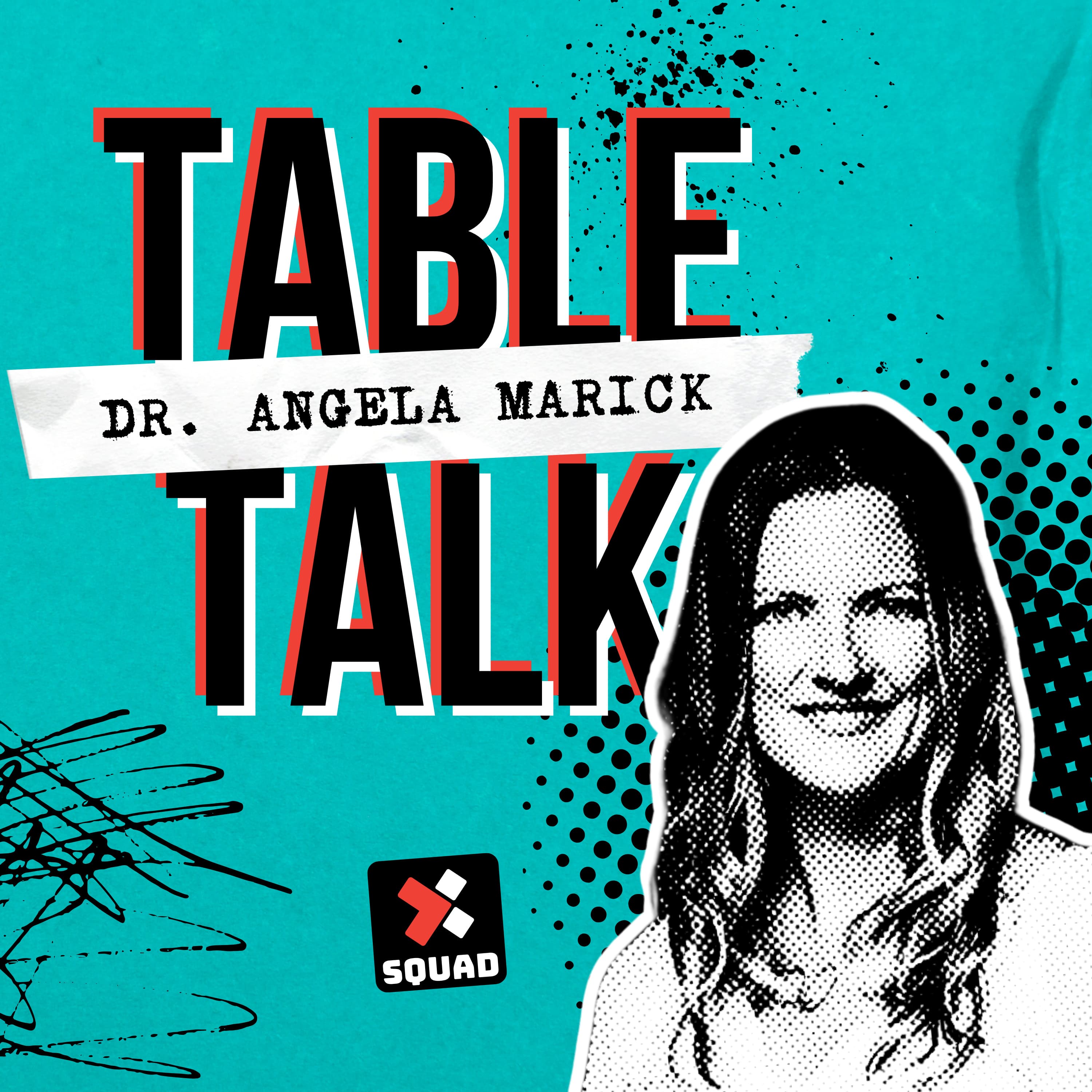
Synopsis
Dr. Angela Merrick, a chiropractor of 22 years, shares how stepping back to focus on family led her into a new season of mission work bringing subluxation-focused chiropractic care to Kenya. She traces the growth of her Kenya work from personal connections into a clinic serving thousands and a nonprofit, Cairo for Kenya, while envisioning a future chiropractic college there. The conversation also turns inward, examining the divide around subluxation as a concept and strategy within the profession and calling for more honest, uncomfortable conversations among chiropractors.
Dr. Angela Marick shares how her path shifted from running a practice and raising a young family into leadership coaching—and then into an unexpected calling to bring chiropractic to Kenya. She walks through how relationships on the ground (and a reunion reconnection with Dr. Kyle Troyer) turned a “someday” mission idea into boots-on-the-ground service, including a first trip where the team delivered thousands of visits in just days. The conversation goes deeper than travel stories: Angela names fear and “us vs. them” division as major subluxations in the profession, and makes a case for maturity, collaboration, and having the hard conversations with integrity. She closes with a practical vision for sustainability in Kenya (training locals, potential school pathways) and clear ways for chiropractors to get involved.
Key takeaways
- 1
From Family Focus to Global Mission
Dr. Merrick describes stepping back from practice to raise her family before being called into a larger mission serving communities in Kenya.
- 2
Building Chiropractic Care in Kenya
What began as personal connections grew into K Chiropractic, which served over 4,200 people in five days and continues expanding through the Cairo for Kenya nonprofit.
- 3
Confronting Subluxation Within the Profession
The hosts and guest discuss the internal divide in chiropractic over subluxation as both a concept and a strategy, and the need to hold accountability alongside acceptance.
In this episode
Jump straight to any moment.
If you liked this episode, be sure to check out
Full transcript
Made by speech recognition, with names corrected. It may contain errors, so check quotes against the audio. Spot a mistake? Tell us.
0:00Introducing Dr. Angela Merrick's Journey
Dr. Angela Marick 0:00
Foreign.
Host 1 0:05
Wants to make a bigger impact.
Dr. Angela Marick 0:06
What's getting in your way?
Show intro 0:07
You're tuned into the Subluxation Squad podcast. One squad, one mission Chiropractic for all.
Host 2 0:15
Welcome back, everybody. Hi, Steve. And welcome Dr. Angela. Very nice to meet you. Glad you could make time to be on the squadcast with us today. So for those people out there who don't know who you are, would you introduce yourself and, you know, tell us a little bit about how chiropractic found you?
Read the full transcript (5,398 more words, 9 more chapters)Hide the rest of the transcript
Dr. Angela Marick 0:37
Yeah. My name is Dr. Angela Marick. I have been a chiropractor for 20, 22 years. I graduated Palmer College of Chiropractic and, you know, I did the. The route of being an associate to try to figure out what is it like to run a business, and then moved on to independent chiropract and opened my own practice in 2010. And through my journey, and, you know, can share a little bit about that briefly is, you know, had my practice, had two small children, was navigating what is it like to, you know, being a mom, like all the roles and still taking care of yourself.
And so I navigated through that and it was so helpful to have mentors and coaches to support through that season. And when my life turned, took a left turn and run the middle of that, I found myself in a whole different capacity and really challenging what I. What I thought about being a leader, being a. A role model as well as a chiropractor. And so I decided in that particular season of my life to take a pause and to really, really step back and evaluate and focus on my family.
And anyway, so I have now come back through a very incredible, intentional series of life events that I'm happy to share in just a little bit exploring, kind of almost like if you imagine marriage going through different seasons of connection with partners and all of a sudden coming into a new season that is asking of more, that has more curiosity, has more exploring and the willingness to take risks in ways I didn't even know was possible when I first started this venture 20 some years ago.
Host 1 2:30
Very cool. So tell us a little bit about where chiropractic is taking you now. And, you know, I've gotten to hear you speak at the. Is that the Nietzsche Society Lyceum, which is, you know, what created this relationship and what. Why I thought it'd be really important for people to hear what you're doing. Can you share more about that with us?
2:31How the Kenya Mission Began
Dr. Angela Marick 2:52
Yeah, sure. So in 2019, my brother decided to move to Kenya in Africa, and my husband and I invested into the country into the work that he was doing, which was working with farmers. So we, as an investor, decided to go to Kenya and just check it out. And as soon as I stepped foot on the land, something was different. And I started meeting people and having really deep conversations with people I never would have come across otherwise. And the next thing you know, I just met more and more people, including a woman by the name of Josephine Amali. And we became good friends.
And a few years later, she invited me to collaborate with her to start a school. And so then it was like the next thing. So we started a school in western Kenya and what's called Kakamega. And then it led me to meet more people on the coast of Kenya. And then I went back to my 20th chiropractic reunion in the middle of all this. At the time, I had sold my practice. I was working as a life coach for leaders and loving that role as well. When I was in this particular space or went back to my reunion, I came across a dear friend, Dr.
Kyle Schroyer, and he's like, you know, I've had it on my heart for 20 years to want to do a mission trip in Kenya or in Africa. And I said, all right, well, let's talk about it. So every month we had a zoom call, and then he invited a couple of his dear friends, Dr. Chris Tabak and Dr. Zach Shaw. And the next thing you know, we had a team. Now, what was interesting, these practice, these. These amazing chiropractors are neat chest, upper cervical doctors. I have always been a full spine doc, and I was planning to like, hey, let's go to Kenya and we'll introduce chiropractic care.
I'm just going to bring the people together because I don't practice that way. And at the time, I was, you know, focusing more on my coaching practice, and then one thing after another happened. Somebody wasn't able to go. And Kyle looked at me, he's like, hey, am she ready to learn a new technique? I said, game on. Let's do this right. So a month before we go, I start learning knee chest. And, you know, being a little bit of a perfectionist that I am, you know, I was in that, like, you know, imposter syndrome. Like, I don't want to let anybody down. I want to make sure we're introducing with the highest quality possible to my. My. My new.
My new friends and connections in Kenya, because I want to offer this and the best foot forward, all the things. But I just like, well, this is what we just do right. Somebody says, yes, and your heart goes, oh, my gosh, yes, we're doing this. Even though I don't know what the hell I'm doing. I'm in. So we showed up in July this past summer to part of. In Kenya called Watamu, which happened to be a place where my brother, who now lives in the main area called Nairobi, him, his family, and our family decided to build a house in Watamu. So we have been there many times.
We've established a lot of really great relationships, including the local government and a lot of key leaders. So we were able to kind of have a really big foot in the door to start sharing about the message of chiropractic and the possibility. And so when we got started, nobody had ever heard of chiropractic in the community. Nobody ever experienced an adjustment. And, you know, this is a community that, you know, really relies on a lot of medications to sleep, a lot of just a lot of health challenges and things that just get cared for because there really hasn't been the capacity or education or the resources.
So we show up and we start adjusting in this community. And we were in two different locations, and the first day, we saw a few hundred people, and it was amazing. Babies. We saw seizure activity. Like, so many different challenges were coming to our doorstep. And by the end of the fifth day, we had served over 4,200 visits between the four of us. And it was just, like, such a celebration, you know? Yes, the number sounds really cool, but, you know, we get in this to actually connect. We get in this to make a difference. And I'll get emotional about it because it was so beautiful.
But when I would see these beautiful older, more seasoned women walking towards me as I would be checking them, checking their posture, about ready to lay down, I, like, felt there was something in their eyes. Like, we are. We're choosing to trust you. You know, we talk about the sacred trust, right? Like, there was something that got exchanged that changed me forever. And I just knew, like, at that point, I was like, I. I'm here for you. And we got to. I mean, we saw, you know, kids that weren't making eye contact were more engaged. We saw one man who no longer needed crutches.
Apparently, the pharmacists locally were upset with us because people weren't coming there to get their medication. The same level. Sorry. Not sorry. I know. So, like, there were so many things we. We connected with the government, who they, you know, the media came and shared about our story. I had the. The opportunity a few months later to go back. And one of the challenges that we are now leaning into is sharing more, to bring more support.
But I got to tell you, one of the things that I feel really convicted in my heart and this is what has found back like in my connection with K chiropractic and just what happens when we're, when we're more connected
8:19K Chiropractic Opens in Kenya
Host 1 8:30
is
Dr. Angela Marick 8:33
that we're wanted. The work that we were offering is wanted. And I am doing my very best, you know. And again, I don't mean to sound like I like it's on me but like committed to showing up and trusting the others are coming. And so I went back as a sole practitioner with my husband and my son in November and we were able to see almost a thousand visits in a few days just to continue that goodwill and nourish those relationships. And my intention is to go the end of February and then we'll be bringing the original team back, I'm hoping at the beginning of July this summer.
And then more I hope I know more are coming and I'm so grateful to have these channels to share that. And I know what it's like when you to take a week off and go travel to a country that is not just down the street. It's not like flying a two hour flight. It is a commitment, commitment. And but the thing is what becomes possible is when you're connected to something bigger reminds us when we're talking about this bigger mission, especially what you, you both are committed to.
And this is just my part of the puzzle that I get to, to connect with both of you and I'm so grateful for that, is that, you know, it's, and it's not just like this sacrificial, like you know, like over obligation or overextend. It's just like it's this calling, this commandment. It's like I can't not do this right. And the people I was just talking to, some of them yesterday that were on the ground that are Kenyan in that area. And one of them, he helped us like helped run the clinic and got adjusted of course. He's like, I've become famous in my community. His name is Evans. I adore this man, young man, family man.
And he wants to make a difference in his community. And he just told me that his grandmother was so impressed with our clinic that she is wanting to dedicate some of their ancestral lands to do work for the community. And so I just feel like there's these beautiful possibilities that we get to engage.
And my greatest Hope and prayer is to have people that have servant hearts that want to be a part of this, that have the willingness to take some challenges, to close their shop if they have their chiropractic office, or to let someone else care for it while they attend and have an incredible adventure and bringing that power back and serving in such a deeper capacity, it just opens up doors that we just can't even imagine. And one of them being here with
Host 1 10:58
you right now, that's very cool. Pacho. I'm curious to hear what questions you have for Dr. Angela. You know, you know, you're in a different part of the, of the world. You've seen chiropractic in the US but you've seen it in other parts of the world too. So I'm curious what questions you have for, for Dr. Angela about her experience here.
11:02Defining Subluxation in the Profession
Host 2 11:19
So I have a question specifically about, you know, what you're doing. But the Subluxation Squad podcast, and Subluxation Squad in general is about removing subluxations in the profession. And I would like to know, before I ask my other question, what do you see as the biggest subluxation in chiropractic as a profession? So whether that's, you know, whether that's like in, in Kenya or in the US or just, I don't know if it's the same or if they're different ones. So that's kind of what I would like.
Dr. Angela Marick 11:52
Yeah, I, I mean, I have, I have many thoughts on that. I think one of the challenges, at least subluxation I see in going to Kenya, what I imagine is, you know, and I remember this when I had my full time practice, right? Like closing your practice for a week is, can be really scary, right? You're like, oh my gosh, she's going to take care of my patients. Where's the income in my business going to come? You know, there's a lot of. It can invoke a lot of fear and holding us, the feeling of being held hostage that we're not allowed to, right? Like we can't do this because of whatever.
I still remember the first year in practice, I had a hot appendix. I literally was having the appendix rupturing and I still went to my office to serve patients. And I don't say that like as a pride thing. I know I did it out of fear because I had somebody who could step in and take care of my patients and it was okay because I know giving an adjustment when your appendix is rupturing is not a healthy thing. Like, I'm not Giving them my best. Right. Like who wants that? So as. So I learned that in my first year of owning my own practice and noticing how that completely challenged it. The.
So I see that and just wanting to as chiropractors, when we make a decision, when we are presented with an opportunity, say go to Kenya, go to a completely different continent, sit with people that have had wildly different lived experiences than your own, to open up your echo chamber, to open up your ability to connect with people simply by laying hands on them and just loving the crap out of them. Which is what I love doing that when we do that, we open ourselves up to new ways of how we get to serve. Right.
I believe, you know, it's just how do we noticing when we get in our own ways and will we let fear make the decision rather than trust. And I also believe in our profession, you know, and Steve and I, we talked a little bit about this is we all have a different lived experience. We all have a different perspective. Right. And I hear a lot of people, us versus them, a lot of different. A lot of attacking. And I think when we're telling people and judging other people, in my opinion, doesn't invite new ways to collaborate, new ways to discuss. I believe too as you talk to Steve about there are standards for sure, right.
There are agreements that get to be met. But when we're constantly looking at somebody who believes differently than us is that they're against us. I don't believe it's inviting another way forward where we discover how do we meet people where they're at, where do we practice acceptance and love without conditions while still holding accountability? And by the way, I'm raising boys, they're older teenagers and so they're teaching me this every day. So I'm learning this in my own home of holding that accountability while saying I love you no matter what. But this is what we're doing or this is what we need to do. Are you ready to come along?
And so I just. That's what I see so much because it makes my heart so sad when I. When we automatically self select ourselves out or self select other people without really coming, seeking to understand before being understood. And that's something I'm really practicing to try to learn and get better at. Because when you do that, when people get to be witnessed and seen and then they allow themselves to actually be appreciated or loved for who they are or the journey they've been on, I believe new doors open that we can't imagine in this moment.
Host 1 15:46
Yeah, that's those are some really great thoughts in terms of, you know, what the different conversations that need to happen that aren't.
Host 2 15:54
It's.
Host 1 15:55
And admittedly, I found myself in a tough place. Right. Because I'm, I'm leading. Yeah. Different parts of the profession where there's. It's. It's hard to imagine that people could be on our side when they're doing things diametrically opposed. So, so I'm navigating that. And, and I've just heard this message, you know, similar message yesterday. And, and I can say that the group that, that I'm involved with is actually taking this approach of less adversarial, less of less personal and more. More objective. Like we're trying to make things more about objectives.
And I, and I appreciate your, your message of, of just listening to try to understand just where the people are at first. Because you're right, a lot of people, if they, once they feel understood or heard, they're going to be much more open to hearing, you know, your vantage point. So I do really appreciate that. Where do you, where do you see chiropractic now that you've seen chiropractic in, you know, another continent.
16:56Envisioning Chiropractic's Future in Kenya
Dr. Angela Marick 17:04
Yeah.
Host 1 17:04
Where do you see. Where do you see that going? Like, what's the end game? Do you see. Is there a chiropractic college in this vision? Is there a. What's the next step after obviously serving these people really well?
Host 2 17:19
Yeah.
Dr. Angela Marick 17:19
Well, I think the immediate next steps is building the community that wants to go over and serve while also discovering ways of how can we start creating that sustainability in the community to begin with, whether it's having a chiropractor going there, working there, whether it's, you know, somebody from Kenya going to another school until we have an actual school in Kenya. And that is definitely something that has been in conversations with one of the chiropractic colleges in which I love exploring that. I think the other thing that I, I really want to.
That's important as I see it, because I, you know, now have get to collaborate with the school. I have actually worked with some, let's just say they could have been overlooked, incredible leaders. And for whatever reason, they have crossed my path and they have let me love them and believe in them and help support giving them a platform and to evolve in leadership. And because of that, like, I'm envisioning something in Kenya, especially as, you know, as this one young man was like, my ancestral land might be dedicated, you know, whether it's to a school.
I love the idea of bringing a school that's dedicated not only to identifying, releasing subluxation, but also identifying releasing subluxation in the, you know, in the communities, by the communities.
Host 2 18:53
Right.
Dr. Angela Marick 18:53
And creating. Cultivating something where we are really about connection, where we are about integrity. We are about connecting to something greater than just our own I story, if that makes sense. And I believe when we come to, to the table, we all have something to learn from one another. And I think that's important. So one of the things I'm really, I like to think about, you know, and noticing where my own ego shows up is like, you know, we're all, we all matter. We all have a role and we get to discover what that looks like. I think that's something too.
Just to circle back, Steve, about with, with the subluxation in our profession and the, the very, the intersectionality of the role you are specifically walking. You know, something that I learned, talking to people at different backgrounds is like creating those safe spaces to be able to say the things that they are scared to say. At least in my experience. You know, now you're dealing with all different, different, you know, a greater variety. So I, I can't speak to all that. But something that I've been witnessing in my little petri dish of experimentation of this experience is bringing people to have a space, have it identified, have.
Have it boundaried of. What does it look like to come to this conversation, share why, you know, what, what, what is that? So that we can move forward in a direction that is more in service, that is more in a way that why Chiropractic was founded in the first place.
19:30A Call for Honest Subluxation Dialogue
Host 1 20:27
Yeah. You know, you get me thinking about maybe you coming in as a moderator for a specific conversation. Right now we have on the subluxation focus side of the profession, we have a difference in strategy, a pretty hardcore difference in strategic approach. And that's creating two different teams at the moment. So it would be interesting and we need to have that conversation. And even if we're going to agree to disagree on the strategy, I think that's, that's an important conversation to have so we can leave as colleagues and you know, not put negative energy towards attacking or anything else.
So anyway, maybe there's some opportunity there.
Dr. Angela Marick 21:14
Yeah, happy to explore it.
21:16How Serving Kenya Changes Chiropractors
Host 2 21:16
I am, I'm curious about something else you mentioned in the beginning when you, when you shared the, you know, your, your first Kenya experience, how those women came to you and you saw in their eyes the trust that they put, you know, that they were willing to give you without knowing anything about what you Do.
Dr. Angela Marick 21:37
Right.
Host 2 21:38
I'm curious what you think makes it easier for them to do that, which seems like a bigger step than for somebody walking into a chiropractor office in, in the US for example.
Dr. Angela Marick 21:54
Yeah, well, I think one of the things. It's a novelty, right. It was something new. We had already had the blessing of the government, the local government. Even though I know there's some distrust with government, with people that we were serving, there was still a layer of that there. Also with the title of being an American doctor for sure came some unearned privilege there. And by the nature of my skin
Host 2 22:20
tone, to be honest and kind of to follow up on that, like on the other side, you know, as the, as the doctors, what do you think? I, you know, and this, like, I'm not a chiropractor, so, you know, I'm just looking at it from the outside thinking, like, okay, what is the difference here? Like, what do you think changes when somebody goes to Kenya to serve those communities there and like reconnecting with, you know, with their own purpose or maybe discovering it really, versus doing that in the US where it's like, you know, where you have to. And that's me putting it on from the outside.
You know, we have the pressure of like running a business and making money, which you don't have when you go there necessarily, I'm guessing.
Dr. Angela Marick 23:06
Yeah. What's different? Yeah, yeah.
Host 2 23:09
Like why, why can't we do that in the US Why can't we do that?
Dr. Angela Marick 23:12
That's a really, I think that is a really, really infinite question. But I think too a couple of things. You're right, there wasn't. We didn't have to worry about the extra layer of money exchange. Right. We, you know, some of them, you know, many can speak English, but not all. There was something to be said in like, it really felt that there were so many layers that we don't have to stay in our head thinking about as business owners, day to day, that we literally, it was like innate to innate. It was heart to heart. It's like, I see you and if you'll let me, I'm going to love the crap out of you. Right.
So, like, that's how I think about it. So every time I put my hands on someone, because I wanted to always maintain that, like the humility of the exchange, the humility of delivering an adjustment as pure as I could with the intention to release interference in their body so they can express more life. And every person I put my hands on, I just was like in my Mind thinking, I love you. And I find it was less distracting because I could be so focused than when sometimes we're in the United States with, okay, oh, the phone's ringing for that person. Oh, I gotta go talk to that person.
Oh, their care plan isn't, you know, like, there's so many other. There's so much freaking noise in our brain.
Host 1 24:31
Right.
Dr. Angela Marick 24:32
Which I'm like, I think, yes, I am. Pastor, I'm so glad you asked this question, because this is also, like, I've had this conversation with the other chiropractors that went. And it's like, yeah, what is it? How do we get to harness that in a really high in integrity. Right. And also, you know, my background is a life coach. You know, I'm also a mindset coach. Right. So I'm like, oh, what happens in the brain? How can we evolve that to be willing to support that purity in a more easeful way? Yeah, go ahead, Steve.
Host 1 24:58
Well, you know, it's. It's a state of being, right. That was brought about through a specific ex. Experience. And so what. What comes to me is how important having that experience is, because without the experience, you don't even know what it feels like, you know, what you're describing. Right. So I think that's why it's so important for. For people listening that are feeling called to serve at a higher level, to. To go and experience this. And then, you know, now for you guys, you know what you guys are like, how do we harness that? How do we take that and bring it into our practice environment? I think is a really cool conversation.
25:38Cairo for Kenya Nonprofit Explained
Dr. Angela Marick 25:38
I will just share this one thing that was really, I. Because I've gone to Kenya now 14 times, and I know what it can feel like sometimes when you have an incredible experience, when you come back to your old life, it can feel a little. You can feel really alone. And one of the things that I've done with. We did with our group is we made a commitment to talk every two weeks as. As having a community to, like, continue that conversation. How's it going? How are you sharing that message? Like, holding each other kind of accountable, but also, like to remind each other that we're not alone in this journey.
Host 1 26:12
That's very cool. Yeah, I can relate. I took nine months off and traveled around the world, and when I came back, it was very jarring to come back into.
Dr. Angela Marick 26:23
They didn't warn you about that one?
Host 1 26:25
Yeah, yeah, for sure. Well, I'd love to hear how people can connect with you, how they can maybe sign up for the next trip. What's the next step for people?
Dr. Angela Marick 26:37
Yeah, they're welcome to email me. I don't know if you can put that in some sort of notes. Dr. Angela at Creating Ubuntu. Ubuntu is a word I learned in Kenya that means I am because you are and you are because I am. We're in this world together. I. You can email me. I can get you in touch with our upcoming mission trips that we have. We are in the works of creating our website. We do have a Cairo for Kenya nonprofit 501C3 that has been initiated with Dr. Kyle. Dr. Kyle Troyer. He and I are kind of spearheading that together. And between the two of us, we can get you in touch with an application if you're interested.
We are raising funds to support what we're doing over there. And eventually we'd love to have our students come over and have new opportunities as well. So I would start with the email and I'm on social media. I'm on Angela Marick. I'm on Facebook and Instagram. Dr. Angela Marick. Just reach out and I would be happy to connect you with the right channels to help you experience more life.
Host 1 27:42
Awesome. Awesome. We always like to end with a rapid fire round of questions. Pacha, you want to start it off?
27:44Naming Chiropractic's Uncomfortable Conversations
Host 2 27:51
Sure. If chiropractic were a superhero, what's the superpower?
Dr. Angela Marick 27:58
Oh, wow. I would say, I'm gonna say X ray vision.
Host 2 28:06
Nice.
Dr. Angela Marick 28:06
I'm gonna say from heart to heart, innate to innate. Yep.
Host 2 28:10
Cool.
Host 1 28:10
What conversation in the profession is not happening?
Dr. Angela Marick 28:14
That should be the willingness to have uncomfortable conversations with the differencing of opinions.
Host 2 28:21
What's one thing nobody knows about you?
Dr. Angela Marick 28:24
Oh, I jumped out an airplane a week before I got remarried. Cool. I think that's perfect.
Host 1 28:35
What's the price we're paying for trying to be acceptable?
Dr. Angela Marick 28:40
We are killing our identity and our connection to our own soul.
Host 2 28:46
What's one believe that you were holding five years ago that you now know was wrong?
Dr. Angela Marick 28:56
That I'm not. I'm not in charge.
Host 1 29:01
Who are three people we should interview next?
Dr. Angela Marick 29:05
Well, I think you should talk to Dr. Kyle Troyer. Yeah, he's doing some awesome stuff.
Host 1 29:08
Absolutely.
Dr. Angela Marick 29:10
Yeah. I also a mentor of mine is Dr. Jack Bourla. I'm sure you probably have already had him on this.
Host 1 29:15
Yeah, he was our first guest.
Dr. Angela Marick 29:17
I love it. I love it. He has just been such a huge advocate as we are have been growing in our friendship and all the things. And then I believe. Yeah. Hearing Dr. Chris Tabak's background. He's done 17 mission trips and I think he could be a really, really incredible conversation, if you haven't already.
Host 1 29:39
Yeah, I really enjoyed meeting him and hearing him speak at the NHS Lyceum as well. Awesome.
29:46Picturing an Unsubluxated Profession
Host 2 29:46
All right. What does an unsub luxated profession look like to you? It's a big one.
Dr. Angela Marick 29:53
Yeah. Well, I know what it feels like. The first word that came to mind was magic. And it brings tears to my eyes. Because what I want to imagine is our profession. I like to see each practitioner, each chiropractor to remember that we are infinitely and unconditionally loved and accepted as we are. As we do that with our patients, as we do that with each person, we have the utmost privilege of touching and allowing that life force to flow more uninterfered with that. When we do that, we get to be that beacon of what's possible. We get to be that beacon for our world.
And not from this big yo, like, oh, yeah, we're gonna save the world, but from a place of when we lean into that, it creates a ripple effect that ends up creating its own life that we don't have to keep. Let's try to convince the people, like, it's energetically depleting. It won't. It will no longer be depleting. It'll be abundant. It will have its own life that we don't have to worry about the 10 of the population. It will take on a life of its own. And it. It won't. It won't feel so heavy.
Host 1 31:05
Very cool. I love it too. What, you know, you already mentioned you know, how to get in touch with you again. Instagram, Facebook is a great way. And then also through that email. If you want to give us the email one more time for anyone who might have missed it.
Dr. Angela Marick 31:20
Sure. It's Dr. Angela. So D R A N G e L A at creating C R E A T I N G Ubuntu U B U N T U dot com.
Host 1 31:36
Awesome. Thank you so much, Dr. Angela. Super appreciate your time. Everything you're doing to elevate the profession and to take chiropractic to the world.
Host 2 31:43
Yeah, I love it too. It's very nice to meet you and I love your passion, I love your. Your heart that's in this. And I love what you're doing in Kenya. My husband is actually going to Kenya next month.
Dr. Angela Marick 31:56
No kidding. Well, my plan is too. All right, well, if he wants any. Any feedback, happy to. Or any tips or any questions, I'm all.
Host 2 32:06
I'll reach out to you on facebook.
Dr. Angela Marick 32:08
Please do. Please do, pasha.
Host 2 32:10
Cool.
Dr. Angela Marick 32:11
Awesome.
Host 1 32:11
All right, guys, take care, and thanks, everyone, for watching.
Host 2 32:15
Yeah. See you next time.
Dr. Angela Marick 32:16
Thank you.
Host 2 32:17
By.
Subscribe and review
If this hit, help another chiropractor find the show.
If you love this episode, please take a moment to subscribe and leave a review on Apple Podcasts or Spotify. Your support helps us reach more chiropractors who need these insights. Thanks for tuning into the Squadcast. See you next week.