Episode 6 | Dec 26, 2025
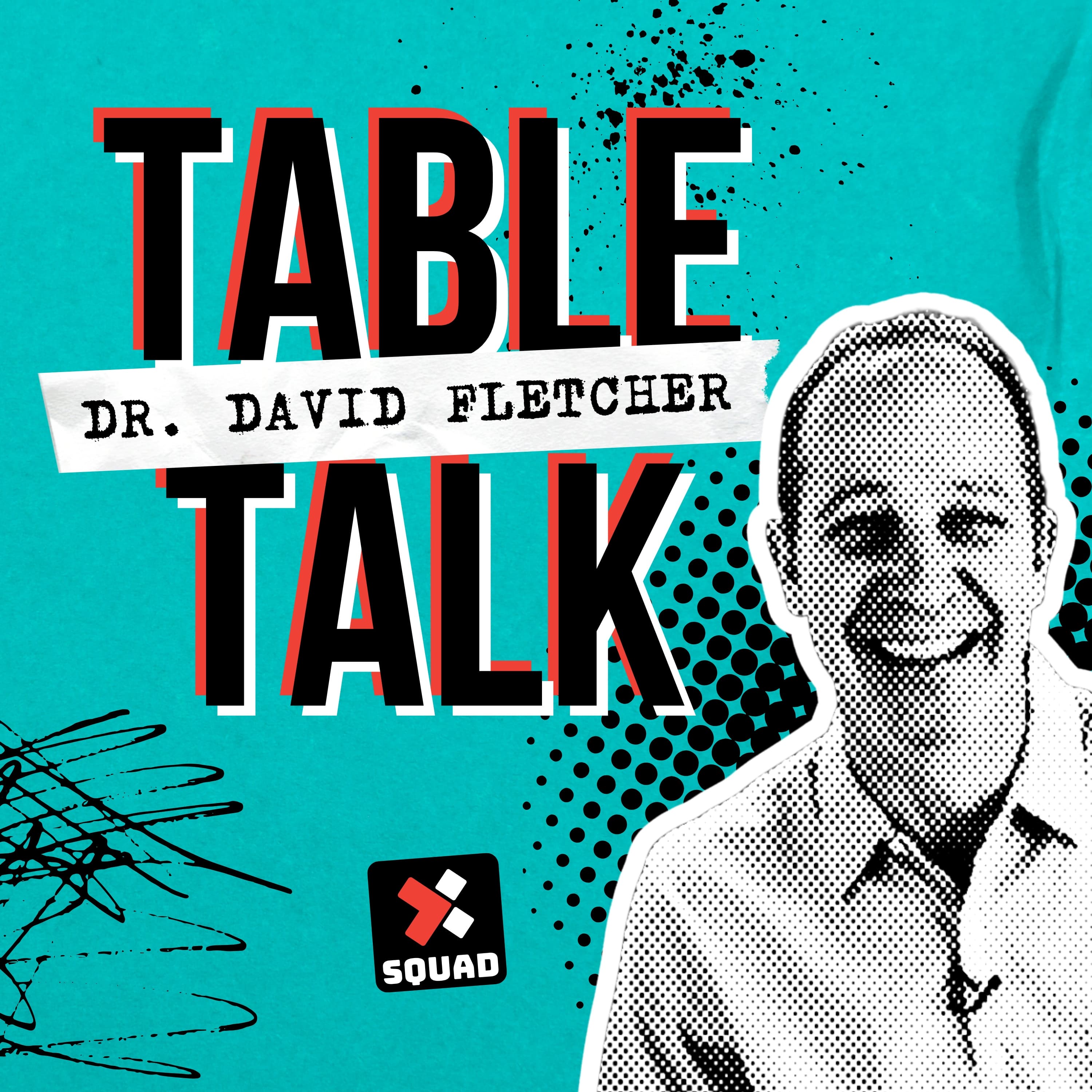
Clarity in Chiropractic: Chiropractic at a Crossroads with Dr. David Fletcher
Synopsis
Dr. Steve Tullius and Pacha Hornaday sit down with Dr. David Fletcher of CLA to discuss where chiropractic stands today, the profession's branding problem, and how shifting the conversation from symptoms to nervous system function can grow the field. They also explore how large scale scan data is being used to measure patient outcomes and what it will take for chiropractors to think bigger about their impact. The conversation matters for any subluxation-focused chiropractor trying to position their practice and their message for the future.
In this episode of Subluxation Squad, Steve and Pacha sit down with Dr. David Fletcher, longtime chiropractor and owner/CEO of Chiropractic Leadership Alliance (CLA), to talk about where chiropractic is really at and what’s holding it back.Dr. Fletcher shares how he went from a busy practice to leading CLA. With tens of thousands of offices using CLA technology and millions of scans flowing through their systems, he has a unique vantage point on what’s working in chiropractic and where the cracks are showing.He and Steve dig into what Fletcher sees as the profession’s biggest subluxations:A confused brand: mixed messages about what chiropractic actually is.A culture of fear: fear of using the word “subluxation,” fear around the cervical spine, fear of being “too chiropractic.”A crisis of self-worth and small thinking inside many chiropractors themselves.From there, they talk about how modern scanning and big data support the Big Idea showing changes in adaptability, coherence, and neuroplasticity over time and why exams and scans are the start of the journey, not the end. Fletcher lays out what separates thriving offices from struggling ones, why so many chiropractors underestimate how big they can actually be, and how often the real subluxation is in the doctor’s own mindset, not in the marketplace.
Key takeaways
- 1
Chiropractic's branding problem
Dr. Fletcher argues that one of the profession's biggest subluxations is a weak, inconsistent brand that fails to communicate its true value.
- 2
Shifting from symptoms to nervous system
The hosts discuss moving the public conversation away from symptom relief and toward a neurocentric understanding of subluxation and nervous system function.
- 3
Big data as proof of impact
CLA's millions of annual scans are presented as a tool for measuring patient adaptability and holding the profession accountable for real outcomes.
In this episode
Jump straight to any moment.
If you liked this episode, be sure to check out
Episode 33
Why Telling the Story is Hurting your Practice and the Profession with Dr. Martin Harvey
Episode 14
Optimizing Your Practice and Life with Dr. Liam Schubel
Episode 11
Making Chiropractic Relevant with Dr. Mark Romano
Episode 7
The Science of Chiropractic with Dr. Monique Andrews
Episode 4
What’s the BEST Chiropractic Technique?
Full transcript
Made by speech recognition, with names corrected. It may contain errors, so check quotes against the audio. Spot a mistake? Tell us.
0:00Chiropractic at a crossroads
Show intro 0:03
Every doc wants to make a bigger impact. What's getting in your way? You're tuned into the Subluxation Squad podcast. One squad, one mission, chiropractic for all.
Host 1 0:15
Hey, everyone. Welcome. Pacha, Dr. David. Excited to have this conversation today.
Guest 0:21
Oh, myself as well. Can't wait to rattle some cages.
Host 1 0:25
Yeah, yeah. Well, you know that I've never shied away from that
Guest 0:31
today.
Read the full transcript (5,391 more words, 11 more chapters)Hide the rest of the transcript
Host 1 0:31
You know, I'm super excited to have you on. You're our second guest. And when, when Pacha and I, you know, had the vision for Subluxation Squad, we envisioned bringing in visionaries in the profession, people who have had vast experience, and you certainly have had that. I think you mentioned the other day, 45 years in chiropractic. Is that.
Guest 0:53
Yeah, yeah, that's, that's, that's the number. As I was saying, maybe that, that is, you know, the. Get the old guys out first.
Host 1 1:00
Well, you know, I, I, there, there is something to say about wisdom, you know, that comes with experience.
Guest 1:07
Yeah.
Host 1 1:08
And so that's really why we wanted you on here today to share your experience in terms of where you see us going as a profession. You had mentioned crossroads. You know, we're a pivotal time at a crossroads.
Guest 1:23
We.
Host 1 1:23
And where do you see us? Where are we currently at? And what are some of the biggest subluxations that you see in the profession that are holding us back?
Host 2 1:31
Well, hold on, hold on. I think, I mean, maybe you assume that everybody knows who, you know, David Fletcher is, but I think for the people that don't, why don't you introduce yourself first and, you know, what you do and why, why you should be here.
1:46Pacha's origin story in chiropractic
Guest 1:46
So I'm this incredibly youthful chiropractor who started, started my university career when I was 12. And so I'm just kid. And so here we are having a conversation about sort of this journey. And my origin story within chiropractic is pretty standard because 45 years ago, you didn't choose to be a chiropractor. It was more like you defined yourself as a chiropractic possibility from your experiences. I was a child being checked and adjusted as in my early years, and I chose to be one. I, my origin story takes me, and this is important through a mathematics degree. And, and the reason that that's important is that it relates to the logic.
And so one of the things that I see as this intersectional moment within chiropractic is that the world is waking up in a logical way, not just a frivolous way to understanding the importance of what we do. Of course, it's up to us, Pacha, especially from a branding perspective, to brand ourselves appropriately into that time frame. But these are exciting times. So anyhow, during my journey, not only was I exceedingly busy and, and, and working within chiropractic practices and developing those, but I, I started to work with the Chiropractic Leadership alliance, or cla. And my mentors were Christopher Kent and Pat J. Tempo.
And as they decision themselves out of cla, I took over the role of. Of ownership and CEO of it. And we've been able to put a tremendous amount of development and advancement into the scanning technologies, but most importantly, engaging people in the profession to understand the value of moving the message of chiropractic far beyond, you know, how do you feel? But more importantly, how do you function for a lifetime?
Host 1 3:39
Awesome. You know, Pacha, thank you. This is why David, and David, this is why we do it together, so that I don't mess everything up. So now that you've shared that, and I can't wait to jump into
3:48Matter, force, and intelligence explained
Guest 3:53
the
Host 1 3:54
scanning technology and why that's so important, taking the conversation into function and the nervous system and brain, where do you see the biggest subluxations currently? Well, one, do you feel like we're where we need to be as a profession? And two, what's stopping us from getting there?
Guest 4:11
Well, I think that when we take a look at the grandeur of the message that chiropractic delivers, you know, we're not talking about being. Being limited to the symptomatology of helping people or even the pathologies of, you know, whatever, whatever organ system we're looking at. We begin with the end in mind. And the end in mind is huge, and it actually is. Is big life. And so, you know, if you take a look at the first four words of our major premise defines us really exceedingly well. It says a universal intelligence is.
It's not a statement of, maybe it is in all things and gives to it all of its properties and thereby maintaining it in its existence. But one of the things that we do have to realize more than anything is that at this intersectional moment, that is more relevant than ever because it uses the principle of intelligence. And if you look on the COVID of any magazine or you look at any. At any stock in the stock market or otherwise, the concept of intelligence is at the top and in front of everybody, albeit we're referring to it as artificial intelligence these days.
But the three most important things that define chiropractic application are matter, force, and intelligence. And the genius of chiropractic is this understanding that complexities in organizational modeling, especially in human condition, is under the guidance of an intelligent design. And so the more that we reference that at that intersectional moment that I'm talking about, the more that we allow ourselves to embrace what was embedded in our purpose and our culture, the stronger we become, you know, as a brand and the more we become defined as unique. So it's. It's a great time.
6:00Chiropractic's biggest subluxation is its brand
Host 1 6:00
Pacha, you know, I. I'd love you for you to chime in. You know, Doc, Dr. David just mentioned, you know, us as a brand new. As a brand expert. I'd love to hear what you. What questions you have for Dr. David.
Host 2 6:14
I love that you bring up branding, because I think one of the biggest subluxations that chiropractic as a profession has is its brand, because it's not defined very well, because chiropractors can't even agree on within themselves what it is. And then you see discussions on Facebook and in all the, you know, all the platforms where people are arguing with each other whether or not something is chiropractic or isn't. And I also. I also love the idea of bringing intelligence into it and logic, because when Dr. Steve, as my very first chiropractor, introduced me to chiropractic and explained it to me, that's what got me.
It's the logic behind it. It just made sense. And then when you, you know, when you. When you experience it, then you feel it too, but that's like a whole different thing. Like, you know. Yeah.
7:04Chiropractors defaulting to symptom based care
Guest 7:04
So you asked me what the subluxation is, and I'll be very direct with this. I think it's the fear of rejection. Okay. I think that most chiropractors are more worried about being friendly and being friends of the patients or being received as somebody who is responsible and logical, that they defer to the lowest common denominator, which is symptomatology. You know, they want to be. They want to be a helper of the person in front of them at the. At the expense of telling the whole story, which is what chiropractic really defines itself as. I mean, it is the whole story.
Host 2 7:43
Yeah. So you think it's fear, Fear of rejection?
Guest 7:46
I think mostly fear of rejection. You know, I think that many people who are in the profession are almost afraid to tell others that they're. They're chiropractors in social situations. And secondly, we know that the attrition rate, that. The attrition rate in new graduates, especially coming from, like, my alma mater was Canadian Memorial and at the time I graduated, it was a juggernaut of intellectual stimulation, meaning it was a great school. And in those 45 years, it's devolved into becoming a, you know, a, a physiotherapy organized approach. And, and, and they, they, they inject fear into it about using the term subluxation.
And they inject fear into their graduates about being like, you know, I refer to them as being like trained assassins if they look above T1, you know, don't palpate or even think of adjusting in the cervical spine. So there's this injected fear. And it comes at such an expense because chiropractic's message and its delivery is designed to be so simple to live on this complexity of the, the message we have and simplify it down to the power of an adjustment, you know, and, and now we're learning about what that really does at the scientific and, and research level. And it's, it's awe inspiring.
Host 1 9:08
Right.
Guest 9:08
It's jaw dropping.
Host 1 9:09
Well, you know, and, and so what you're talk. We're go back, we're going back to is, is a brand problem. Yeah, that, that whole segment within our brand, we're not speaking the same language. And they have no idea of how tremendous and how powerful an upper cervical adjustment could. Can be. And so, and even if we look at our methods, we're actually addressing different clinical entities. One a vertebral subluxation and one a spinal misalignment. Right. Where.
Host 2 9:42
Yes.
Guest 9:42
Completely different.
Host 1 9:44
Yeah.
Guest 9:44
I, in one of my, in one of my lectures, I have a quote from B.J. when he's doing Lyceum in 1933, and he said, you know, we can look at, we can. I'll paraphrase it. He said, you know, we can look at X rays, we can, we can palpate spines, we can palpate misalignments. And he said, none of those define a subluxation. All of those define a misaligned spine. And he was very clear that you had to interrupt the mental impulse to define a subluxation, meaning that there had to be a deterioration of intelligent response. And, you know, and that kind of opens the door for, you know, the conversations that I used to evolve with my patients.
I would sit patiently and listen to what they had to tell me about their belief and their, their reason why they came to a chiropractor. And instead of making them wrong, that's this invitational process. I would comfortably say to them, what I have learned and what I know to be true is that if the stresses in your Life, the traumas, the toxins and the thoughts that you' you've become used to have stained or embedded themselves in your nervous system, then we need to understand to what depth that has created change in your health. We use the scanning technology to begin that.
And if we find that there are interferences in your nervous system, then we can certainly help you. Let's begin with that. And that's the sort of branding that we would never dismiss the reality that they live in, but introduce ourselves to saying we're the experts at looking at the why or the cause of what's there and then bracketing it by saying if you, if indeed that is the case, then you're in the right place.
11:23Moving from spinal centric to neurocentric
Host 1 11:23
So you're, you're bridging the gap right here to the next question because we, we started to define the problem, some of the biggest problems, you know, fear, as you mentioned, having different conversations, having different conversations, thinking we have to meet people like fully on in their symptoms. And now you're bridging the gap. And so, so now what, what are some of the ways that you, through CLA and other methods are, you know, correcting these subluxations in the profession?
Guest 11:57
Well, I think that number one certainty or clarity is, is the driving force for the, you know, for the end product that we're going to see, which is chiropractors being more productive and more capable, giving them the tools to know that they're, they're absolutely seeing what they can't see with their fingers or their hands or their eyes, meaning looking deeper into the system. That's, that's the whole essence of, of analysis in these complex systems. These complex systems, the intelligent design on them is hidden beneath many, many layers of structure and function.
And so one of the things that, that defines us clearly in a vertebral subluxation model is, is that there is interference in the organizing capacity of the nervous system, not of the spinal system, but of the nervous system. And so the faster and the deeper we get into functioning in the nervous system, it means that we control the message from that point forward. And that's why we dedicated ourselves to developing the scanning technologies that were super easy to present. We're repeatable, valid, reliable, you know, all the hallmarks of a scientific design. And then we, we put those into the market space and, and Paget.
This is where we started to see that the brand of chiropractic then became a neurocentric conversation instead of a spinal centric conversation. And that was a huge shift in that process.
Host 2 13:25
Yeah, the idea is to make the. The conversation easier, to shift it from the symptoms to the root cause of the nervous system.
13:36Measuring adaptability through scan data
Host 1 13:36
I'm interested in hearing your experience because when you came to me, I had that technology that was. Do you remember. Was that a big part of.
Host 2 13:44
Of why I actually don't remember ever being scanned. And none of the chiropractors I've seen since have ever. I have not had the pleasure of an inside scan, so I don't remember that you did that, to be honest. I mean, it is 15 years ago,
Guest 14:02
but we've got work to do then. But, you know, it's interesting. We were looking at some statist statistical relevance near the end of the year here. And, you know, you try and see whether the. Whether you're moving a needle or not. And right now, we were saying on a previous conversation, Steve and I, that, you know, we. We now are in 30 different countries with this. And I just looked most recently, and we're. We're gathering through our servers now somewhere close to 6 million scans on an annual basis. So we're talking about huge numbers.
Like, one of the things that we, we help our doctors, but I want all chiropractors to do this, is that the experience of scanning a person or examining a person is the start of the journey, not the beginning of the end of the journey. Meaning that the relationship is that we need to understand the adaptability in the nervous system. And as a consequence of that, we encourage everyone to not only take, to remove themselves from the symptom process, to not only get a baseline of where you meet the person or even a progress exam, but to define yourself.
And this is the fear model is to go to a third data set, because by the time you take a third data set, you can observe trends and adaptability. You need three consistent data sets. First data set is baseline. Second data set defines the relationship of changeability. Look, it's not all unicorns and roses when you walk into a chiropractic office. Meaning just because you made a decision to be under care doesn't mean your body or you are ready to accept the full power of chiropractic. So we need to refine ourselves and call ourselves out and hold ourselves accountable to moving the needle for each and every patient.
And one of the things we're so proud of in the scanning world is that we open this up to all four generations, if not five generations of every family. You can't really understand a patient's nervous system in a. In a newborn or an infant by simply palpating you have to be able to measure it.
Host 1 16:05
Absolutely.
Host 2 16:06
And I, I would, I mean, I don't know. Again, I'm the non chiropractor here, but I would even say, especially when it comes to newborns and very small children, that not just knowing what's going on in their body, but also what's going on in their mom's body because they have such a close relationship and if they're nervous system is whack, then that probably affects the child as well. I, I have a follow up question because you mentioned the immense data set that you have in terms of the scans from all the clinics across the world that are working with cla. Do you.
I'm not sure they'll ask this question when, when I understand how doctors are using it for each patient. Right. Like you measure before and you measure again after a while and you see this trend. Right. It would be really helpful to be able to, to look at it across your whole entire patient base. Right. And compare trends within your clinic and then even for the, for the entire profession. Is this something that you look at like this data and say, okay baby,
16:30Using big data across the profession
Guest 17:20
we are so, we are the darlings of the research community because as we began this conversation, we've entered into the realm of machine learning and artificial intelligence. And one of the things that drives that outcome is big data. And as a consequence of that, you have to remember that we have a consistency in the way we teach and train our doctors to use the technology. So there is a consistency in outcomes and reliability.
And when we start to take a look at, you know, in office trends, or in community trends, or in country trends, or in world trends, it's obvious what is happening and that is that, you know, the tide is rising, all boats, meaning it doesn't matter where you are. If you are under chiropractic care and you are starting to have a consistency of care with that person, neuroplastic shift is guaranteed.
And the second thing that's guaranteed is the principle of coherence, which means that not only is the nervous system shifting and a stickiness in that change is absolutely occurring, but it means that there is greater socialization, that there's greater harmonic relationships interpersonally. That's the principle of coherence. It's what we always dreamed of, is that if you have a subluxated human being, they're a disturbance not only to their own health, but to their community. And so we want to, we want to show and, and coherence is very, very responsibly measured, especially when you're looking with big data sets.
So this is, this is where the world is going within chiropractic. You know, it's up to us to keep it going.
Host 2 19:03
Right.
Host 1 19:04
That's amazing, David. You know, there's. When I hear you talking about it, I just hear the big idea.
Guest 19:10
Right? That is the big idea. Yeah.
Host 1 19:12
Airman, woman, child check from birth throughout a lifetime, we would have a massively different planet. And that's why we do what we do. That's why you've been doing well. You can't, you can't do anything else besides you can't retire, right?
Guest 19:23
I don't know. No, I'm, I'm. I'm trying to do that. You know, ageism, you know, cloning principle. Now there's so many people that, that could, could take the reins of this, because one of the things that we've done is that we have standardized the process to allow chiropractors to literally have this type of conversation within their own offices. There's no reason why somebody who pokes their head up in a leadership role couldn't understand the power of what we're talking about today.
19:55Why chiropractors underestimate their potential
Host 1 19:55
David, I have an. What I feel is a really important question. What. You know, you've worked with so many chiropractors. You know, I mean, how many chiropractors do you think you guys have worked?
Guest 20:07
Oh, I mean, we have. We have close to 20,000 installations.
Host 1 20:12
Okay. So you've seen offices, you've seen those that are just thriving and doing amazing. You've seen those that are. They get stuck somewhere in a certain range of, you know, patient volume. And, and then you see those who, who, they start to come on board and then they stop, too, I'm sure.
Guest 20:32
Yeah. Oh, absolutely.
Host 1 20:34
What, what is the. What's the common denominator for those that are thriving and what is the biggest subluxation in the mindset of the chiropractors who are stuck?
Guest 20:48
Yeah. There's no question that given the tool that we can provide them and allowing them to. To operate it simply and effectively in their office, we know that the limitation is literally the subluxation between their ears, meaning that they have to make a choice. And, you know, I, you know, I, I have said this from the stage. I said, you know, do not blame chiropractic for where you are in practice. Meaning it's just waiting for you to understand the big idea, to understand the principles that drive us. You know, it's, it's the biggest challenge is that chiropractors don't understand Understand how. How big they can be. And so they.
They dwell on the. All their limitations and their failures and the. The difficulties. I hear so many of them saying, well, you know, I didn't. I didn't go to business school, so how am I supposed to run a small practice? And the answer is, we'll figure it out. You know, I mean, like, like you've got this thing called chiropractic, which is this golden goose. You just have to. Just have to use it, and you will be the most successful person you've ever wanted to be. It's up to you. It's not up to chiropractic. So the easiest thing for me to say is we need to address those fears that I said beforehand.
The fears of rejection, the fears of insufficiency. We need to slay the people who. Within our own profession. You know, Larry Marks and always said it best. He said chiropractic is the only profession that circles the wagons and fires inward. And as a consequence of that, we need to stand our ground. We need to have the strength of community, like the IFCO and other organizations that never budge from the principle. And we need to.
Instead of fighting fights, which is what you said at the very beginning here, both Patch and Steve, we need to create an invitational experience so that everyone understands that they're not wrong, they're just not there yet. And we're too small a profession and too young a profession to keep fighting amongst ourselves. We have to. We have to stop the straighten mixer fight. It's just not. It's just not healthy for anybody. You do you. And we do we. And you know what? We're all under this umbrella called chiropractic. If you define the vertebral subluxation, well,
Host 1 23:16
I'm with you 100% on that. And I feel we are moving away from that straight versus mixer conversation. Prior to us getting on, Pacha and I were talking about, you know, the. The. The focus, middle, broad scope. But then we have this. This. What I call this bastard hybrid, that. Which involves drugs and surgery, and that's a whole nother.
23:24Maturing as a profession and leading with certainty
Guest 23:36
That's. That's out there. Yeah, right.
Host 1 23:38
And. And so maybe we'll have you come back, have that conversation, but, you know, we. What I'm hearing, and I agree is that we need. We need to grow mature. And you certainly have helped me do that because I. I was part of the problem before with the judgment and the shaming and things like that, and I've grown out of that. So I, I appreciate you for being A. A beacon of reason and tolerance within our core values.
Guest 24:10
You know, you don't have. It's. It's so interesting. I was, you know, one of. I, I actually learned directly from Wayne Dyer in the early days. And, and, you know, there's. There's this sense of. Of tolerance and peacefulness when. When you are certain of the outcome, you can afford to listen to others. And this is such a powerful principle, is that no one is going to move you off your mark. And so you can just listen to people and then find the reason that they should listen to you. And it's so critically important to realize that you. People sometimes see that as a weakness, that they. That they don't fight for their values.
And it's exactly the opposite, is that you. You are fighting, and they are not even realizing how strong you are influencing them. And we see that every day in meeting strangers. And, you know, the people that come to us in need, well, here's an example of fear, okay, is that a patient will come to us and have a wonderful experience, and they'll say to the chiropractor, hey, listen, would you mind calling my family doctor and tell them what you found? Because this is what's really made a difference for me.
And I can promise you that nine out of ten of those people that are asked that request will defer and say, well, why don't you tell them yourself? Or, I don't do that. Or, you know, I'm not really the person to do it. Whenever anybody asked me to do that, I would say, sit with me and let's talk to him together or her together. You know, in other words, I want to. I want to define what we do. Not because it was good for my practice, but because it was good for the world. If, if you are the leader of that message, they are going to respect you so much more than being the person that hides behind it. Love it.
Host 2 25:58
For me, that was really why I started working on the chiropractic manifesto, because I worked with so many chiropractors who probably would all claim they're all different and they need. They need to be all different, you know, looking out in terms of branding, because you need to differentiate, right? But there is an underlying message that they all repeated to me over and over and over with different words and, you know, slightly different, slightly different, but there was this underlying message, and I was like, well, is there such a thing as an industry brand? And I think there is.
And that's what I was trying to define from the outside, because I was not a chiropractor. This is what I kept hearing. So I tried to write it down, and I'm trying to find this now with Steve together. It's like there's got to be something where we can say, this is it. This is the foundation of it. And we layer our own stuff on top. No matter whatever technique you're using, whatever other therapies you might want to bring into your office, because they support what you do for your patients. But. And I think that's. That's what you're saying, too, we need to define the underlying.
Like, what it is, what's the subluxation, what is chiropractic? And in reference to that. And then we work from there, and everybody can add their piece to it, but the foundation needs to stay the same.
Guest 27:21
So two quick points, because I know we're running into the. Into the time slots here, but two quick points is, number one, we have a cla manifesto. I'll send that off to you so that you can see that we actually have it printed on T shirts for our clients. The second is that David Russell, one of my great friends, did a study on looking at the semantics and the logic and the conversations related to chiropractic branding wise. But more importantly, 88% of those polled chiropractors recognized the term vertebral subluxation and used it consistently. So even though there is a small group or a growing small group of people that deride the.
The principle of the subluxation and refer to it as a historical side note and everything else, it really is a beautiful term. You have to learn about it and otherwise. But listen, if you're not there yet, the essence of a subluxation can be brought down to common denominators like the nervous system, like distress, like the fact that there is the activity of poor performance in the nervous system. I don't care how you define it. As a clinician, it makes my life easier if I define it as a vertebral subluxation. All right, that takes us to the
28:33Rapid fire questions with Dr. Fletcher
Host 1 28:36
last couple minutes here. We have some rapid fire questions for you.
Guest 28:39
Yeah, let's do it.
Host 1 28:40
All right, so describe chiropractic in one word.
Guest 28:45
Exceptional.
Host 1 28:47
Pacha, you want to take the next one and then. All right, three people that we should invite next.
Host 2 28:56
Oh, yes, that's a good one.
Guest 28:57
Oh, no question. I'd love you to invite Phil McMaster, who is the. The president of New Zealand College. Great, great, active, active person. Travis Corcoran, who is a fighter. And you know what? I'm going to say is. I'm going to say somebody who's big in pediatrics, Tony Evil. You know why? Because he gets the principles.
Host 1 29:20
Absolutely. All three. Fantastic. And all three are on our.
Guest 29:23
Our list. I was on a call.
Host 1 29:25
I was on a call with Phil McMaster last night. You want to take the next one?
Host 2 29:31
Yeah. What are you most proud of?
Guest 29:33
Oh, my three children by far. You know, the relationship that allowed me to create what their. Their. They're, you know, adults now. To great, great citizens. They're beautiful people.
Host 1 29:49
Awesome. If chiropractic was an animal, what would it be?
Guest 29:54
It would be a wolf. Because a wolf not only is powerful in its environment, but if you look at a mother wolf, it nurtures and allows. Allows the pack to grow.
Host 2 30:06
And it's a. You know, they are lone wolves, but it's in the end.
Host 1 30:09
That's right.
Guest 30:09
They're lone wolves, but they're bigger and better in a pack. Totally.
Host 2 30:13
I love that. What's one thing that nobody knows about you?
Guest 30:17
Oh, that I am a frustrated but loving rock climber. I never do enough of it. And. And I love myself when I'm rock climbing. Awesome.
Host 1 30:30
What. What conversation is. Is not happening that we should be having on this podcast.
Guest 30:37
You know, that's a great one. I think the conversation needs to. I wouldn't say you haven't done it yet, but you can grow upon it is the sense of empowerment. And when we use the term empowerment, it means that. That we challenge people. So asking harder questions and challenging the guests to dig deeper.
30:48Empowering guests to dig deeper
Host 2 31:03
All right, I'm gonna make you dig deeper.
Guest 31:05
Like, especially branding. Good Lord. I know so little about it because here's what I know is that I never needed to advertise. My practice was always completely loaded full. But I didn't. Never knew why.
Host 2 31:19
Because you had a good brand. Branding a great brand.
Host 1 31:21
Exactly.
Host 2 31:22
Isn't the same thing. Yeah, that's a good conversation to have.
Guest 31:25
Dude.
Host 1 31:26
The script you. You shared with us, you know, which I'm sure you used over and over and over.
Host 2 31:30
Yeah.
Host 1 31:30
Was fantastic.
Guest 31:32
There you go.
Host 2 31:33
All right, last one. Show us something you have on your desk or someone close to you that has significant meaning until.
Guest 31:42
Absolutely. I have two books. Well, I have all my stack of books here that I reflect and refer to. And here they are right here. Puzner and Cos is the Leadership Challenge. It's one of the most seminal books that you need to read when it comes to that one Cause One Cure, which is Fred Barge, the Brain's Way of Healing Deutsch who talks about neuroplasticity, the wisdom of the 33, which is. I was an author of one of the 33 and the meaningful Chiropractor by a colleague of mine in Canada, Tom Presley.
Host 1 32:17
Amazing. Well, this was a fantastic episode. Thank you. Dr. David, thank you for everything that you have done and are doing and will continue to do to advance our profession. And we will definitely have you back. If you'll join us again, just let
Guest 32:33
me know and I'll be here. Thank you both for doing what you're doing with the Subluxation Squad. Critically important work. Thank you.
Host 2 32:41
So great to meet you.
Guest 32:43
So nice to meet you as well. Pacha and Steve. It's always great to connect with you.
Host 1 32:48
Absolutely. All right, take care. Bye.
Guest 32:49
Be well. Bye. Bye.
Subscribe and review
If this hit, help another chiropractor find the show.
If you love this episode, please take a moment to subscribe and leave a review on Apple Podcasts or Spotify. Your support helps us reach more chiropractors who need these insights. Thanks for tuning into the Squadcast. See you next week.