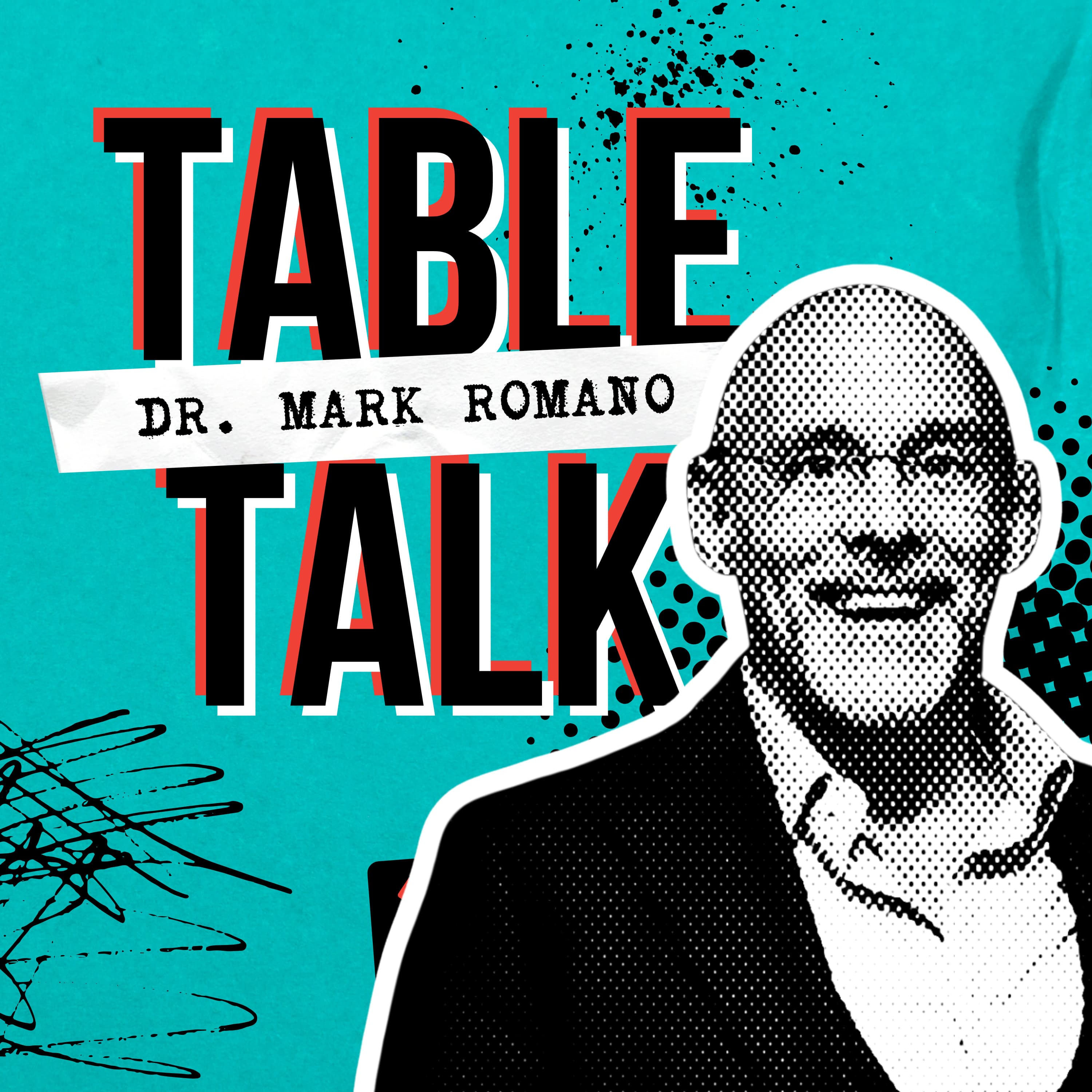
Synopsis
Dr. Mark Romano joins The Squadcast to unpack the non-therapeutic model of chiropractic, tracing its roots from D.D. and B.J. Palmer through Reggie Gold and explaining how it differs from treating disease. He shares how this philosophy shaped his referral-based practice and the core values behind it, then discusses the profession's public perception problems and the shortage of chiropractors worldwide. The conversation gives practicing chiropractors a clearer framework for explaining subluxation-focused care to patients and colleagues alike.
Dr. Mark Romano lays out what he believes makes chiropractic relevant to the modern public: a clear identity, a consistent message, and communication that stays congruent with what chiropractors can be absolutely certain about. He contrasts a non-therapeutic chiropractic (NTC) model focused on locating and correcting vertebral subluxation for fuller expression of life with the common symptom-outcome framing that can unintentionally turn chiropractic into just another therapy. The conversation moves from chiropractic history and philosophy into practical realities: how to talk to pain-driven people without making promises, how to build an “oversubscribed” practice through congruence and reputation, and what an “unsubluxated profession” would look like if chiropractors aligned around identity and message.
Key takeaways
- 1
Non-Therapeutic Chiropractic Explained
Dr. Romano traces the model back to D.D. and B.J. Palmer and Reggie Gold, clarifying that true chiropractic was never about treating disease but about correcting subluxation and letting the body heal.
- 2
Referrals Over Crisis Care
Romano describes how framing chiropractic as a lifelong habit rather than a pain-relief service has built a practice sustained almost entirely by patient referrals.
- 3
The Profession's Perception Problem
The hosts and Romano discuss how the public still equates chiropractic with back and neck pain relief, and why the Subluxation Squad exists to correct that narrative and grow the profession.
In this episode
Jump straight to any moment.
If you liked this episode, be sure to check out
Full transcript
Made by speech recognition, with names corrected. It may contain errors, so check quotes against the audio. Spot a mistake? Tell us.
0:00Meet Dr. Mark Romano
Show intro 0:04
Every doc wants to make a bigger impact. What's getting in your way? You're tuned into the Subluxation Squad podcast. One squad, one mission. Chiropractic for all.
Host 1 0:16
Welcome back, everybody. Back to the squad cast. We're live today with Dr. Mark Romano. Welcome to this podcast.
Dr. Mark Romano 0:26
Thank you for having me. Thank you, Pontia.
Host 1 0:29
So for those of you know, for those of you that don't know, Dr. Romano, would you introduce yourself and you know, tell us a little bit about how you got to where you are right now, like how chiropractic found you. Really?
Dr. Mark Romano 0:45
Awesome. Awesome. Well, I can't believe there are people out there who don't know me, but in just in case, my name's Dr. Mark Romano. I've been practicing chiropractic. Privileged to practice chiropractic since the end of 1993. Graduated from Palmer College of Chiropractic in Davenport, Iowa. You know, I love being a chiropractor. It's quite the privilege. So read a book years ago in the 1980s by Franco Colombo about bodybuilding and he ended up being like Arnold Schwarzenegger's best friend.
Read the full transcript (6,842 more words, 11 more chapters)Hide the rest of the transcript
Dr. Mark Romano (continued) 0:45
And he was a powerlifter, bodybuilder, Olympic weightlifter, boxer, quite an outstanding athlete. And he was a chiropractor. And the one thing that he said that changed my life forever was that bones in your spine can misalign and produce nerve interference and that interferes with life. And I helped your body adjust that. And as a 13 year old kid, I went, man, I'd go every week if I could afford something like that. I can't tell you why, but I just resonated with me. And you know, growing up in Boston, people can be wonderfully brutal.
And you know, I was good at sports, I was not good at school because I didn't have any purpose for being in school. School was the way to go to play hockey or something like that and, you know, have friends and talk to girls. So. But the minute that I realized I wanted to be a chiropractor, I realized nobody is going to be surprised if I fall flat on my face because they tell me all the time how I'm not very bright, so I'm just going to shoot for the stars. And then once I got a purpose, school became very natural and enjoyable because I had a purpose or reason for being there. So, you know, we can go into how our educational system is now.
We can definitely have a wonderful discussion there. But now, and you know, in chiropractic you go around the world and you're taught all these different things and at best it's extremely confusing and hopefully we'll get into that. But now I practice in the NTC or the non a therapeutic model where I serve people in the same way that I would my own family. So my practice is my family.
I'm highly selective on those who are letting my practice because I want Everybody to be 100% a buy in and very passionate and excited about being a part of this wonderful mission and, and also I love to help build other chiropractic offices in my community and around the world, which brings me here talking to you wonderful folks.
3:26Origins of Non-Therapeutic Chiropractic
Host 2 3:26
Awesome. Thank you. Dr. Mark, appreciate hearing your backstory. I wasn't aware of that and it's really enlightening to hear, you know, how everybody gets to this, this thing called chiropractic. So, you know, I want to start off by talking about the, in, you know, this non therapeutic, you know, philosophy and approach that you represent. You're one of the leaders in it. Maybe tell us a little bit more about, you know, what that is versus traditional straight chiropractic philosophy for those who aren't aware and who some of the, you know, who developed the ideas and then we can go from there.
Dr. Mark Romano 4:03
That's great. That's great, Doc. And we're going to go into that. You know, let's go into the history. As controversial as this may be, when we look at the origins of chiropractic that started in 1895, as we know, Dee Palmer discovered it and his son B.J. palmer developed it. Maybe B.J. was in the room during the first chiropractic adjustment. Maybe he wasn't. I actually have an interview yesterday that was with a Dr. Jonathan glare and wonderful guy. So what I would say is check out that, because in Dee Dee's writings he said he was alone. In B.J.'s writings he said he was there.
And one of the questions that was proposed to me yesterday, and he's like, well, Didi said this and do you think he was lying? And I'm like, I don't think so. But then if you look back at the history, somebody was lying, okay? And it is what it is. And you know, people write history through their perspective. Maybe B.J. was hiding and Deedee didn't see them. Anyway, Dee Dee died in 1913, in 18 years at a wonderful foundation at which B.J. continued. Chiropractic unfortunately started in what's called physical medicine, that the vertree, the vertebral subluxation, which was the common theme even up Till today.
I wish they came up with a better term, but I really love that term was the focus of getting sick people well and keeping the well from getting sick. And of course, if you read DD and B.J.'s writing, everybody got well. And so chiropractic was the cure for everything. Even B.J. Palmer's technique that he developed in the late 30s and arguably for the rest of his life, the HIO, which was hole in one, which was the whole. Everything comes down to the upper cervical. This is the cause and cure of all disease. And even he would even.
Host 2 5:59
Wait, wait, Mark, I gotta stop you there. Because, because, because he, that's not what he actually said. You know, it was, this is, you know, there was so much context that's being left out. It was always clarified that it was not the treatment of disease. It was removing interference to the expression of life, the, the innate, the mental impulse, allowing the body to reorganize and heal itself.
Dr. Mark Romano 6:24
So, so it's still the same thing. It's still, you're still in healing and even. Okay, you have a legitimate argument, but I would go back and they use the term disease. I don't know why they had to use that term. B.J. in his green books did use it interchangeably with disease. And if you look back in volume 18, the only. Yeah, no, yeah, we're gonna go. Oh, we got plenty. We got plenty, though. If you look back in volume 18, there are 3500 conditions, is the only book B.J. said to read three times. There are 3500 conditions that got well under his care.
Host 2 7:00
Okay, so let's take a step back. Dis ease, lack of ease. You know, that there was very, it was purposely chosen to use that now, and disease was used at different times. Now. Let me ask you a question. If there is dis ease long enough, if there's interference to the expression of health and life, you know, caused by vertebral subluxation, if it's there long enough, does that lead to the pathological phenomenon known, known as disease?
Dr. Mark Romano 7:27
Possibly. And we're going to get into that. So hold that thought. So I'm leaving a lot out. There's no doubt. And, and keep in mind, like you, I love this and I love these conversations.
Host 2 7:38
I love this too. I, I, I know you do.
Dr. Mark Romano 7:41
And it, and it's mutual. You know that, Stephen. You know that. So I'm le out because we got a half an hour. We're going to go and we're going to debate this too. So at any rate, you know B.J. had his research clinic was which was proving chiropractic by medical means. And that was from 1935 to 1951. B.J. did come close to leaving the therapeutic model when he was defending chiropractors for practicing medicine without a license. And that's where it really became evident. And I'm not saying Didi didn't do this too, but to keep chiropractic separate and distinct.
And so as we progress, you know, even when I went to Palmer and I've read all the green books, I've read all the green books from volume 14 on, I'm going to revisit parts of and probably the whole books. I've only read parts of The Chiropractic Adjuster Volume 10 by Dee Dee Palmer. So I, to be fair, I have not completed that book, but I have researched it. So I am going to read that book. And with that being said, when you had Reggie Gold, that was in school and Reggie graduated in the 50s, so B.J. was still there and he was in and out. Because from about 1951 to 1961, B.J.
did spend a lot of time in Sarasota, Florida and he was back and forth. Arguably a lot of the history would say that B.J. really did not want the school to be handed over to his son David. And there were changes there, good or bad. I think all the Palmers did contribute something that was very important, including their daughter Vicki, David's daughter, who was chairman when I was there in school in the 90s. So now Reggie comes out into practice. And what Reggie notices is that not all sick people get well when an adjustment occurs and not all people who are well stay well under chiropractic.
And Reggie notices that everything is regardless of what people may be going through physiologically or medically. Everybody lives better when vertebral subluxations are adjusted and for no other reason. And that was the birth of what we would call today non therapeutic straight chiropractic. Now, Joe Strauss, in his amazing blue books, tried to classify chiropractic into three different categories. An authoritative phase, which is where you follow Dee Dee or B.J. to the very end. A traditional phase is we've done this with the vertebral subluxation. This is the tradition of chiropractic and we're going to hold on to that.
All of these are legitimate arguments. And then the third phase would be the objective straight that your objective determines what you are as a chiropractor. If your objective is the adjustment of vertebral subluxations for a fuller expression of innate impulses, then that would be what we would call a straight chiropractor. If the objective is getting sick people well, keeping the well from getting sick, that would fall into the therapeutic model. So Jim Healy later on, and even Claude Lassard, who's continued with the blue books, said, look, there is too much that is unclear. Chiropractic is in two models.
And to this day, there's two models. There is a therapeutic model in which chiropractic is used for healing, health, the treatment of symptoms, conditions, and it can be conservative or it can be liberal. And then there is this group of chiropractors called ntc, Non Therapeutic chiropractors that our focus is exclusively the adjustment of vertebral subluxations for a fuller expression of innate impulses, totally disassociated from any physiological outcome, because you cannot correlate a vertebral subluxation to any specific physiological function in the body. And we would go so far to say to do so crosses the line into therapy.
And that's the short version, as best I could. Fire away.
7:51BJ Palmer and the Birth of Straight Chiropractic
Host 2 11:44
No, that was great. It is fantastic way to describe everything. And so the. I guess I'm going to take a step back because I, I have a lot to say on this. I want to hear from, from the branding expert here, what, what questions do you have for this model? And, and just for Dr. Romano in
Host 1 12:03
general, that was a lot for me just there. I mean, you know, I'm not a chiropractor, so I'm familiar with a lot, but you know, the whole history and like all this, it's like, okay, I think I get the idea, but I'm wondering how you, how you communicate that. Like you, you were saying in the beginning that, you know, you don't even want to take on patience, that don't get it or don't agree with it or, you know, whatever the line is. Like, how do you, you know, how do you. Well, first of all, how do you communicate this versus, you know, especially to somebody who comes in, says, well, I have a pain, you know, can you help me?
And where do you draw the line? Is it really like, you know, it's, it's this message or nothing or like, how much are you working there with people?
Dr. Mark Romano 12:58
Well, first of all, you obviously know a lot about chiropractic because these are excellent questions, okay? And these are very pertinent to the successful office. Now, I do teach chiropractors the art of communication and of course it's specific to this model of chiropractic ntc. When we're communicating, there are universal principles. So when a person comes to see me, before that ever happens, the chiropractor must decide certain things first. The chiropractor must decide. How do you define chiropractic in your office?
I read a quote by Fred Barge, and I was very privileged to have lots of conversations with Fred Barge, and I did always enjoy his animation. He did get frustrated because I was so aligned with the blue books of Joe Strauss and he would call them Straussisms. Mark, you're so focused on Straussism because Fred Barge wanted to reach the world, but he wanted to do so incorporating chiropractic into a medical type system. One of the genius things that I just saw him quoted was when we left the definition of chiropractic to state legislature, he saw that as being a very bad thing. B.J. Saw that as being a bad thing. And they both were right.
Okay, so I'm going to go so far as to say, in more controversy coming your way, that the Wilkes case did more to hurt chiropractic than help chiropractic. So with that being said, it is inevitable that a chiropractor, whether they do so consciously or not, is going to define chiropractic in their office. Once you define chiropractic, you now have a scope of practice, and then you have the structure built around that. And I've. Steve, I've heard you talk many times about structure and how important it is. And it is very important that you have to have a solid structure. And that structure is. Okay, we're going to.
When a person first calls the office, from the moment that you meet somebody out in the community to the point that they call your office, you schedule your. Your consultation or orientation and then how you proceed forward. And it has to be 100% congruent with. With the chiropractic tenant. One of the things Claude Lassard has done that I love is he's taken the 33 principles and make. Made them a basic science concept as opposed to a philosophical concept. So that, to me is extremely important that you must always be congruent with, with these tenants of chiropractic. Now, once that's being said, people come into your office.
Now, I've been in practice for 33 years. I'm so excited to give this message. And I think there has to be that excitement and that resonance and that congruence, because I do have a definition of success, which I'd be glad to share. With you. So when a person comes into my office now, people resonate with you. I know Joe Strauss in his books try to say, oh, you don't want to build a practice on personality. And I'm here to tell you that's the only way to build a practice. People are going to come in because they love you.
And my intent when I'm teaching folks is that you want to be oversubscribed, that you want people unbelievably, fanatically excited to have you as their chiropractor. And you want more people to want you in regards to that service than you could ever provide humanly possible. And that's how you become oversubscribed. And this is the means to true success. So when a person comes in, the vast majority of my practice now is built on referrals, as it should be. I don't really require a whole lot of new people. In fact, even in my peak times, I really don't want to see more than three to five new people a week.
I want to sit down and I want to vet them and I as they're explaining why they came in. And the more that you're congruent in how you give your message, the more you're going to find people that resonate with that message and are going to start to come into the office. In our office, we look at chiropractic never as a crisis service, never as a treatment service in any way. So when folks come in, if somebody calls me up and they says, hey, Mark, really want to come into your office? My family's been coming in, my uncle, and I really want to get this habit. That person's probably going to come in within 24 hours.
Now if somebody calls in and they're in massive crisis, they're going to be longer to educate. So I'm going to set more time aside. It's going to take them longer to come in and I'm going to let them know on the phone that this is not a crisis service, that there are other things you may need and that we're glad to see you and that we need to sit down and talk. It's so important that we don't even charge for it. And I remind them that this is not a crisis service. So I'm vetting before people even come in the office.
Now, once people come in the office, I have a wonderful communication process that on my institute, NTSC Institute, I've broken down the whole communication process from in the community to on the phone to when they're in the office, in the consultation, into the opening to the sale, to the close, and how you loop it back into the sale and then from there sharing everything as congruently as possible. If they say no, I'm going to think about it. What they're really saying is you haven't given me enough information. I bring it back into the sale and then from there, now I'm looking at it.
Is this person ready for what we have and are they excited about it? And I'll always give them a chance. Now, does that mean you have to sign up for life right away? No. If I'm uncertain that they're really bought in, I'll stop them on a form, a three month program. And during that three month program and of course chiropractic.
15:26Building a Practice on Referrals, Not Crisis Care
Host 2 18:41
What's, what's going on? So during that three month program though, like what's, what's the end result? What's the goal?
Dr. Mark Romano 18:46
Well, the goal is always to have this as a habit for the rest of your life.
Host 2 18:50
Okay, so, but, but then, but what's the res. What's the result that they think that they're going to get in three months?
Dr. Mark Romano 18:57
That. Well, no, they're not going to get any result in three months. They're going to get educated. That they're going to get educated. The result is one thing, and that's a very good question. The result is the adjustment of vertebral subluxations for a fuller expression of life or innate impulse. How that manifests in any human being is impossible for any chiropractor to say. Logic tells us it will make your body stronger over time. We simply can't predict how. And here's what's crazy. When I educate the public on this, they're like, yeah, that makes sense, I get it.
Host 2 19:30
Yeah. And I use some of those same, you know, people ask all the time, hey, what, Doc, what should I expect? What results? Hey, hey, hey, Mark. No doctor could possibly know exactly what any form of care they apply is going to bring about in terms of the exact results. However, we should expect phenomenal results. You know, if we see clearly there's a massive subluxation in your spine that's interfering with the messages that travel from your brain to your body. Your body to your brain. Those messages that, that rebuild your body constantly.
Then let me ask you, which way do you think you're going to go towards more dysfunction symptoms, dis ease or degrade levels of health, healing and restoration? Like so I guess my question to you is what's the difference between that and the non therapeutic approach.
Dr. Mark Romano 20:15
Well, there's a lot of difference when you just said I will, I'll talk you through. Wait, I'll talk you through what you just said.
Host 2 20:20
Yeah, we, I got. But so I just want to let you know I have a hard stop in three minutes. I'm gonna let you go, then Pacha is going to continue and then we're going to bring you back, Mark. Because yeah, this is part one of nts because we gotta, we gotta go dive into it deeply.
20:29Two Models of Chiropractic, Therapeutic and Non-Therapeutic
Dr. Mark Romano 20:35
Absolutely. Because when you said that no doctor can predict how you're going to feel however. However in the word but do two things. They erase whatever comes before them. So you erase that and then you gave a therapeutic message when you talked about health and healing and all these things being better. Maybe they will, maybe they won't. Maybe they don't have a heart attack 20 years from now. And that's something you could never prove under. Anyway.
Host 2 20:59
That would be illogical for me not to expect a neurophysiological outcome, improve physiological outcomes that equates to better function, which means better expression of health and life. Like I, I don't see. Like you, I just don't see how what we're doing isn't this very, very, very similar and well, within the scientific and philosophic bounds of chiropractic.
Dr. Mark Romano 21:28
Well, there's no doubt that because chiropractic legitimately has two models, I can argue from either side that therapeutic or not. So there's no doubt when you cross into this health and healing, you're appeasing a therapeutic objective that you know. Yes. We're finding out all these functions about the body we never even knew were there. And there's probably trillions more we don't know that's there. So rather than trying to. Because what that member is hearing is my symptoms are going to go away. That's what they're hearing. We live in a therapeutic world.
So if we really, truly want to reach the world through chiropractic, let's focus on what we're absolutely certain of. And everybody lives better when vertebral subluxations are adjusted because there's a fuller expression of life. Life is powerful, so the adjustment is powerful. We cannot measure life. We cannot prove life. I think it's ontology that we do not study life based on what it is. We try to study life based on what it does. And because we don't know innate normal, we don't know what's normal for anybody. So the NTC model simply Begins and ends with the adjustment of vertebral subluxations.
Once we cross into health and healing, we are now in the realm of physical medicine.
Host 2 22:52
Yeah, I totally hear you on this. I unfortunately don't have more time to dive into this. I'd love to. I know Katja has some great questions on what you see as the being the biggest subluxations in the profession right now. So she's going to dive down that path with you and then of course, I'd love to have you back here and then we could dive deeper into, you know, a, a two day debate or something like that.
Dr. Mark Romano 23:15
Love that. That would be fun. Yes, absolutely.
Host 2 23:17
Awesome. All right, guys, take care. I'll see you later.
Host 1 23:19
See you later, Steve.
Dr. Mark Romano 23:21
See you, Doc.
Host 1 23:24
All right, so, you know, I'm gonna take it down a notch because, because like, you guys are way up there and you know, I'm looking at it from the patient perspective. Right. I have to say I was lucky because Steve was my first chiropractor, so he introduced me to chiropractic and you know, it, it made sense to me. But I'm still trying to understand the non therapeutic model that you're talking about. It sounds like you're just taking out the, the, the back part of it. So what happens after the adjustment? Basically, you know, you don't want to, you don't want to say specific outcomes because it could be anything, really. Correct.
Dr. Mark Romano 24:04
That's part of it. Yes, that's right. And that's part of it? Yes, ma', am. That's absolutely part of it.
24:09What Causes a Vertebral Subluxation
Host 1 24:09
Okay, so how do you talk one to patients who come in in stress because they've been in pain for a really long time and they've been under this, whatever stress they're having, right. That's causing the subluxations and that's really. They can't really function properly because they're stressed. How do you take them from that? You know, from this, Like, I just want to be out of pain into, you know, like anything can happen on the other side. Because I think all they're hearing is, will I get better? Will I guess. Will I get better? Yes. But will my pain go away without you saying yes?
I can promise you you're going, you know, your pain is going away.
Dr. Mark Romano 24:50
Do it. And I, I have to be as honest with folks as possible. And the reality is we don't know if that pain is going to go away or not. And honest to goodness, Poncha, you attract what you are committed to. I, I really don't have Crisis, folks, come in my office. Vertebral subluxations are caused because of one thing. When the stress or the external forces overcome the internal adaptive forces, a vertebral subluxation can be caused, which is a limitation of matter that cannot adapt. So a bone misaligns and produces nerve interference in some capacity. There are lots of different theories into how this happens.
One of my favorite theories is pressure on the brain and spinal cord. No matter how slight that tiny pressure from the increased pressure of the cerebral spinal fluid interferes with the shape of the brain and spinal cord and now interferes with the function. So life cannot flow to the body and back to the brain at 100%. There's no way we can correlate a vertebral subluxation to any area, symptom, or condition, because the brain and spinal cord, that organ, is in charge of controlling and coordinating the whole body. But what we can say is that pressure there from vertebral subluxations is always bad.
You cannot feel vertebral subluxations, and you never want them because they're interfering with life. You could live to 100 years old and never see a chiropractor. You just would never live to your full potential. You lived in spite of vertebral subluxations. People live to 100 years old drinking and smoking, and they're not living to their full potential. And a vertebral subluxation is just one more thing that can happen that will limit people. That's what we as chiropractors are exclusively focused on.
So when folks see that brain and spinal cord analogy, and they can very easily see that, hey, the adjustment of these vertebral subluxations, allowing for a fuller expression of life, is a good thing for the whole body to function better. I want that. Now, if somebody comes in and they simply say, I want to be out of pain, that is a therapeutic objective. I cannot predict that, and I'd rather be totally honest. And when this does happen, very rarely, but when it does, it's like, look, I can show you what I do. I can show you that the logic that your life will be better because of it. And it's the same sort of habit that I have in my life.
And if that's something you want, we're going to proceed forward and start right now. If you're unsure or uncertain, I'll give you some information to take home with you. And the reality is this, because of my reputation, because of the volume of people that I've Seen people have an idea that, hey, he's the guy you go to for a long time as a habit. Now keep in mind, I've also had many chiropractors work with me and when a chiropractor works with me, we are really focused on their development as a chiropractor. So there's no radius clauses.
I can't tell you how many people have gone to other offices who were here, but they liked the chiropractor that was here and wanted to follow them into their own office. So we've helped so many chiropractors locally as well as internationally. And with that being said, it's always easy to build the practice back up. The message must be consistent if you're going to have. Because there's no revolving door here when we look at our pva and that term just doesn't work for us because I've got people who've been coming in twice a week for almost 30 years.
Host 1 28:38
I can see, you know, once you have that reputation that that's what you do. You, you know, you attract the right people. Now looking at like new graduates, for example, who are broke and scared probably and under a lot of pressure. Like, is it fair to tell them to avoid pain based messaging like when rent is due at the end of the month?
Dr. Mark Romano 28:58
Yeah, because it's honest. I'd say this, you tell every one of them, come and work with me. I've got plenty of room, I got places for you to stay. And we would love to have the problem that we'd have to figure out ways to employ more chiropractors. I have no radius clause. You have a place to live and you will collect over 50 or you will collect right at or a little under 50% of what you collect, not what you bring in what you collect. So that would be my answer there and that would solve a lot of that problem. And then the other side of it is get on. If you don't want to come to Mississippi and work for two years, fine. Get on ntscinstitute.
com and learn how to communicate this. Sell it and close it. Be strong in your convictions, passionate about your purpose, and you will be successful. Like anything, the principles of success are already in the universe. And before all these things come together to help you, you will be tested to see what your metal is made of. And if you're truly convicted on this model of practice.
29:57The Mission Behind the Subluxation Squad
Host 1 29:57
Okay, I think we really need to get you on again to discuss this a little further. There's like so much because a lot of what Steve and I are talking about with the chiropractic manifesto is about communication, communicating, chiropractic. How can we get out. How can we get it out to the public? Because they're still stuck for the most part in this whole, like, back neck pain thing, right? So I would love to. To nail this down a little bit more and learn a little bit more about it.
But, you know, the subluxation squad in general is about removing subluxations, you know, from the profession and helping chiropractors remove them in their practices. What would you say are the biggest subluxations in the profession?
30:36The Biggest Subluxations Facing the Profession
Dr. Mark Romano 30:40
A lack of identity. The public doesn't really know what chiropractic is, and chiropractors will jump on any bandwagon to. To either make more money, and I love money. It's just not. It's just not the most important thing. If you were to ask me to define success, my definition of success would be knowing your purpose. Constantly developing yourself to live to a massively high level of excellence. You know, sowing seeds that benefit others, staying massively congruent with your values, developing fabulous and amazing relationships. And did I say staying congruent with your values? I hope I did okay.
And then making tons of money and having autonomy and experiencing constant joy because of the life that you built. You see what I'm saying? So, so many times, you know, if you were to ask me what schools are actually teaching chiropractic or have any remnants of it, that would be Sherman and perhaps New Zealand. You see? So. And money talks. You got to make money. You got to pay to play in this world. And I want to make a ton of money doing what I love. It just has to come at being congruent with my values and the values of chiropractic. Chiropractic has to be bigger than all of us if we're going to truly succeed congruently.
So most chiropractors don't do that, and most chiropractic is in the realm of physical medicine. And when it's in the realm of physical medicine, you're going to add more therapies and modalities, and you will eventually, within our lifetime, have drugs as a part of it, too. One vote away in Montana. It's coming because it's a therapeutic mindset. So until chiropractic has an identity that it has the courage to define what it is, the public will unfortunately never experience their true benefit. Because we're not about results ever. We're about result.
Getting the adjustment of vertebral subluxations on a regular basis for a fuller expression of life. And when chiropractic comes together on that result, then we will reach more of the public in the way that we practice. We want a chiropractor on every corner and 8.2 billion people seeing their chiropractor every week to be checked. Any other way of doing it is a therapeutic model that will never see those numbers. And unfortunately, the numbers get less and less per capita.
33:05Purpose, Vision, and Core Values in Practice
Host 1 33:05
Yeah, I love. Like, every guest I think we've had so far on this show has, at some point during the interview brought up the purpose, the vision, the values. Like, I love that this comes up because I feel like we don't talk about this enough in, you know, as a profession, because this is really what drives, what drives the practice, what drives your success, and what will drive chiropractic success as a profession in general going forward. Like, people have to be clear on what they stand for, what they believe in, what things mean to them and how they're going to show up for their patients and for their communities. So I love that this is.
This is always, you know, at the forefront for. For the people we talk to. You know, as a brand strategist, coming from a whole different perspective, we call the. The purpose, the vision, the mission, and your core values. I call this the heart and soul of your brand. That's really what drives it from the inside out. Just like, you know, chiropractic does that beautifully, too. So we defined what the problem is. Now let's say, you know, let's. Let's try an adjustment. What would you say? Like, you know, one practical action step that somebody could take listening to this and say, okay, I want to shift my conversations a little bit.
I want to go more, you know, into this other conversation with my patients or even with the public in general. What would you tell them? Like, how can they get started tomorrow?
Dr. Mark Romano 34:31
I would say this. Join ntscinstitute.com It's $89 a month. There's hundreds of videos that go over these things and, you know, brutal honesty. You know, when I transitioned my practice in 1997 to the NTC model, I was being brutally honest. And even recently, I transitioned my analysis and starting with folks seated and then moving to a prone position. And when they asked, why are you doing this? I said, because of our commitment to excellence, we always want to give the best analysis and the best service possible. And we're constantly striving, and they're like, cool. I love that. So if one Your personal development is key.
You will never be more successful than your personal development. NTSC Institute literally serves it on a silver platter for you. At $89 a month. You will, you will 10 times 10 that investment within a month that you will be communicating better and more congruently. Also have some sort of investment on a daily. If you're not on the institute, well, go, go to my free content at Dr. Mark J. Romano on YouTube and watch our videos and use that information.
If you're not constantly improving reading Claude Lassard's new blue books and breaking down Stevenson's into four different separate books and all of these things and how the our understanding of philosophy and principles has evolved in chiropractic, you constantly have to grow because as you know, pancha, if you're not growing, you die.
Host 1 36:12
That's right. All right, so to finish this off a little bit, we usually go through a rapid fire round with some really brief questions. So just really quick answer. So I'm going to do this without Steve today.
36:14The Superpower of the Vertebral Subluxation
Dr. Mark Romano 36:26
Okay.
Host 1 36:27
All right, let's see. If vertebral subluxation was a villain, what's the superpower?
Dr. Mark Romano 36:36
The superpower is going to be the magic power of the adjustment like a, like a lightsaber is to a Jedi.
Host 1 36:47
Okay. I'm talking about the subluxation as the villain.
Dr. Mark Romano 36:50
Oh, the subluxation is the villain. Who's the hero?
Host 1 36:54
No, what's the superpower of the villain?
Dr. Mark Romano 36:57
Oh, what's the superpower of the villain?
Host 1 36:59
Yeah, I know I have to address this question.
Dr. Mark Romano 37:02
Yeah, the superpower of the villain. The superpower of that villain is going to be omnipresent. It's everywhere.
Host 1 37:10
Okay, what is a conversation in the profession that is not happening and should be?
Dr. Mark Romano 37:17
That chiropractic started as physical medicine and that vertebral subluxations are always bad under every circumstance and the adjustment is always powerful because of a fuller expression of life. And that is enough to sustain a profession to the world.
Host 1 37:34
Wait, we have a hold on. No, that's not it. There. Give you a little there. All right. What's one thing nobody knows about you?
37:45Respecting Chiropractors You Disagree With
Dr. Mark Romano 37:49
How much I love them and how much I put into every single day to be the best version of myself.
Host 1 37:55
I love that. Okay, let's see. This is a good one. I like this one. Who do you disagree with that you still respect and what do they get right?
Dr. Mark Romano 38:09
That's. You talked about almost every chiropractor on the planet. I think I. Steve and I just disagreed. And what he has right is his heart his sincerity and programs like this.
Host 1 38:23
What do you or what believe. Do you hold strongly or did you. Did you hold strongly five years ago that you would now say it was wrong? Maybe 10 years ago.
Dr. Mark Romano 38:35
Maybe 10 years ago, a belief that being in this model you had that that money was evil and that you had to have a. You had to be committed to poverty if you were going to be massively successful. That was totally wrong.
Host 1 38:54
Yes, money is evil. Is a good one. That's. That's definitely true for me too.
Dr. Mark Romano 38:59
Yeah. Yeah. I think we all have to overcome that at some point, Pancha. I really do.
Host 1 39:03
I don't even. Yeah, I mean I have an idea where it came from, but.
Dr. Mark Romano 39:06
Yeah, me too.
Host 1 39:08
People should be interview next.
Dr. Mark Romano 39:12
I'm going to say that I would love for you to interview Tom Gregory. I would love for you to interview Jim Healy. Mark Osteen Blythe peoples stomach. So much elitis. I would love for stomach. I'm going to say let's put Stamati on there.
Host 1 39:30
Perfect. I will. We will work on this for sure. I always love this question because there's always new people that and learn about and yeah, some great people out there. All right, one big question. What does an unsupplexated profession look like to you?
39:40A Profession Facing a Massive Shortage
Dr. Mark Romano 39:46
We have a profession that had a congruent identity and message and was seeing 8.2 billion people a week. I know this is supposed to be a short answer. Right now there's 107,000 chiropractors practicing in the world. If chiropractors were in the NTC model with this mission and every chiropractor moved to the United states, there are 330 million people living here here and they'd be seeing over 3,300 visits a week. We are in a massive shortage of chiropractors. When we can get on the same page with the same identity and the same message.
Host 1 40:20
Let's work on that. Here, here. All right. That was. That was awesome. I love this whole conversation. I hope we can repeat it for listeners who want to go deeper with you. You kind of talked about it a little bit just one more time. Where's the best place to find you to get a hold of you to join what you're doing?
Dr. Mark Romano 40:37
I love it. I love it. Ntscinstitute.com and also YouTube. Dr. Mark. Romano and you can email me at markromano5234mail.com Wonderful.
Host 1 40:53
All right. Dr. Romano, it was a pleasure meeting you.
Dr. Mark Romano 40:57
Pleasure is mine.
Host 1 40:58
I love learning new things all the time. So, everybody else out there, if you have any questions, you know, reach out to Dr. Romano. I'm sure he'll happily answer them all for you. Thanks for listening again. This time without Steve. I hope I didn't mess it up too bad.
Dr. Mark Romano 41:16
You did great. You did great, Pancha. You did fantastic.
Host 1 41:20
All right, thanks for listening to the squadcast. Until next time, everybody. Let's see if I can find my way out of here.
Dr. Mark Romano 41:26
Yeah,
Host 1 41:33
And stream.
Subscribe and review
If this hit, help another chiropractor find the show.
If you love this episode, please take a moment to subscribe and leave a review on Apple Podcasts or Spotify. Your support helps us reach more chiropractors who need these insights. Thanks for tuning into the Squadcast. See you next week.