Episode 29 | Jun 22, 2026
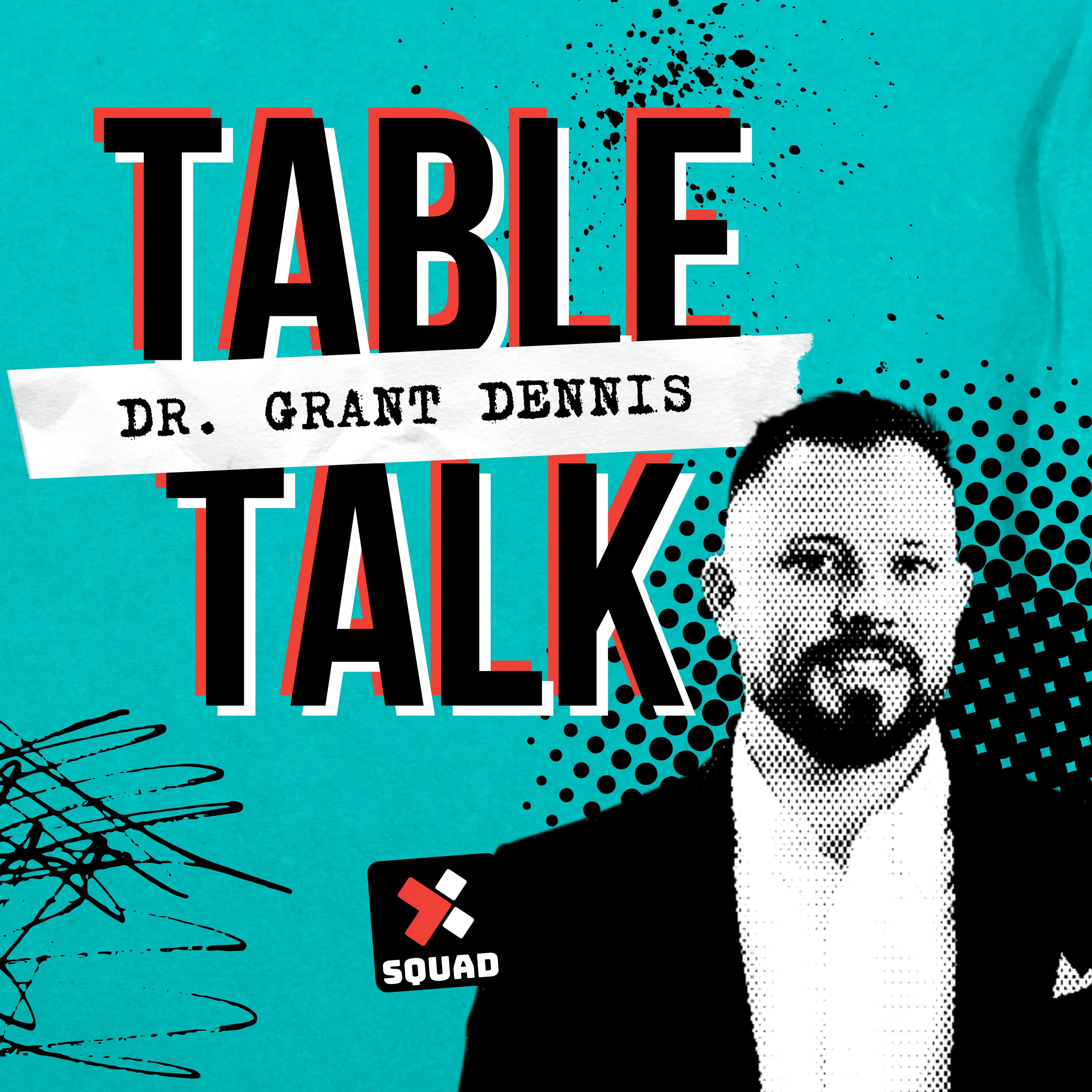
Taking Chiropractic Where it's Never Gone Before with Dr. Grant Dennis
Synopsis
Steve Tullius talks with Dr. Dennis Grant about why the definition of chiropractic still divides the profession and what a subluxation-focused practice built on clarity, communication, and unity could look like. The conversation covers the history of the profession's early splintering, the need for a new generation of collaborative leadership, and a real example of a chiropractor jailed repeatedly for practicing outside legal definitions. It offers chiropractors a practical look at how clearer definitions and stronger peer support could move the field forward.
Dr. Grant Dennis shares how a commitment to service, stewardship, and leadership has shaped his journey in chiropractic and his work with students across the profession. He reflects on the challenges that continue to limit chiropractic's growth, from internal division and unclear communication to a lack of support between chiropractors who ultimately want the same outcome. The discussion digs into leadership development, student engagement, and the responsibility of creating opportunities for the next generation to contribute in meaningful ways. What emerges throughout the episode is a vision for expanding chiropractic's impact by building stronger relationships, fostering greater collaboration, and creating a profession that is united around service rather than separation.
Key takeaways
- 1
The Definition of Chiropractic Divides the Profession
Most chiropractors agree on the underlying science, but disagreement over how to define the practice itself has splintered the profession since its early days.
- 2
A Call for a New Era of Unified Leadership
Grant argues that real leadership is emerging from students and lesser-known practitioners, and that progress depends on building unity rather than individual recognition.
- 3
Lack of Clarity and Communication Are the Real Subluxations
Across many interviews, the same practice problems keep surfacing: poor clarity and communication, with money treated as a byproduct of genuine value and service rather than the goal itself.
In this episode
Jump straight to any moment.
If you liked this episode, be sure to check out
Episode 44
From Smile to Spine: The Missing Link in Whole Body Wellness with Dr. Gary Glassman
Episode 42
Identity and the Future of Chiropractic with Dr. Joe Betz
Episode 40
Awaking the Bigness Within with Dr. Wade Port
Episode 39
The Self-Expression Subluxation with Dr. Melissa Longo
Episode 38
The Heart of Chiropractic with Dr. Marc Surprenant
Full transcript
Made by speech recognition, with names corrected. It may contain errors, so check quotes against the audio. Spot a mistake? Tell us.
0:00How Dr. Grant Practices and Serves Patients
Show intro 0:04
Every doc wants to make a bigger impact. What's getting in your way? You're tuned into the Subluxation Squad podcast. One squad, one mission. Chiropractic for all.
Dr. Steve Tullius 0:16
Hey everybody, welcome to another episode of the Subluxation Squad. I'm Steve Tullius and with my co host, Pacha Hornaday. Pacha, it's good to see you.
Pacha Hornaday 0:26
Good to see you, Steve.
Dr. Steve Tullius 0:27
Yeah, we, we get to see each other every week is really why we, we did this because we love just talking about chiropractic non stop, so, so we figured we should do it with other people too. And I'm really excited to have a dear friend, colleague, someone who I respect tremendously. Dr. Grant. Dennis. Welcome, Dr. Grant.
Dr. Grant Dennis 0:47
Excited to be here, guys. I've been able to tune into several of your shows. They're fun, they're insightful, decided to maybe provide a little value to the viewership. Have a little fun.
Read the full transcript (7,739 more words, 10 more chapters)Hide the rest of the transcript
Dr. Steve Tullius 0:56
Yeah, absolutely. So, you know, we've known each other for, for years now, probably a decade, I would imagine, at this point or more. And you know, one of the things I could tell from the moment I met you was your, your stewardship attitude, your servant attitude towards the perfect, you know, for the profession and the principles and just, hey, how can I serve this thing even more? Which is what I felt from you immediately. And then throughout the years, that's what you've been doing too. So really excited to dive into all those things. What you've seen is some of the biggest subluxations in the profession.
But before we do that, why don't you just share with our guests who you are, how you got into this thing and just a little bit more about yourself.
Dr. Grant Dennis 1:46
Yeah. So, you know, I've maybe it's infamously, or not so infamously, you know, known as the, the guy in Arkansas to a lot of people. You know, I practice in Little Rock, Arkansas, which for those who don't know, is a state in between Texas and Mississippi that just kind of lies there. But yeah, you know, I, I just have always, from a really young age, always kind of strived and aim to be a part of something that was bigger than myself. And what I mean by that is, in a way, my big personal impact is always I get more out of helping somebody than something that directly helps me. You know, whether it's a patient or a student or a movement or.
What I really get a big impact out of is an associate telling me how great they're doing or a patient telling me how much different their life is. And so from an early, you know, maybe it was through baseball early on, helping a teammate find success. I just had always kind of gravitated towards finding an impact and impacting someone else's life more so than a direct impact to mine. And I found that if I can do that for somebody, it really helps me feel better about myself. And that's kind of what just led me to the field of healthcare in general. Eventually just kind of found chiropractic.
And once I started studying chiropractic and I started studying our principals and our founders and people like Herbert Ross Reaver, that gelled themselves, you know, to make this profession go really resonated with people out there. And it's really what drove me into a place of service. And so, you know, that that's just me in a nutshell, just about me outside of what you could read on a bio or a website. But, you know, I think for the purposes of today, I think it's just helping people understand that this profession, it's about the people, it's about the movement, it's about what we do for humanity and how it serves humanity.
And if you can remove yourself from the equation and everything being always about you, I think you begin to understand the implications of the impact you can make, not only you personally, but within the profession at large across the world. And so it's just a good place to start. Just as an intro to me.
Dr. Steve Tullius 3:48
Awesome. Yeah, thank you. I know Pacha has some questions that are ruined in her head, because that's what I love about Pacha. She brings such great questions that forced me to think outside my worldview as a chiropractor many times, because Pacha is not a chiropractor, but she's been in this profession for so long. What questions do you have?
3:50Pacha's Questions Challenge Chiropractic Assumptions
Dr. Grant Dennis 4:10
For you, granted.
Pacha Hornaday 4:11
What questions do I have? Well, yeah, it's. I mean, in a way, it's easier for me to ask certain questions because I'm okay with looking dumb, because I'm not a chiropractor. So I can put that ego aside and say, okay, I can ask, you know, some silly questions. So Steve and I were talking about, you know, this topic a little bit at our last podcast, last episode that we did last week, and one of the. One of the topics that came up, as it does often, is the definition of chiropractic. Right. Like how. How do we define it? Because in the end, that's what divides the profession. So I'm curious what you think, and I'm diving straight in here.
I'm not talking around the bottom I'm wondering what you think about allowing two definitions within, you know, within chiropractic and say, okay, there is the subluxation based, nervous system based chiropractic and then there is, you know, the muscle skeletal version of chiropractic. Is that even something that in the, in, in with within the idea of bringing people to the table and having conversation, is that even something that you would consider?
4:28The Definition of Chiropractic Divides the Profession
Dr. Grant Dennis 5:31
Yeah, I mean, I think that one of the things that is critically important to realize, at least in my experience, is that when I talk to chiropractors from all over the, whether it's Mexico, Latin America, the U.K. you know, Europe, Australia, Singapore and everywhere in between. One of the things that's interesting is I think 80 to 85, if not 90% of chiropractors, we agree on the philosophy for the most part. I think most. Now you're always going to have the 5 to 10% out on the fringe who want to make chiropractic something it's not.
And the reason that I can say that is because you have to always go back to what your original question is, the definition. Right. So, you know, in the United States of America, for example, we have the Constitution which clearly defines and states certain things to be true in the court of law, which anytime you go into a court of law, they're going to bring out law. Constitution, right. And that is encompassed by definitions. We have the same thing in chiropractic. You know, Stevenson, you know, released volume 14, which was a direct reflection and it was actually endorsed by B.J.
Palmer, the developer of chiropractic, which clearly stated and identified what our definitions in chiropractic are. So I always get interested when people say my definition of chiropractic or the, the big common one here lately is the forward, you know, movement definition. Well, nowhere else in society or the world do you see a new definition. There's, there is an accepted upon definition by a developer of whatever the thing was. Right. And so we have that we have. So one of the things I always ask when people say, well, my definition say, well, where do you get your definition from?
Because if it comes from you, well then that's, that's an emotional, not airtight, logical case for there is no such thing. There is, you know, like if you look at avionics or flying a plane, there's, there's definitions and there's principles of flying a plane. You can't just say I'm gonna fly this plane based on my definition or my principles, because at least I Don't want to get on that plane with that pilot, because if he doesn't believe in the concept of gravity or the concept of lift or the concept of thrust or partial pressures or these. These are all accepted definitions, right, within avionics.
And so if the pilot was like, well, I think I'll just live within my own definitions. I'm not getting on that plane any more so than a patient would want to come in a chiropractic office where someone has that premise, right? Because it just doesn't exist. There is certain principles, there's certain, you know, things that we establish to be the. To be the norm or the standard within a profession or a. Or more importantly, a principle. And, you know, Sid used to always say, you drop the keys. The keys drop because of gravity, right? And I view it kind of the same in every profession.
We have certain laws and standards and principles we live by that define the profession, which is why you have to have definitions, because definitions are what upholds standards. So, but, Dan, you know, to go back to it, I have found that 85 to 90% of chiropractors agree upon our philosophy. I would say about 75 to 80, maybe. And this is, of course, my own opinion, but just based on personal experience, agree on the science, right? Whether it be a neuromusculoskeletal or maybe a musculoskeletal with a little neuro involvement. But for the most part, the science is widely accepted.
What I find interesting is that the large majority of the disconnect and the lack of unity that surrounds our profession is in the art form. Because, you know, chiropractic is, by definition of philosophy, science and an art, you know, you know, of things natural. A system of adjusting the segments of the spinal column by hand only. That is our definition. But what I found is that the philosophy piece is widely accepted. For the most part, the science piece is where the unit, the lack of unity and the disconnect occurs is in the art form.
Whether it's how I choose to adjust somebody, the technique I choose to use, the business system, I choose to use cash versus insurance practice. This is where then chiropractors do this goofy thing where we argue and we create disconnect over the third component, which is the art, without actually realizing that we agree on the large majority of the philosophy and the large majority of the science. But in order for me to accept your art form, that would require me to remove my ego. And I think that that's where then we start to begin to see these. These Things happen interestingly in chiropractic.
But back to your original definition, because I'm kind of sidetracking here, you know, your question. Yeah, I mean, I think anytime the first question always comes with your def. Is it your definition or the definition?
Pacha Hornaday 9:41
And I think just to jump in here for a second, you know, you brought up other laws and things like that. And you know, while we have laws and we have definitions, they're made of words. And words can be interpreted and understood differently by different people. And I think that's where the problem comes from that, you know, some people read something and they take it to mean one thing, and some people read the same thing and take it to mean something else based on their experience and whatnot. I understand there are certain things that, you know, gravity is like, works a certain way and that's, that's the way it is.
You know, you can't read much into it. You can misunderstand it certainly.
Dr. Steve Tullius 10:24
You know, so I, as you're sharing, Grant, you know, the. What came up for me was how our profession got splintered really early. Right. You know, in our. Before, you know, the telephone, before the Internet, you know, and so then there were some separate definitions. Right. Early on. And so I'm curious today, you know, we see people, I, I wonder if, if it's really their definition or just their mentors, you know, their mentors, mentors, definition. Right. One of the, they, they went down that path. And we know, you know, even at the schools, that the schools, many of the schools now represent a certain path. Right.
That was not the original founders path. So can you, can you comment on that?
10:29How Definitions in Chiropractic Keep Shifting
Dr. Grant Dennis 11:13
Yeah, yeah. I think, you know, chiropractic also is, is very largely dependent upon deductive reasoning instead of inductive reasoning. And you know, I think that the first step always has to go back to where did the definition come from. Right. So, you know, for example, if a particular, in your case school said, hey, we're adopting this definition, then the question becomes, where did that definition come from? If it came from the president of the institution. Right. Then that's could certainly warrant some merit for that particular school. The reason it becomes problematic is what happens whenever that president leaves the school?
Does he take that definition with him or does it remain with the school? And the new president comes in, has a new definition, you know, and we see this largely, but you know, across multiple things and in society today, unfortunately is definitions constantly change in the interpretation of them. But I think early on what happened was, you know, there was, there was a clear, you know, Dede had a. Had a definition, and then B.J. had a definition, and then Galen Price had a definition, and then Stevenson had a definition. Right.
And I think what then starts to happen is, you know, you get all these different opinions versus definitions and like Pacha was saying, interpretations of them. But I think, you know, at least for me anyway, what it always is going to boil back to, at least in, in a large premise, is where did the original definition come from? And, you know, there was a fight early on, and a lot of chiropractors don't even know this, that the medical model was trying to tell us what we were doing was practicing medicine. And that's where the definition came into play. Right, Because.
Well, no, because you understood the definition of medicine and you understood what the definition of chiropractic is, which was clearly defined, you would understand that they're not the same thing. Because definitions do matter in this case. Right. And so, you know, I don't want to go into political things or things we see in today's society, but, you know, it's the reason that they matter is because definitions are based on some sort of principle or premise. And we have 33 principles in chiropractic, which then kind of helps support the definition of chiropractic. Right. And so, you know, I'm not sure that I wish I could go back and ask.
Right. But, you know, one of the things that we have to keep in mind too, is that there were chiropractors early on who were jailed to practice that definition, to uphold that definition, to uphold that standard, because they believe strongly enough in it. And I think that's one of the most interesting things, is point out any other profession where there was founding fathers or people who lived and died on the principles so much that they were willing to go to jail for it. And so, you know, you don't see it much.
And the reason for that, I think, is because a lot of that premise there was around the definition, what they were essentially going to stand on, be willing to die on that hill. And some of them actually did was on the definition. And our founding fathers, you know, in the United States of America did the same thing. There's been wars fought over it. I mean, you know, so definitions do. And I'm not sure where that actually the splinter in the. In the early days started, but I think largely it had to do with people that put maybe motives and agendas and egos over a central movement. But that was backed by a definition.
Dr. Steve Tullius 14:29
Yeah, there's definitely a lot of egos early on in our profession and continue to, and I see it. I'd like to hear your opinion now for those that don't know, we haven't mentioned this and Grant, you didn't share this, you're the chairman of the IFCO, so you, and you've been your past president as well. You've been involved politically for a very long time. So you know, the profession, I feel like it needs to move into a new era of leadership. Right. Where we don't have any of these, we don't have B.J. Palmer anymore, Sid Williams, all these big characters and who everyone just followed. Right.
Can you, can you speak to what the next era of leadership really needs to look like?
14:37Calling for a New Era of Leadership
Dr. Grant Dennis 15:24
Oh, that's a good one.
Dr. Steve Tullius 15:26
Yeah.
Dr. Grant Dennis 15:26
So as you mentioned a long time ago, what we would see is, you know, and I, and I mentioned this at a talk I gave recently is in order for the, I believe this in order for the profession to go where we've never gone, we have to become something we've never become. And what I mean by that is these past generations of leaders that people that somewhat kind of initiated the movement and then we had these so called, the kind of followers that follow these particular movements, whether it was seminars, techniques, schools, whatever the case was. Right.
I think what we're starting to see now, and this is in a lot of areas of society is oftentimes what you see is that the leader is the one who's often not saying the most, but is doing the most. So I, and one of the things that encourages me is one of the ways that we're seeing this in chiropractic currently is some of our biggest leaders in chiropractic right now are students that people know nothing about, that people have never heard about, that people don't see on Instagram pages and social media pages. But behind the scenes they're doing a lot of work for the profession. You know, I can just speak for the student IFCO club as an example.
Behind the scenes are doing a lot of things to unify schools and unify students together. And you've never heard of them. And so I think the next generation of leadership in chiropractic is going to be those that understand it's not about me, it's not about my voice, it's not about how many Instagram followers I have. It's about the people I can bring together to create a movement based on unity, based on a commonality, based on a vision that we collectively see that is bigger than any one of us. Right.
And I think that it's interesting because it's also at a time where social media is perpetuating this top 10 SportsCenter highlights of my life. Right. Well, look at how great I am. And what you don't see is what I'm actually doing. And it may look like I'm doing a lot, but I'm actually not doing a whole lot as far as an impact's concerned. And I think what I'm starting to see and really appreciate, and it excites me about the next generation of leadership in our profession is you're starting to see these. These people who get that and understand.
If I can get a group of students at Sherman College and a different group of students at New Zealand Chiropractic College, and we can all begin to unite under a central premise and work together and collaborate, and no one really cares who's getting the cloud or the. Or the, you know, accolades. That is what will create a ripple effect. And one of the things that's interesting is I would make the argument today, Steven Pacha, that I know personally 15, 20, maybe 30 and maybe more students who are making a greater impact for this profession than most than a large language majority of docs in our profession.
And the reason for that is because they're like, I don't have to be a doc, and I don't have to have a degree to make an impact. I can make an impact with my unique gifts, talents, and treasures now even before I'm out in the profession. And unfortunately, what we see is we have docs out in the profession who say things like, well, I don't want to get involved in anything. I just want to sit in my practice and continue to take from chiropractic and make a great living and buy all the things. And I don't want to support chiropractic in return because it's about me, right?
It's about what it gains for me instead of understanding what the students are beginning to understand. And what this kind of younger generation is beginning to understand is I don't care so much about, you know, what I gained from it. I want to know what the impact is going to be as an implication for the future of chiropractic. And so, you know, the student IFCO is a great example of that. The students working behind the scenes at the Chiropractic Freedom Coalition is a great example of that. You know, Delta Sigma Chi, I could go on, but I can tell you that that's what excites me about the future generation.
As far as leadership goes is I'm beginning to understand and see that they come from kind of the same, you know, premise that I do, which is it's not about me, it's about what I can contribute to a movement that's going to change the world. And I think that if we can any movement we've ever seen that it's done that. That's what it always started with, right? Is people who are willing to put, you know, the movement above self, who cares who gets the accolades, you know, and we've had that also in the past. You know, the names that come to mind for me are names like Chris Kent, right.
People like that, who you may not viewing this, maybe you may have heard his name, but you don't have any idea the amount of influence and impact he has made on the profession because he's, he doesn't care about it. They're the Bill Decans of the world, right. Or the, you know, I could go on with lists of names, but it's like the people who are like, you know, maybe it's not about me, maybe accolades or my name being on research paper, it's what does it do for the profession, right. I think the next generation and wave of leaders, that's what's the underlying tone I'm beginning to see that excites me a lot.
Pacha Hornaday 20:07
I mean, in the end is I think it's having the vision that, you know, if you contribute to the tide, it will rise, it will raise all boats, you know, like everybody will profit from, from that. Right. So if you don't have that vision, if you're like so narrow minded that it's just about me and my practice and.
Dr. Steve Tullius 20:26
Well, yeah, so you mentioned vision, right. Pacha, and that's what, you know, Grant, we've, we've done. This is now episode 29. Of all the leaders, all the individuals we've talked to, the same themes come up, right? Biggest subluxations in practice, lack of clarity, lack of communication, lack of systems. Right. You know, personally, like once I understood what the big idea was, right. And what that meant for humanity, you know, that, that, that the entire, you know, future of humanity would be dramatically different and improved and, and disrupt the current socioeconomic power struggles of humanity that have existed since the dawn of time.
Like at that point I, I had no other option than to dedicate my life to it. Right. And, and in return, you know, receive so much too. I, I'm curious if you feel that. Is it just people don't get that or, or are they Immoral.
20:30Clarity and Communication as Core Practice Issues
Dr. Grant Dennis 21:31
Yeah. Well, that's a great question. I think we can sum it up by just asking the viewers one simple question, right? And this is a self reflection of, you know, because I love the concept of man in the mirror or woman in the mirror. It's looking at yourself in the mirror and being able to square yourself up every day and be brutally honest with yourself. Here's a question you could ask yourself, right, as a viewer.
And this addresses the underlying root cause, you know, cause to your question, which is if you were to discover something, you know, innovative, let's just say it was a herb out in nature that, that you were able to find that if it was consumed by someone suffering from cancer, it was 100 or 90% successful at removing cancer, would your first thought be to how do I monetize this and enrich myself or how do I help humanity? If the answer to your question was the first one and be honest with yourself, then you're the problem.
If the answer was how do I help humanity rid of this awful thing that tears families apart and that is the central reason for you bringing it to the world and not the gain you get from it. What you inherently know would come from it. But if your initial thought would be how do I enrich myself from this particular thing, that's the problem is you don't, I don't like it's the same because then now take that herb and scratch it out, put vertebral subluxation.
That's the problem is you're looking at, well, how do I, can I help people with this but make money doing it instead of how can I help humanity rid it of this awful thing that's living within people and they have no idea, they have no idea that this could be the answer for so many life altering things they have going on in your life. But I think that also has to go back to do you believe in it enough?
Because one of the things that I also see with a lot of docs is, you know, the reason that they don't purport the vertebral subluxation as a philosophy or a construct or definition to chiropractic is because they don't, they themselves don't believe in it. They themselves don't know the power of it, whether it be by, you know, ignorance, I've never been introduced to it or I was never taught it. But if you don't have any respect for it and you don't understand the impact it has, then you couldn't possibly report to it. Right.
Dr. Steve Tullius 23:37
So.
Dr. Grant Dennis 23:38
But then it goes even deeper, is if you did purport to it, you understood the implications it had on humanity, then, then you would have an obligation to go and tell people about it. And the more people you told about it, the greater their lives became. Then as a byproduct, you know, Jim Parker, I went to Parker. I'm not honest with you. Real Parker proud. But one of the things that I loved about one of his principles that he talked about at Parker was that money was always just a byproduct of value and service provided to humanity. And we hear those things. Right? But I think it's hard for docs to put that together sometimes.
But I think it starts with, what is the underlying thing that you are the best at detecting, locating and correcting that helps humanity? And then the question becomes, if you really felt that strongly about it, would you not want to do everything you could from a scientific perspective to locate it and remove it objectively for yourself? And then if you're able to do that, then you're able to change humanity and then earn a great living doing it. And then from a place of service, go back to make sure it's protected because you understood how important it was to humanity.
And that's where the politics side of it comes in, the research side of it comes in, you know. And so I think it just comes back to that central question, which. Which camp do you live in? Is it to enrich yourself and make a great living, or is it to, you know, rid humanity of this awful thing that, you know, a lot of people don't think exists, that we know exists. It's, you know, scientifically validated, philosophically, and our science every day is far outpacing our philosophy. And I think. But I think the central thing it always comes back to is for whatever reason, we as chiropractors love to argue about the art.
And it breaks my heart, whether it's the art of practice, the technique art, you know, the teaching art, communication art, whatever the case may be, that tends to bear to be where we get hung up.
Dr. Steve Tullius 25:18
Yeah, it's interesting. I've never heard it, obviously, technique art there. I've never heard anyone share how we fight over the art of business. And it's very true. You look at the different gurus who teach different ways, and it's their way. And then there's these camps, right? We have all these camps. We're a fractured tribal profession, and, oh, I can't be in that camp because I'm in that camp. So. And so doesn't like so and so and it becomes this high school, you know, the association. Yeah, let's dive into that because I, I know I was a problem. I know I was part of that problem. Right.
In terms of being in certain camps and, and not being willing to have conversations saying really mean things about people, which is not even alignment with like our chiropractic philosophy. You know, the way we practice in our practices is so heart centered, so loving, but then, then we go and we want to, you know, fight and say really mean things about other people, other chiropractors. So next week we, we have Dr. Joe Betz, who's the ICA president. Right. And I'm, you know, in the past, because I was in a certain camp, right.
I would never have even considered this, but now that I see that, that the really the truly only way for us to move forward is through uni unity around our core values. Right. Which as you share, we do, we do share that. So now we might differ on strategy or, or we might differ on, you know, you mentioned cash practice versus insurance practice. Like I've been cash practice for years, so I, I could care less about, specifically for me, getting higher reimbursement on insurance. But I also know now that a lot of our brothers and sisters are in network with insurance and they meet like that's needed.
And it also makes sense that we would have parity and things like that within like Medicare and other places. So I'd love to hear your thoughts and your evolution as we move forward as a profession in terms of dialogue, communication between the camps. How do we have more dialogue and more collaboration?
25:52ICA President Joe Betts on Unity
Dr. Grant Dennis 27:36
Yeah, I mean it. I, I think it first starts with a place of being able to say, you know, I, it's, it's funny, right? Because I think a lot of chiropractors also within their own little communities find other chiropractors as competition. And I've never viewed it that way. I've always viewed it as if I was to see, you know, 150, 200 patients, let's call it 2,000 patients a day, which is not possible. No one's ever done it more, nor will do it. I still can't see the amount of people in Little Rock, Arkansas to take, make sure the whole community is taken care of.
I need these other brothers and sisters of chiropractic to make a big ripple impact on my city in particular. I think most chiropractors don't look at it that way. It's, oh, they chose to go to that person or this like. Right. Like, because they needed to and the universe sent them there. And you need to take care of the people that are sent to you to help the whole. Right. And, you know, whether it's, you know, we see this in associations, organizations, you know, the, the way that they, the art and the way that they run their organizations gets picked on. Right.
But I think it first just starts with the understanding that there will be a day where a fight comes to the chiropractic door. And when it happens, and it's going to be to remove verbal subluxation or remove the profession altogether, one organization is not going to be able to fight it, one association is not going to be able to fight it. One chiropractor is certainly not going to be able to fight it. But a collective of people that agree on the core values, that are able to remove the human element from it.
As far as ego, personal infightings, and even just personal vendettas against people that can, you know, it's the principle over people. We can agree on the principle. I'm not really sure I care about who the people are involved. Right. As far as them as human beings. Right. And so I think that's where the first step starts, is that, you know, like. And I love the fact that you're talking to Joe Betz with the ica. I love that we're bringing in other. Starting to have this conversation because I think in order for us to, you know, the word that keeps coming up is unity. Right. But really, I think it's not unity, really.
I think it's just collaboration. I think it's just, look, we're not going to agree on everything, but we can agree on 80% of what we're talking about. And instead of getting, you know, we see this in American politics. Right. It's why, you know, you got. They call it the different sides of the aisle. Right. Well, I mean, at the end of the day, it's why there's never any great motion that occurs. And I think in the chiropractic profession, what I would like to see is I'm not sure there's ever going to be, you know, a complete. Where there's never an aisle in the middle.
But what I'd like to start to see is people, instead of viewing it that way, is let's begin to understand what can we agree on? What's your vision, mission, and how does it collaborate with what I'm trying to do? And putting aside these, these personal vendettas because they just, like I Said we're gonna look up in 20, you know, 50, and, you know, 2100. We're going to start to see that chiropractic's in the exact same place that it was in nineteen six, in the nineteen twenties and thirties and fifties. It's because we can't just, for whatever reason, get off of that, you know, that train of. I would. I'm gonna die on this hill.
For me, personally versus the collective. I think that's where we got to start.
Dr. Steve Tullius 30:45
Yeah, no, I. I agree, and I see it moving that way, too.
Dr. Grant Dennis 30:49
So also, I was just gonna add one other thing, is, I think, opening it up for healthy debate. I think that's something that has to be able to be had in chiropractic that's never been had before, is the ability for us to debate from a place of integrity, accept each other's viewpoints, understand why your viewpoint is what it is, and make a decision there. I think that's just one thing I was gonna add there, too, I think is important.
Dr. Steve Tullius 31:14
Yeah, we want to do that where we actually have, like, a philosophy panel and we have technique panels and do things like that, where people with different ideas come together and share them and with an attitude of curiosity. So Pacha has really helped me personally, like, be more curious. Right. And not just hold on to my thought of way of doing things. So she's. She always is very curious, and that's why she's a great interviewer. So, Pacha, I heard you starting to chime up. I'd love to hear what. What.
31:42Supporting Each Other Across Generations
Pacha Hornaday 31:46
You want to know what I was gonna say? Oh, I was just gonna make a comment because you. You brought up, you know, politics and the. The two sides of the aisle. And, you know, I. I love that metaphor in a sense, because we. We just have to understand that we're still sitting in the same house. Right? So if we. If. If we can. I mean, we. I'm including myself. I don't even know why, but if you guys can figure this out, right? Like, what house are we sitting in? You know, what's that hill we're standing on? Then that should be the. The foundation to move forward somehow. But I think it's a lot. There is a lot of ego in it from, you know, from.
From a lot of people, and to a point where it's like, my definition or my view of chiropractic is better than yours. You know what I mean? And, like, my technique is better than yours. Like, whatever.
Dr. Steve Tullius 32:39
It's just.
Pacha Hornaday 32:39
Yeah, we just need to put that Aside. And we were talking about how, how in medicine there is like all those different branches now. Right. Like a pediatrician wouldn't argue that pediatrics is better than whatever. I can't think of another Geriatrics.
Dr. Steve Tullius 32:56
Yeah.
Pacha Hornaday 32:57
Geometrics or, or cardiology or whatever, you know, anything. It's just different. So is that possible in chiropractic where we just say, you know, it's.
Dr. Grant Dennis 33:07
It's not.
Pacha Hornaday 33:07
Maybe there is. And I know Steve was like, wait, but there is a better.
Dr. Grant Dennis 33:12
You know, I think it is.
Pacha Hornaday 33:13
Is. There isn't a way to say it's just different.
Dr. Grant Dennis 33:17
I think it is possible and I think we're starting to see it happen. I think there's a new generation and wave of student chiropractors in the future of chiropractic that's starting to begin to show this from a place of maturity. And even, you know, students are showing chiropractic maturity to the elders of our profession, if I'm being honest. And we're starting to see that, you know, because it always goes back to our principles. Right? Universal intelligence in all matter, not some like it.
So if you believe chiropractic is an asset to the universe, which, if you're a chiropractor, I hope you do, then you understand the major premise tells us it will be protected and promoted because it gives, continually gives to its, all of its properties and actions, thus maintaining it in existence. What that means is there are students who are hearing this and understanding, okay, well, if that's the case, and let's work together for this thing called chiropractic, whether it's you do pediatrics or you do upper cervical or you do Gonstead, we're all, we agree on the philosophy we go on the science.
I respect your art form and your portrayal of that. And so if that's the case, let's support each other. And I think that's one thing in chiropractic that we do a really bad job of supporting each other. I think that's one thing that just is an overarching theme for years. I'm not sure where it came from. But, you know, I think what. But what excites me is that the younger generation that I speak with and work with, you know, on a day to day basis, students from Palmer, students from Sherm and from all these different schools are working together.
And the last conversation they're happening having is whether what technique they do or where they want to practice, or cash versus insurance or PI versus. They don't. They're not Having these conversations, they're like, okay, well, you know, this is what we want to do and create a movement to get other students on board and create this wave of movement. And I think it's. It's really, like I said, it's really exciting to see. And I think it is providing a chiropractic maturity level that's much needed because I think it comes.
There's nothing that's more, I think, respectful than to see a student that's doing more than a doc who's been doing it 30 years in practice. And then when you were to put it on the table and say, what's your contribution? There are students that are contributing more. And I think that's what excites me the most. And, you know, for those who would say, oh, well, I serve my community, that's the bare minimum. That's the standard, in my view, is that you serve your community. But then what is it outside of that? Yeah, you're going to serve your community. You're going to make funds for that.
But what do you give back in return that it should continually give to you for? And like I said, the students understand this, a large majority of them. It's really exciting. I think that's what's going to cause the shift is the. The elder generation of our profession looking down at the example our younger student generation showing.
Dr. Steve Tullius 35:49
Oh, very good. Well, love everything you had to say today, Dr. Grant. Would love to have you come back again because I know there's a whole lot more that we could talk about, too. So why don't we jump into the rapid fire round? So. So, Grant, we always have a rapid fire question, so we like to learn, you know, more about you and just get. See your thoughts on some different things here. So, Pacha, you want to start it off?
36:16Herbert Ross Reaver, the Most Jailed Chiropractor
Pacha Hornaday 36:16
All right, let's see. What belief did you hold strongly five years ago that you now think was
Dr. Grant Dennis 36:23
wrong questions that I. Yeah, that I. That I can do everything better myself.
Dr. Steve Tullius 36:31
Yeah, you're here. I was one of those people, too.
Pacha Hornaday 36:33
Yeah.
Dr. Steve Tullius 36:36
Let's see. A chiropractor, living or dead, you'd love to have dinner with.
Dr. Grant Dennis 36:43
You know, that's Herbert Ross Reaver. I mean, I would love to understand the amount of mental fortitude and what he truly believed and stood for, to endure what he did mentally, physically, emotionally and financially.
Dr. Steve Tullius 36:57
Yeah. For those that may not know, he was the most jailed chiropractor. How many times did he go to jail?
Dr. Grant Dennis 37:02
You know, I mean, yeah, it was like. I mean, it was, I think, a cumulative of like nine or ten times for a span of eight or nine years. I mean it was, it was ludicrous. He end, I mean it, it ended up quite literally costing his life due to health detriments from being in jail.
Pacha Hornaday 37:17
That's having, yeah.
Dr. Grant Dennis 37:20
Having a vision and conviction.
Pacha Hornaday 37:23
Certainty around conviction. That's the word. Exactly. What's one thing nobody knows about you?
37:26Three Guests to Invite Next
Dr. Grant Dennis 37:31
Oh man. Let's see here. One thing nobody doesn't know. Well, it's one thing nobody knows about me. Let's see here. I would say I am deathly afraid of heights. I I, you'll never see me skydive. I get weak at the knees three floors up. Like I don't like high hotel rooms. That's one thing probably most people don't know about. I'm deathly afraid of heights. Maybe because. Maybe it's because I'm short. First one that comes to mind.
Dr. Steve Tullius 38:06
Who should we invite? Who are three people we should invite on next to the show?
Dr. Grant Dennis 38:11
Oh, see here. Three people. I would say it could be anybody. Like any as his chiropractic students, doctors, anybody.
Dr. Steve Tullius 38:27
Yeah. It doesn't have to be chiropractors. Yeah, it could be.
Dr. Grant Dennis 38:29
Yeah. I would say David Meltzer.
Dr. Steve Tullius 38:32
Okay.
Dr. Grant Dennis 38:32
It'd be one, I would say another one would be maybe. I've got a guy actually here locally, his name's Cole Rogers that would be a great guest for this show. He has a podcast called the Resilience Playbook. It's for anybody in any profession. I actually went through a program that of anyways he would be a good one. And then the third one I would say would be Bruce Steinberg.
Dr. Steve Tullius 38:58
You know, I was just thinking about Bruce today when you mentioned the, the delts bring you know, have Bruce come on. Not just that but, but so many great reasons to have Bruce on. So. Yeah, absolutely, I agree.
Dr. Grant Dennis 39:09
Nice.
39:11Envisioning an Unsubluxated Profession
Pacha Hornaday 39:11
What does an unsubtated profession look like to you?
Dr. Grant Dennis 39:15
An unsubluxated profession? I would say it's one where you see strength built in support. I think one of the I think what it looks like is all chiropractors willing to support other chiropractors because of what chiropractic is. Right. So in other words, under when I tell somebody I'm a chiropractor, they immediately would be willing to support me because they understand what it is that I stand for. Right.
And they understand what I'm trying to do for my community or for the people that I take care of is there would be 100% buy in and support amongst chiropractors supporting other chiropractors in whatever it is that they're trying to do to serve humanity.
Pacha Hornaday 40:02
Awesome.
Dr. Steve Tullius 40:03
Love the vision, Love, you know, what you represent and how you lead in this profession. And the students definitely are there for us to see what they're doing and to learn from them. But I'm gonna suggest that everyone has a lot to learn from you as well and how you're leading. So thank you for your continued growth as a leader and what you're doing. How can people get in contact with you? What's the best way to get, you know, connected to IFCO to or any other places that you'd like to for them to connect with you?
Dr. Grant Dennis 40:35
Yeah, I mean, I'd love to connect with anybody because like I said, I come from a place of just support. And maybe it's not even that I have the answer for you. I maybe know somebody who does. Like I just said before, I used to believe I have the answers and could do everything better myself. But I've learned through hardship you can't. And oftentimes it's just knowing who to send people to. And you know, the best way would be just Dr. Grant Dennis on Instagram. So at Dr. Grant Dennis or Dr. Grant Dennis dot com, just Google Dr. Grant Dennis. Or you could just grant the specific dot com. Shoot me an email.
Like I said, just here to really help kind of bridge the gap between people understanding and helping understand different viewpoints in the profession as a way to gain clarity so we can begin to support each other. Awesome. Thanks for having me.
Dr. Steve Tullius 41:20
Yeah, I'd love to have you on and everyone have a great rest of your day. See ya.
Dr. Grant Dennis 41:24
Until next time.
Subscribe and review
If this hit, help another chiropractor find the show.
If you love this episode, please take a moment to subscribe and leave a review on Apple Podcasts or Spotify. Your support helps us reach more chiropractors who need these insights. Thanks for tuning into the Squadcast. See you next week.