Synopsis
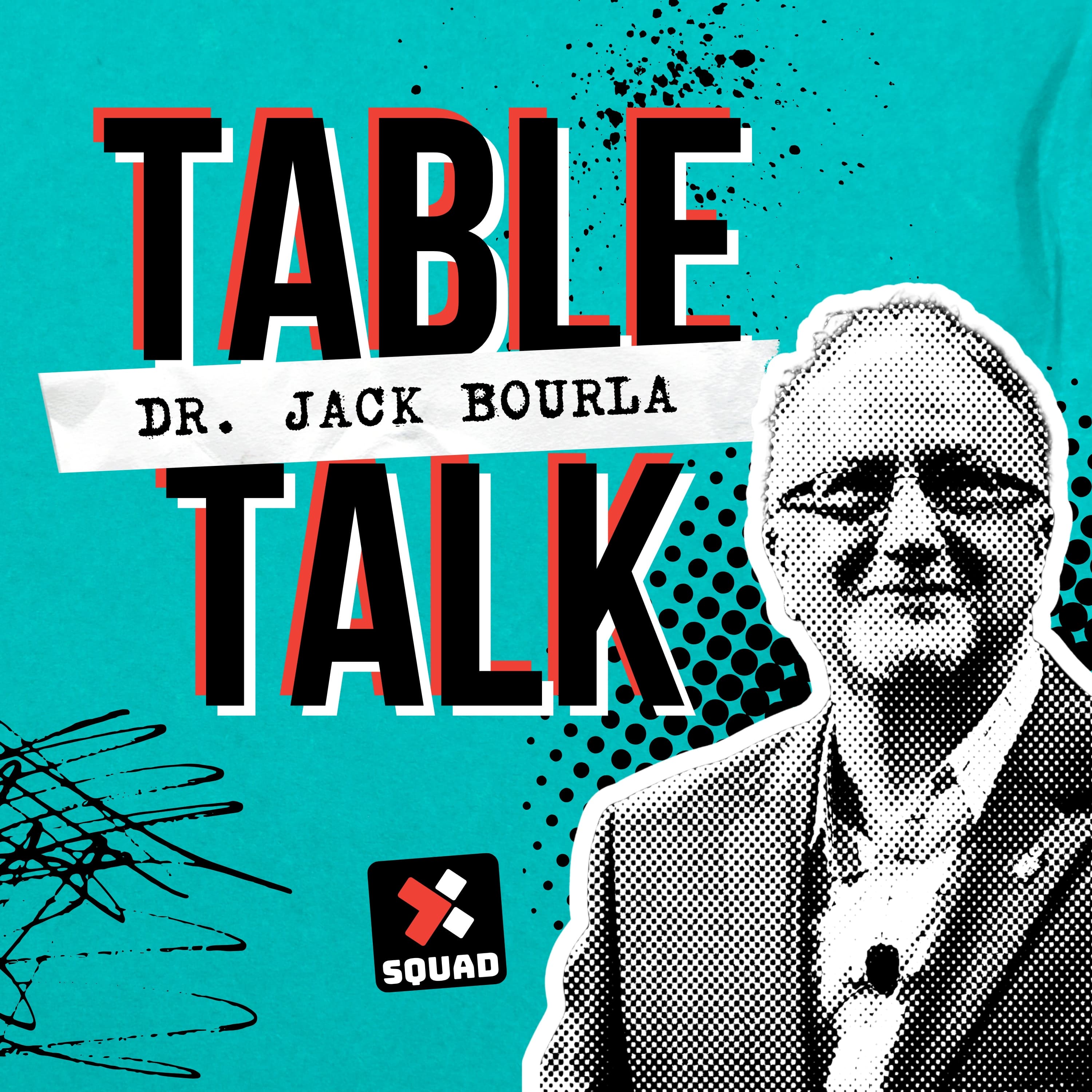
This episode of The Subluxation Squad features its first guest, Dr. Jack Bourla, president of Sherman College of Chiropractic, discussing his path into chiropractic, the state of the profession, and what he sees as its biggest subluxations. The conversation covers chiropractic identity, education, and unity, giving chiropractors a candid look at where the profession stands and what leadership within it requires.
Dr. Jack Bourla joins Steve and Pacha to tackle a blunt question: how did chiropractic drift so far from the thing it was created to be? This conversation cuts straight to purpose, clarity, and the definition too many chiropractors were never actually taught. If you’ve ever wondered where the profession lost the plot and what it would take to bring it back, this is the episode to start with.
Key takeaways
- 1
An Emergency Led Him to Chiropractic
Dr. Bourla shares how his wife's sudden paralysis on New Year's Day led him into the profession by accident.
- 2
Chiropractic Colleges Have Lost Alignment
Bourla argues that many chiropractic schools have drifted from the original principles and tenets of the profession.
- 3
Choice Is the Hill Worth Dying On
He states that a body free of vertebral subluxation functions better, and that preserving patient choice is the core issue he would defend.
In this episode
Jump straight to any moment.
If you liked this episode, be sure to check out
Episode 44
From Smile to Spine: The Missing Link in Whole Body Wellness with Dr. Gary Glassman
Episode 42
Identity and the Future of Chiropractic with Dr. Joe Betz
Episode 40
Awaking the Bigness Within with Dr. Wade Port
Episode 39
The Self-Expression Subluxation with Dr. Melissa Longo
Episode 38
The Heart of Chiropractic with Dr. Marc Surprenant
Full transcript
Made by speech recognition, with names corrected. It may contain errors, so check quotes against the audio. Spot a mistake? Tell us.
0:00Introducing First Guest Dr. Jack Bourla
Show intro 0:03
Every doc wants to make a bigger impact. What's getting in your way? You're tuned into the Subluxation Squad podcast. One squad, one mission. Chiropractic for all.
Dr. Steve Tullius 0:14
Hey, Pacha, we are back and excited for this episode.
Pacha Hornaday 0:19
I'm excited, that's for sure.
Dr. Steve Tullius 0:21
Yeah. We have our very first guest to the squad cast. The Subluxation Squad is having their first guest. And this next individual is someone that I personally have known for 20 plus years, one of my dearest friends, a person who I consider one of the greatest stewards of the chiropractic profession. And so it makes total sense why we would have Dr. Jack Bourla as our first guest, the president of Sherman College of Chiropractic. So this is your first time meeting him. So I'm curious to hear just how you're feeling about this.
Pacha Hornaday 0:58
Well, you know, I. When I got started with this whole chiropractic thing, like taking it a little bit more serious, which was at the end of 2019, the beginning of 2020, I reached out to you and I was like, steve, I want to do it, you know, focus more on chiropractic, helping chiropractors.
Read the full transcript (5,565 more words, 11 more chapters)Hide the rest of the transcript
Pacha Hornaday (continued) 0:58
Like, where do I need to be? Who do I need to know? And you kind of pointed me in the direction. So I entered this world and then Covid hit and kind of things collapsed a little bit. And as I enter the chiropractic world, there were a couple of people that really stood out to me, and, you know, I was like, completely new to this, to this world, and one of them was Jack Bourla. Like, I saw his posts and what really, what I really connected with was his. His humanity and his kindness. That really stood out to me in all of the messages that he put out there. There was so much.
There was so much anger going on at that time, so much confusion, so much fear. But he brought like this calm, reassuring, positive, optimistic voice to the whole conversation. And that really resonated with me. I was like, I want to. I want to be his friend. So that's kind of. That was my first impression, and I still haven't met him. So I'm really excited, you know, for our conversation.
Dr. Steve Tullius 2:19
Awesome. Yeah.
Pacha Hornaday 2:19
You.
Dr. Steve Tullius 2:19
You described Jack to a T, you know, and you've never met him in person, yet you just described his essence. So without further ado, let's. Let's bring Dr. Jack Bourla on. Well, welcome, Dr. Jack.
Dr. Jack Bourla 2:31
Good morning, good afternoon. Thanks for having me.
Dr. Steve Tullius 2:34
Absolutely. So, you know, as I mentioned, as we introduced you just a second ago in terms of why we chose you, it's really because of your leadership and your stewardship. And so for those out there who don't know you yet, can you just briefly introduce yourself and how chiropractic found you?
2:35An Emergency That Led to Chiropractic
Dr. Jack Bourla 2:55
Sure. First of all, let me say one thing. And this is not to be critical, but I can't stand that word leadership. I think that we should use the word servanthood, because a true leader is a servant. And so I hope that I fall into the category of. Of being an adequate servant. I got into chiropractic by accident, by an emergency, actually. My. My wife woke up one day on New Year's Day. We'd gone out the night before, and she woke up on New Year's Day. She was unable to move her legs out of nowhere. And so we were quite perplexed. So I did what most people would do and I put her in the car, took her to the emergency room and they examined her.
They admitted her, they examined her, they imaged her, they medicated her, they injected her. And by about 3:30 in the afternoon, they said, on New Year's Day, there's nothing more we can do. Go home and see what time will do for you. So I. We went home rather distraught. And on New Year's Day I always call my dearest friends to wish them a happy New Year. And I talked to one of my buddies and told him what happened. He says, why don't you call my chiropractor? And at that time I had no idea what a chiropractor was or what they could do. And I said, well, what is this individual going to do that a modern medical facility can't do?
And he said, I don't know. He's helped me a lot. And I said, what is he doing? He explained a little bit about the nerve system and how it functions. So I called this guy on New Year's Day. He gave me a cell number. I called him on New Year's Day and he answered. So the first thing I thought is, he's either really desperate for business or he's crazy, or, or maybe even both. And he turned out to be neither. He turned out to be this incredible human being who. I explained him what happened. He says, I really can't do much with her unless I see her. Because you bring him to the office. I said, of course I can. I said, where's your office?
And he told me, and I said, when should I bring? I said, how about 5:30? I said, Great, I'll see you tomorrow at 5:30. He says, no, no, no, no, I'll see you today at 5:30. And I said, but doctor, it's New Year's Day. He says, oh, I know what day it is, but I took an oath. And those words, I took an oath have never left the back of my mind. So at 5:30 I present to his office with my, my wife, who again could not use her legs at all. He explained to us what he was going to do. He did what he did. He got on top of her and I said, dude, what are you doing? He says, trust me. So he did his thing that we now know is the adjustment.
And I heard this horrific cracking sound and I thought, oh my God, he killed her. And she sat up and walked out. And I thought, holy smokes, if he can help her with her condition. I've got so many issues, most of them, you know, appear. I said, if he can help her, I wonder if he can help me. So she and I went every Friday at 4 o' clock and we never missed an appointment unless we were out of town or his office was closed. And it wasn't because we had headache, neck ache, back pain, sciatica. It's because we knew we functioned better. And he did such a beautiful job explaining to us what he was going to do and he fulfilled on his obligation.
So that was my entrance into chiropractic. I never thought I'd be a chiropractor. I thought I was going to be a cosmetic surgeon for disfigured kids. My, my parents are immigrants from Algeria and when they came here they established themselves. And as a young Jewish boy, I really only had two choices. I was either going to be an attorney or I was going to be a medical doctor. And I knew I didn't want to argue with people all day long because that's what marriage is for. So I didn't want to do that. So I decided I'm going to be a medical doctor. And I wanted to be a cosmetic surgeon for disfigured kids.
Because when I was a, a young boy, we had magazines and I don't know if you guys know what magazines are, but there's these papers that have pictures and writing and almost every year Life magazine did an expose. Boom. Almost every year Life magazine did an expose on, on children and the disfigurements that they experienced. And I thought if I don't do something about that, who will? And so my goal was I was going to be a medical doctor, go to medical school, specialize in, in cosmetic surgery for disfigured kids. And that was going to be my life. And then, you know, I didn't turn out that way. I met my first wife. I've had 17.
I met my first wife, and she was previously married. She was divorced with two kids. And so I had to make a choice. Do I join this new family unit or do I go to medical school? And I chose the family unit as the universe would have it. And it was because of her that I learned about chiropractic. And so I had done a lot of things in my life before going to chiropractic college. I went back at the age of 39. So I was the. I was the oldest guy in my class back at Palmer West in the 90s. And I came to a point in my life after having worked in. I. I taught for two years at San Francisco State University in the biology department.
I was a family planning counselor. I worked at Stanford University and did administration for their blood center. And then I got into Biotech for about 10 years. And biotech back in the 80s was just great business to be in because it was lucrative. They paid us tons of money. They gave us stock like it was candy. It was ridiculous. But after about 10 years, I said, I don't want to do this anymore. And so I made a decision for a new career. And I bought three restaurants, which is the dumbest thing I've ever done in my life. I don't recommend it to anybody, but I bought these restaurants, I owned and operated them for five years.
I said, I'm done. Sold the restaurants. And now I'm 39 years old and thinking, what am I going to do with my life? And I knew in my heart that I always wanted to help people, which is why I wanted to be the. The medical doctor for kids. But that wasn't a possibility. So I recalled the incredible experiences that my wife and I had with chiropractic. And so in the San Francisco Bay area, there were two colleges. One was Palmer West, one was Life West. And I selected Palmer West. And that's how I started my career. I've never looked back. It has been the best decision, besides being my. My wife and kids today.
Best decision I've ever had, I could ever have asked for. And. And I've gotten some incredible friends like you, Steve. And now soon, Pacha, you'll be a good friend. You'll never get rid of me. Sorry. But you know, when. When you know you're in the right place, doing the right things for the right reasons, your life just hums And I could honestly say that since I started chiropractic in 1994, I've had the most incredible, incredible life. I won't call it luck, because I think that there's a purpose to everything. But I've had this most incredible life that chiropractic has given me. So now I want to give back to chiropractic.
Sorry I took up all your time. Hey, it was nice talking to both of you.
7:45Starting Chiropractic in 1994, No Regrets
9:36The Chiropractor Who Introduced Him to the Field
Pacha Hornaday 9:36
I want to go back to your first experience that you described with that chiropractor. You took in your wife because she couldn't move her legs.
Dr. Jack Bourla 9:43
Yes.
Pacha Hornaday 9:44
And, you know, you stayed with it because you wondered what else is possible, if this is possible. I wonder, like, when or did you understand what was happening? Like the, you know, the logic behind. Did you describe it to you, or was it just like, you know, we crack it, you go, she's better. Like when. Where was the connection between, you know, the bones versus the nervous system? Let's put it that way.
Dr. Jack Bourla 10:08
Yeah. Well, I'll tell you. Even before that, the connection was with another human being who was compassionate, empathetic, and understanding. And he met me and my wife on New Year's Day. Way different experience than what I experienced anywhere else. And so right away, I knew there was something different. I had a ton of science because, you know, again, I was. I was studying pre med, so I had. My. My undergraduate degree was in cell molecular biology. I did master's work in physiology and behavior biology.
So I understood the body, but I never understood the connection he described about misalignments within the spine and what effect it has on your neurology and therefore your. Your body's ability to experience life, not just function, but experience life as you were intended to experience. So that rang really nicely with me, which is why I was. I committed to him every Friday. I didn't commit to him. I committed to me through him every Friday. And that's why we didn't miss appointments unless we were able to get to him. But.
But he explained in very simple terms the connection between the spine and the nerve system and the nervous system and the body. And although I had an understanding of that, I didn't have it to the degree that chiropractic made sense. He described it, and it made total sense to me.
Pacha Hornaday 11:23
That's my experience That I had. I don't know if you know this, but Steve was actually my very first chiropractor. He was the one that introduced me to chiropractic. And that's how he explained it to me. And I was like, oh my gosh. Yeah, hallelujah.
Dr. Steve Tullius 11:36
And I'm sure I did a much better job than Jack's chiropractor.
Dr. Jack Bourla 11:39
No kidding.
11:42Describing Chiropractic in One Word: Transformative
Dr. Steve Tullius 11:42
So. So, Jack Pacho, do you mind if I take this next question? As you know, it's going to get to you, but Jack, if you can describe chiropractic in one word right now, this is. Now we take that verbose nature that you have and we take to one word. Now, Jack, what would you, what word would it be and why?
Dr. Jack Bourla 11:58
One word for chiropractic.
Dr. Steve Tullius 12:00
Yeah. If you could just describe chiropractic in one word and why. Why would you choose that word?
Dr. Jack Bourla 12:06
My, my gut says amazing, amazing. But, but that's kind of trite and that's what a lot of people say. I would say transformative. Yep. I would say transformative because once you experience chiropractic the right way and the right ways through a very thorough analysis, first of all, very thorough consultation, a very thorough analysis, a very specific adjustment, and then a post analysis, once you've experienced that and your body responds in the way that it's going to, you've been transformed. So I think transformative is the word.
Dr. Steve Tullius 12:40
Yep, that's great. Pancha, do you want to dive into. So Jack, we, the whole purpose of the subluxation squad is to dive into the biggest subluxations in the profession and have these conversations with, with servants like yourself. So Pacha, do you want to dive into some of our core questions and ask Jack his thoughts on some of these?
12:57The Biggest Subluxations Within the Profession
Pacha Hornaday 12:57
Yeah, I guess we can start with that question. What do you think the biggest subluxation in the chiropractic industry is? So not necessarily facing one chiropractor over the other chiropractor or the people that need to see chiropractors. But as the profession, what are the biggest subluxations that you're seeing?
Dr. Jack Bourla 13:16
I think the biggest subluxation is people don't know what chiropractic is, is both within the profession and outside the profession. You know, we are blessed that our fore parents did an awful lot of writing and in their writing they were documenting all kinds of things and they were way ahead of their time. And certainly our science today has caught up to much of what they were claiming. But, but you know, we were, we have green books and in The Green books, we have one, volume 14, which is the chiropractic textbook. Now, if you were going to study, for example, Christianity, you probably would grab the Holy Bible.
If you wanted to study Judaism, you probably grab the Torah. If you wanted to study human physiology or medical physiology, you probably grab Guyton, because those are the authorities. And, and we have a book which is an authority. And the reason we know it's an authority is because B.J. Palmer endorsed this book as the book, the chiropractic textbook. And in that chiropractic textbook, we're very fortunate to have definitions provided to us. And when I read the definition of chiropractic, I'm a real stickler for grammar and punctuation and precision. And when I.
When I read something, and at the end of that thought there is a punctuation mark that tells me something. So when I read the definition of chiropractic in Stevenson's Volume 14, the End of that sentence ends in a period. Now when I see a period, it means the thought is over. Move on to the next thing. What I often ask people is who are we put to put a question mark at the end of that definition when B.J. palmer put a period? The, the arrogance that some of us have that we think we can redefine something which has already been defined for us and established. Now if you don't like that, go do something else, and that's perfectly okay.
But if you are studying chiropractic, at least know what it is. And so it's a very simple. It's a philosophy, science and art of things natural. It's a system of adjusting the segments of the spine by hand only for the correction of the cause of dyse. That's, that's the definition of chiropractic. Anything other than that is something other than chiropractic. And so I think the biggest problem we have is either people aren't reading it or they're confused by other things, perhaps even their own education in their colleges.
I know that Sherman College we teach the location, the analysis and the assisting the body to correct vertical subluxation. That's what we teach our students. And we do really, really good job, primarily because we have some of the best faculty on the planet here on our campus as instructors and faculty members.
Dr. Steve Tullius 15:51
Well, Jack, I would like to really point out too that you also have some of the best board members, board of trustee members as well.
Dr. Jack Bourla 15:58
I haven't met the good ones yet, so I'm not sure.
Pacha Hornaday 16:01
Steve?
Dr. Steve Tullius 16:02
Yeah, so that's. Now, Jack you brought up a interesting conversation that we're going to be having later. We were talking about this, I think last week, Pacha time, about technique. Right. And we're going to be bringing technique leaders on and asking them why is their technique the best? Because, you know, everyone should believe their technique is the best, otherwise why are they doing it? Right. So we're going to be having conversations like that as well.
Dr. Jack Bourla 16:30
You know, what I hope to hear from that discussion, Steve, is that while they may be proficient in one particular technique, they should be available to have multiple techniques because people present differently.
Pacha Hornaday 16:42
Exactly.
Dr. Steve Tullius 16:43
Yes. And that's, you know, that we've had that conversation last time too. We don't have the research yet on which techniques may be better for certain populations and certain presentations, things like that. So we have to be open minded. That's going to be a large part of what we're trying to do. And Pacha is helping me be a whole lot more open minded.
Dr. Jack Bourla 17:04
I think that's awesome. That's awesome to have that approach. But I'll tell you, when I was in practice, I had a particular technique that I think was probably better than most, all even combined. That was the Borla technique. And it was very. Just kidding you. You know, at Sherman and Steve, you know this being on a trustee at Sherman, we provide our students with a wide variety of techniques that they can learn and become proficient in. And yes, you're going to gravitate perhaps to one or one or two.
My hope is that while the technique is super, super important, I hope that their analysis is impeccable because the analysis is going to tell you whether or not you need to adjust that individual who sits before you. And that analysis should be before making determined that yes, they need to be adjusted. And if they need to be adjusted, you have to do a post analysis. Otherwise you're just guessing and it's not fair to guess with someone's well being.
Dr. Steve Tullius 17:58
Absolutely. So Pacha, I was going to ask Jack a question here on our list that I feel like he already answered in terms of how Sherman is really addressing that, you know, that deficiency in the profession right now. So do you want to take this next question? Pacha?
18:12Chiropractic Colleges Losing Sight of Their Mission
Pacha Hornaday 18:16
Sure. So we were wondering where you think we lost alignment in the as a profession because there's a lot of misalignment there, not just in the communication, but even in the definition. And you know, what is chiropractic? Who is a chiropractor? Who isn't? And then how do we get it back? Like what would it look like if chiropractors finally came together and stood united,
Dr. Jack Bourla 18:44
that would be a miracle. And, you know, whatever, whenever you have two chiropractors in the same room, there's a really good chance there's gonna be opposing fuse. It's just the nature of who we are. You know, we've been described by many people as rugged individuals, as, you know, outside the norm. And that might be true, but when you look at the essence of who we are, the first thing that I think that we all agree on is that we want to help other people experience life better. And I think that no matter what your philosophy is and how you approach it, I think that's the essence of who we are as chiropractors.
The schools, the schools have unfortunately gone away from the principles and the premise and the tenets of original chiropractic. Some people even said that what we do is a historical concept that shouldn't even be taught in the colleges. Well, if you don't want to teach chiropractic in the chiropractic college, then what are you going to teach? And so I, I, I have a problem with that. You know, I, I, I did a deep dive into the chiropractic colleges. And it's not to say that one is better or one is worse, but facts are facts.
And when I looked at college's mission statements and vision statements, I realized that Sherman College is the only college that uses adjusting in its vision statement and the words vertical subluxation in our mission statement. No one else specifically addresses those things. And after all, what are we doing? We're adjusting what we conclude to be a vertical subluxation through our analysis. So I think that it starts with the colleges and maybe their deviation from, for whatever reasons, the original tenet and purpose of chiropractic into something else. And if that's what they want to do, that's what they want to do.
But they really should call it something other than chiropractic because again, chiropractic has been defined for us very clearly. And when those of us who apply chiropractic as it was intended, we see incredible results. That some people call them miracles. I don't believe they're miracles. I believe that what we do is we're restoring normal physiology. And that for some people can be considered a miracle. But I don't consider that a miracle. I consider that the restoration of normal physiology.
Dr. Steve Tullius 20:52
Yeah, Jack, I would always say, you know, MBJ said this, right? We should expect miracles. And I would say, you know, that we're not performing miracles. The miracle is life. You know, going back to that, like that's amazing thing called life that defies all laws of physics. Right.
Pacha Hornaday 21:11
So, Jack, what you're creating is the environment for miracles to happen. It's not that you're doing the miracles, it's the body doing the miracles, really.
Dr. Jack Bourla 21:19
Right, right. I think the greatest miracle is the fact that we're more that. You know, out of all the billions of possibilities, two cells came together and formed, all of us individually and all different. There are no two. One of us that are similar. And in Steve's case, I'm grateful for that.
Dr. Steve Tullius 21:37
Yeah. It'd be a crazy world for sure. Jack, if you had a magic wand where you can make the one truth about chiropractic universally known throughout the public, what would it be?
21:39A Hill Worth Dying On: Patient Choice
Dr. Jack Bourla 21:50
That a body absent vertebral subluxation is a better version of itself that a body that functions normally. And there's a number of reasons why a body may not function normally. It could be an injury, it could be a tumor, it could be a blood clot. A number of reasons. But within our realm, a body absent a vertebral subluxation is a body that can perform better, experience life better, and I think be a much more peaceful and kind world that we would see if people were without vertebral subluxations. And B.J. Palmer actually addressed this. If you look at Stevenson's Again, Volume 14, Article 399 is B.J.'s Utopia.
And he talks about what the world would be like if we did not have vertical subluxation.
Pacha Hornaday 22:35
I love that. Yeah. What's a hill you would die on for chiropractic?
Dr. Jack Bourla 22:40
Say it again.
Pacha Hornaday 22:41
What's a hill you die on for chiropractic?
Dr. Jack Bourla 22:45
You know, the only thing I really die on is, is for my family first. But I would if. If someone said to me, either you do this or you die. And what would that be? It would be then maintain the purity of chiropractic as it was intended, as we have been admonished to do by our fore parents. And it really is quite simple. It's this matter of choice.
Dr. Steve Tullius 23:06
Awesome. Thank you, Jack. You know it. And obviously, you know, people come out of Sherman and do various things in practice. Right. You know, I know from our conversations we've had many. You know, it's not about people not doing certain things. You know, we. We'd love to see people only focus on vertebral subluxation, but the reality is that that's never going to happen. Because of just the nature of us. But man, if you know, you brought up something which I didn't know, that none of the other colleges have adjusting in their mission statement or vertebral subluxation in their mission.
And I think that really is telling of why we are slipping towards other things in a lot of ways. So thank you for that, Jack. You know, I think so. We'd like. So we're doing something new here with some wrap. We're doing some rapid fire questions, Jack. So you already answered one of them, so I'm going to skip to this next one. Any chiropractor, living or dead, who. Who do you would you love to have dinner with?
23:52Rapid Fire Questions With Dr. Bourla
Dr. Jack Bourla 24:08
Living or dead?
Dr. Steve Tullius 24:09
Yeah, living or dead.
Dr. Jack Bourla 24:11
I think Fred Barge.
Pacha Hornaday 24:13
Okay.
Dr. Jack Bourla 24:14
Just because I want to hear his thespian speech.
Pacha Hornaday 24:19
What's your favorite quote or principle?
Dr. Jack Bourla 24:22
Oh, God, there's so many. My favorite principle is that you don't have one because they all are important. They all rely on each other. Yes, we start with the major premise and we end with Principle 33, but they're all important and for some people say, my favorite principle is you can't really have them without the others, either before or after.
Dr. Steve Tullius 24:40
Something about you that would surprise your students.
Dr. Jack Bourla 24:43
I'm six foot four.
Dr. Steve Tullius 24:46
But Jack, come on, they're not blind.
Dr. Jack Bourla 24:47
Seriously. No, they're not. You know, I come off as being very kind and I attempt to be kind in every single one of my interactions. But as I'm getting older, my level of tolerance is getting shorter. So they'd be surprised to hear that I have a short tolerance.
Pacha Hornaday 25:04
Yeah, I'd be surprised too. Who's your favorite band?
Dr. Jack Bourla 25:09
My favorite band, Tower of Power. They're a funk band out of Oakland, California. A huge horn section. I have seen them between 40 and 50 times.
Dr. Steve Tullius 25:21
Yeah, I'm old enough to have at least heard of them.
Dr. Jack Bourla 25:23
Jackson, thank you so much, Steve.
Dr. Steve Tullius 25:25
You're welcome. If chiropractic was an animal, what would it be? And why?
25:27If Chiropractic Were an Animal: The Rhino
Dr. Jack Bourla 25:30
Rhino. Okay, it'd be a rhino. Rhinos are known for charging forwards and never retreating.
Dr. Steve Tullius 25:37
Great.
Dr. Jack Bourla 25:37
So I think, in fact a lot of people have used the rhino, as in my office. I've got rhinos all over the place.
Pacha Hornaday 25:45
Very cool. All right, last question. Show us something you have on your desk or near you that has significant meaning and tell us why.
Dr. Jack Bourla 25:56
Hang on a sec.
Dr. Steve Tullius 25:59
Oh, thank God he is wearing pants.
Dr. Jack Bourla 26:02
Yeah, I threatened you without him. This is something that my son made me when he was, I think in first or second grade. And this always sits on my Desk. Because it reminds me of how important relationships are, especially with those that you love the most.
Dr. Steve Tullius 26:19
Awesome. Awesome.
Pacha Hornaday 26:20
Perfect.
26:21What an Unsubluxated Profession Would Look Like
Dr. Steve Tullius 26:21
All right, final question. Jack, what does an unsublicated profession look like to you?
Dr. Jack Bourla 26:27
Utopia. It looks like utopia. It looks like that. That profession that performs a service for others with the kindest heart, the most giving soul and the purity in its. In its purpose. Now with an expectation. Because I think that we don't have to have expectations. The body's going to do what's going to do when it's functioning optically. And I would love to see everybody from the time they're born until they take their last breaths. Checked and adjusted when necessary for vertical subluxation.
Pacha Hornaday 27:00
Wait, wait, wait, wait. There is something that goes here.
Dr. Jack Bourla 27:03
Yeah, I was about to do that.
Dr. Steve Tullius 27:06
Awesome.
Dr. Jack Bourla 27:06
Awesome.
Dr. Steve Tullius 27:08
Well, thank you, Jack, for taking the time to share. We know you're super busy individual. They're serving the profession and all the students and teams at Sherman there. So thanks so much, Jack. We really appreciate you.
Dr. Jack Bourla 27:20
You're welcome. You know, before we leave, I'll say one thing. There is no greater job on this planet than working at Sherman College. This place is unbelievable. If you've never been here, we welcome with open arms. If you've been here, come back again. We have so much to offer. This place is just. It has a hum to it, it has a feel to it. It's. There's a vibe that you can't describe, but you can experience. So everybody's welcome to come. Whether you love us or not, we still will welcome with open arms.
27:48Sherman College's Annual Lyceum Tradition
Dr. Steve Tullius 27:48
And to that, Jack, can you tell us one of some of the next opportunities for individuals to come to Sherman Lyceum will be coming up soon. Can you tell them tell us a little bit more about that?
Dr. Jack Bourla 28:00
Sure. So every year we have a Lyceum. And by the way, we are perhaps the only chiropractic college left that calls the annual event Lyceum. Other people have called it homecomings and other things, but we have stuck to Lyceum because that's the tradition. We do have lyceum coming up April 30th, May 1st and 2nd. It's always great. We have some phenomenal non chiropractic speakers. That's. That will open your heart, open your minds and open your souls to incredible possibilities. We also have what we call IRAPS International Research Symposium for Philosophy and Science symposium that takes place during Lyceum.
We have people submit their abstracts and when chosen, they present. And we have seen some incredible presentations come out of iraps. We have a Quarterly event called Showcase Sherman Weekend. In fact, we have one coming up this weekend, Friday and Saturday. This is an opportunity for prospective students to come on campus, experience us for a couple of days. We show you everything about the campus. We have incredible speakers, but more importantly, we have students who have moved up into leadership roles. We call them ambassadors, and they take students out and show them everything about the campus, answer all the questions.
It's phenomenal event, this particular one. We have 51 prospective students and I believe 89 total guests, which is phenomenal. Right. So the more people who get exposed to the environment. Thank you. Who get exposed to Sherman environment. I believe their lives changes by being here.
Dr. Steve Tullius 29:32
Yeah. Yeah. And I can. Just. Just a quick story. You know, I was at Sherman, you know, after a board meeting, and one of the maintenance crew, and this was on a Sunday, too, the maintenance crew came up and just started talking to me, and, man, what a amazing individual this guy was, and. And the love he had for the campus and for. For the people there and the students, and so just a such a great testament to the. To the servanthood and the culture that you're creating there, Jack. So thank you so much.
Dr. Jack Bourla 30:02
Thank you. Thank you for noticing that.
Dr. Steve Tullius 30:05
Awesome. All right, well, Pacha, we had our first guest. Thank you so much, Jack.
Dr. Jack Bourla 30:13
You're welcome. Honestly, thank you for having me. Thank you for. Allow me the opportunity to talk a little about Sherman College. Anybody who wants to. To learn more, they can either. Can I get my number out?
Dr. Steve Tullius 30:24
Yeah, absolutely.
Dr. Jack Bourla 30:25
My. My cell number is 650-465-3889. Again, 650-465-3889. Never call me, because I won't answer. But you can text me and I'll get right back to you, I promise. Our job at Sherman College is to expose people to possibilities. So if you're looking for some possibilities and I can help you in any way, feel free to text me. I'll get right back to you.
Dr. Steve Tullius 30:50
Awesome. All right. Thank you so much, Jack. Thank you, Pacha. This is a great podcast today. Thanks.
Pacha Hornaday 30:56
Yeah.
Dr. Jack Bourla 30:56
Okay.
Pacha Hornaday 30:57
This is. I always wanted to say this. Welcome to the squad.
Dr. Jack Bourla 31:00
Thanks. I wish you the best.
Dr. Steve Tullius 31:04
You can never leave, Jack. No.
Dr. Jack Bourla 31:06
It's like Hotel California, right?
Dr. Steve Tullius 31:10
All right, guys. Take care. See you.
Dr. Jack Bourla 31:12
Thanks.
Pacha Hornaday 31:13
Thank you. Bye.
Dr. Jack Bourla 31:13
Bye.
Subscribe and review
If this hit, help another chiropractor find the show.
If you love this episode, please take a moment to subscribe and leave a review on Apple Podcasts or Spotify. Your support helps us reach more chiropractors who need these insights. Thanks for tuning into the Squadcast. See you next week.