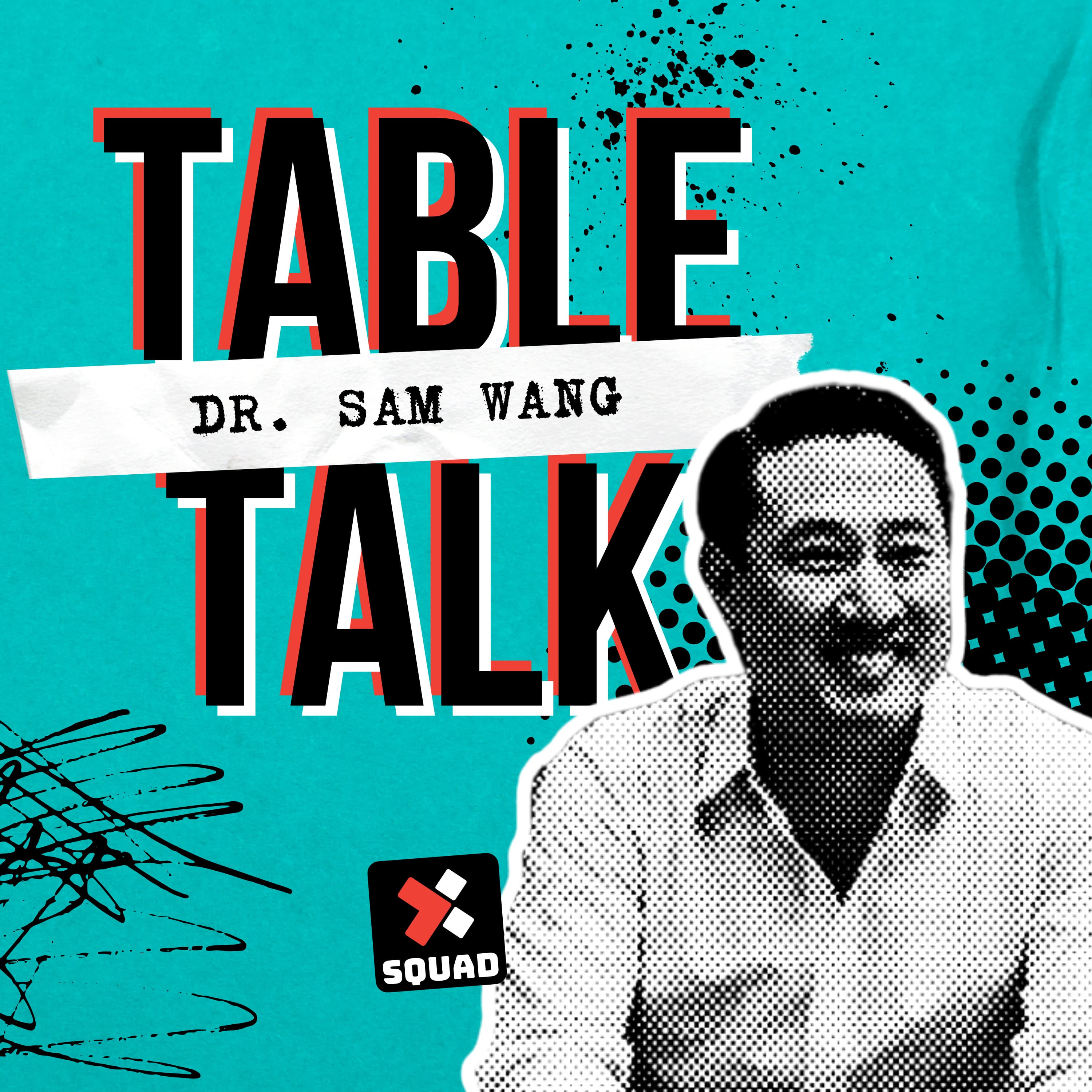
Synopsis
Dr. Steve Tullius and Pacha Hornaday talk with the founder of Chiro One Wellness Centers about building a subluxation-focused practice from a single office into more than 150 clinics nationwide. The conversation covers the mindset and business skills needed to scale a practice, the danger of limiting beliefs, and the need for more collaboration across chiropractic associations. It offers practical insight for chiropractors thinking about growth, leadership, and the future of the profession.
Dr. Sam Wang shares how thinking beyond the walls of an individual practice has shaped his approach to leadership, service, and the future of chiropractic. He reflects on the importance of pursuing a vision larger than personal success, encouraging chiropractors to invest in people, organizations, and opportunities that expand the profession's reach. The discussion digs into long-term thinking, collaboration, and developing future leaders, emphasizing that meaningful growth comes from building relationships rather than protecting territory. What becomes evident is that realizing a bigger vision requires chiropractors to move beyond short-term goals and contribute to something that will outlast their own careers.
Key takeaways
- 1
Scaling to 150 Plus Clinics
The guest describes how a single subluxation-focused office grew into a network of over 150 clinics across 13 states.
- 2
Limiting Beliefs Are the Real Obstacle
The discussion identifies self imposed limiting beliefs, not external circumstances, as the biggest barrier to achieving big goals in practice.
- 3
Breaking Down Silos in Chiropractic
Pacha and the guest discuss how different chiropractic associations and groups need to communicate more openly to move the profession forward.
In this episode
Jump straight to any moment.
If you liked this episode, be sure to check out
Episode 36
Growing Your Practice and Life from the Inside Out with Dr. Corey Malnikof
Episode 27
The $100K Subluxation in Your Practice with Dr. Josiah Fitzsimmons
Episode 26
The Joy Led Practice with Dr. Jodi Dinnerman
Episode 22
The Scaling Subluxation: Adjusting What Breaks When You Try to Grow with Dr. Austin Cohen
Episode 18
Restoring Reason in Chiropractic with Dr. Travis Corcoran
Full transcript
Made by speech recognition, with names corrected. It may contain errors, so check quotes against the audio. Spot a mistake? Tell us.
0:00From a Whiplash Injury to Chiropractic Career
Pacha Hornaday 0:00
Foreign.
Show intro 0:05
Wants to make a bigger impact. What's getting in your way? You're tuned into the subluxation squad podcast. One squad, one mission. Chiropractic for all.
Dr. Steve Tullius 0:16
Hey everybody, welcome to episode 31 of the Subluxation Squad. I'm Steve Tullius with co host Pacha Hornaday. Pacha, how are you doing today?
Pacha Hornaday 0:28
I'm great and I'm excited for another episode.
Dr. Steve Tullius 0:31
Absolutely. I'm always excited to chat with you, Pacha, because we're always talking chiropractic, which I could do all day. Today we have a really special guest who I'm really excited for personally to continue to get to know, Sam Wang here because he's a really unique individual, done some really amazing things in chiropractic and I would say one of our most unique guests because very few people has done what he's done and I just, I can't wait to hear and learn from you, Sam. So welcome to the show, Sam. Thank you so much for being here.
Read the full transcript (8,472 more words, 11 more chapters)Hide the rest of the transcript
Dr. Sam Wang 1:12
Thank you very much guys for having me.
Dr. Steve Tullius 1:15
Yeah, so I, I'd love to hear your story as I personally don't know your story in chiropractic. You know, how you got into chiropractic and, and then what, you know, I know what you've created, but I don't know, like how it all began and you know, what that process looked like. So I'd love to hear your story.
Dr. Sam Wang 1:33
Yeah, I think, I guess peeling just a couple of layers of the onion back. I was a pre med major in undergrad at the University of Iowa. And in between my sophomore junior year, I. Well, actually one. One more layer back. You know, as I was growing up, I'm first generation here in the U.S. we came over in the early 70s and my mom's mantra, you know, experiencing the American dream was you're going to, you know, go to college, you're going to be a doctor, you're going to have a great life. That was, you know, her in Chinese version of that. But you're going to go to college, you're going to be a doctor, you're going to have a great life.
And so when I was in high school, as my guidance counselor asked, what are you going to do, Sam? Are you thinking about college? I said, yeah, I'm going to go to college, I'm going to be a doctor and I'm going to have a great life. That was always just, here's the funniest question. The guidance counselor said, sam, did you know you had to have grades to go to college? And I wasn't the best student academically. And the, you know, guidance counselor kind of had a wake up call. I come to Jesus with me and said, yeah, Sam, you really have to, you know, have the grades. And I said, no, I wasn't aware of that.
My parents didn't go to college, so they didn't kind of prepare me for that. I thought it was an automatic given, right? You graduate high school, you go to college. And it was kind of an eye opening experience that I had to then put in some work, which I did then eventually leading to, you know, an academic ride to go to a state school so that I chose the University of Iowa. And so then, same similar kind of era. I knew now I was going to go to medical school after undergrad, but specialty, I had no idea. And so then again, in my, between my sophomore and junior year, I'm home for the summer, looking to get a summer job.
Nice sunny summer day, little summer rain. And I was driving in between interviews, job interviews. And as I was stopping on the road ahead of me with the car, you know, stopped, I slowly came to a complete stop. And then the car behind me decided to keep on going and she ended up rear ending me. I woke up during that accident. If you would have looked at my vehicle, you would have thought somebody passed because the, the car did its job and kind of just, you know, compressed in and took all the, you know, the, the brute force. But.
And I came out of it going, wow, I definitely have somebody up there watching over me because no scratch, no broken bones, lacerations, nothing. And came out of it again, a teenage kid going, wow, this is great engineering. A week later I wake up with all of the symptomatology of a whiplash injury. And I thought I just slept on the couch, you know, in a bad posture and, and then woke up with a sore neck. But it was really more than a sore neck. It was the sharp reticular pain down my neck and up into my upper back.
And anyway, fast forward, I go find a chiropractor, and I happen to be at that time living where the fountainhead of chiropractic, where chiropractic was first discovered in the Quad Cities. And, and so, you know, I coincidentally saw a commercial on TV for a chiropractor that treated whiplash cases. And so I go and I had the privilege to really experience that hole in one type of adjustment in the sense where the one adjustment I had 10 out of 10 pain to where it went from 10 out of 10 to 0. And so that experience was like, holy cow, eye opening, you know, from above down that.
It said, okay, now I absolutely know what specialty in medicine I'm going to go into is chiropractic. That's how ignorant and naive I was. I thought chiropractic was a branch of medicine. And so I go back then to my guidance counselor at Iowa and said, hey, now I know what I'm going to do when I start medical school. I'm going to specialize in. I thought, you know, chiropractic was ophthalmology or dermatology. It was just chiropractic. And he gave me a chuckle. And at that time, in the mid-90s, you only needed the equivalent of a two year associate's degree to get into chiropractic school. And so he kind of chuckled.
He said, sam, you know, you don't need a bachelor's degree to start chiropractic school. And I said, really? And so anyway, you know, fast forward, I find my way all the way down to Sherman College of Straight Chiropractic in Spartanburg, South Carolina, where then over kind of some journey and for another later date, I ended up graduating in 2001 at a really, really, I think, great time for chiropractic, where I got to experience a lot of the.
What kind of built chiropractic in the 90s and 2000s that I also then got to transition from the manual to the digital age in chiropractic in the early 2000s and started my first practice right in that same time frame.
Dr. Steve Tullius 6:49
Yeah, yeah, I graduated in 2002. So I'm very familiar with the, you know, that era. That's cool. I'm curious, you know, you're. You're in, you're right there next to the Fountainhead. Why. Why'd you go all the way to Sherman?
Dr. Sam Wang 7:04
Yeah, that's a great question. So my roommate at the time was a third generation Palmer student or, you know, graduate. And well, at the time he was a student. And he said if he had a choice because he was playing rugby for Palmer at the time, he would have chose a different program down in Atlanta, Georgia. And. And I said, you know, I'm not attached.
I was finishing up my prereqs and I said, since I'm not attached to staying and all of my high school friends were graduating and coming back home, starting their careers and their jobs, actually making money while I was still a poor student that I knew I needed to get out of town just so that I had the attention and discipline to focus on the Graduate program as opposed to being distracted and going out seven nights a week.
Dr. Steve Tullius 7:54
Yeah, okay, Very cool. By the way, Mark Supernet says hello.
Dr. Sam Wang 8:00
He's very cool.
Dr. Steve Tullius 8:01
Yeah, he's a great individual. We're gonna have him on, on the show in the future. So now you told us like, you know, how you got into chiropractic. What you haven't shared yet is what you did in chiropractic so far. And you're, you're still alive. So I'm sure there's still, there's still more. But man, you've, you've done some things that most people would only dream of. And I'm, I'd love for people to hear what dream you had and how it came became a reality and then maybe more into like what it takes to make that a reality.
8:05Dreaming of Starting a Chiropractic Office
Dr. Sam Wang 8:36
Yeah, I'm probably a great example of just being in the right place at the right time and not out of just being lucky, but putting myself in those opportunities, right those, those places to hang out with great people, fantastic mentors that I've had the privilege of getting into their path and their journeys. Um, but yeah, when I came out of school, the option Sherman offered at the time was a preceptorship. And then, you know, you choose and find a chiropractor in the field to do your last quarter in. And I chose then a doctor in the Chicago metro area because I knew I wanted to come into practice and practice in that state.
So I figured if I could, you know, work part time as a preceptor and then, and then start building my first office out, that would be the ultimate dream. And that way when I walk across the stage, I can go practice the next day. Right. And open the business. And so I needed to hit the ground running. Fast forward a year and a half. We achieved a level of success where we recognized and I partnered my first office with two Sherman alum that I were, that were classmates of mine. So I was able to convince Gary Robin and Brian Rutaki, Gary's from Jersey, Brian's from Pennsylvania.
And both of those home states for them required the part four national exam, which was going to be a six month to nine month delay from the time we walked across the stage. So I convinced them to come with me to Illinois practice their first year because we could get licensed. In fact, we graduated Saturday, we got licensed Monday morning back then. And so I lured them to Chicago to practice so that their hands didn't get rusty, you know, before they were able to practice back home. And so we Brought them out.
We then opened our first office together and we achieved a level of success in the first 18 months that were probably more than the most, you know, the average doc coming out. And arguably it was three doctors doing the work of one. Right? So we were a super doc, but we were really one superdoc, not three superdocs. And so as we thought about and a mentor of mine really reminded us at that time that we're doing a great job. But again, it's three of you doing the work of one. And so we needed and understood really quickly we needed to diversify and open clinic two since we had three doctors.
And as we were opening clinic two, we thought, well, backup strategy also we should probably bring on another associate just as we're growing in volume. And so we recognized really quick as we hired our first associate, we went down the pitfall that notoriously our profession is known for, which is an over promise under deliver. Watch what I do and do as I say, I'll pay you nothing.
You're going to learn everything to where you know, the failures in these associate opportunities is because, not because of mal intent, but I think it's because of lack of really real understanding as an entrepreneur, as a business owner, and a lack of any experience in the whole realm of education of actually being the teacher as opposed to being a student. You know, we go through chiropractic program. Most of us are 812 years of higher education and we're great students, we're professional students, but we're not necessarily a great instructor, teacher, professor. We haven't learned those skills.
And what ends up happening is we, we give this promise that we will train the new doc, the junior doc coming in, the associate, without any real experience or knowledge of how to execute on that training. And so we fell into that same pitfall. It was a, you know, hey Tony, stand behind me, watch as I do, do as I say, learn fast. And Tony did not learn that way. He didn't, he wasn't a visual learner. He just didn't pick up things by mimicking somebody else. And at the six month mark, you know, we were having that conversation, it was a come to Jesus going, hey, maybe this practice isn't the right fit.
And what I recognized really quickly through his effective communication to me was, hey Sam, could you write down some of the things that you were saying? Because I just, you know, I just need to see it in writing. And you know, he was like, he was a fantastic student. And the wheel started turning as I gave him a lot of written materials. The next day this guy comes back and he's fully scripted. And it was kind of this light bulb effect going, well, heck, maybe I need a curriculum to go through what I went through as I was a student and in my first year of practice to then help train Tony and get that associate off, you know, and running.
And that was the awareness and it wasn't. Here's the thing, you know, in parallel I recognize, you know, our allopathic friends, they have residency programs, right. Postgraduate, you know, they go through their four years of medical training and then they go at least two to eight years of, you know, post grad fellowship. And I just realized the other non MD healthcare providers, the optometrist, the dentist, the podiatrist, they all also now have postgraduate fellowship programs. And chiropractic is lacking in some of that.
And the thought occurred to me, wouldn't it be great if I actually created a residency program not necessarily in the specialty or method with the approach, but more on the business, on the operational aspects of clinical practice. Because that's what at that time, 25 years ago I thought was lacking in the profession still probably true to some point, to some extent today. And I thought wouldn't it be great if I could create curriculum to be able to educate associates then to. So that they knew what to expect in terms of, you know, my expectations of whether they're doing a good job or not and what they needed to learn.
And then that way too my expectations got met. Whether they were pacing on track to achieve those goals. Goals and, and more importantly those outcomes.
Dr. Steve Tullius 14:57
Yeah, I mean what you're describing is how all other forms of business, like good business operate. Right. And, and so you're an early adopter of that. What did it, what did it create? So you have, you know, we people know, if people know you, they, they know what you know, they know what it created. I'd love for people to, to really understand what we're talking about because it's not a small thing.
15:07Growing a Subluxation Focused Practice Nationally
Dr. Sam Wang 15:22
Yeah, well, and, and full disclosure, I am a year and a half into retirement but I did help co found a brand called Chiro One Wellness Centers, a family practice subluxation based focusing on obviously restoration of and correction of vertebral subluxation and overall health and wellness as well. Right. And so we have 150 plus locations in 13 different states. But it's not necessarily that you know, the brand or the number of clinics that we own. It's more, it's the systems that we developed and we, and that systems is really riding on that postgraduate fellowship training that we created that focused on three main pillars.
Office procedures and protocols, which, you know, everybody kind of has out there. We just, we did a really good job identifying every single procedure down to where we place our pens. We just got very standardized across all of our clinics and what color pens we use. Blue was patient, black was staff. Right. But we got very, very detailed with office policy and procedures. Then the second pillar was professional development. There's a very huge gap of knowledge from a doctor or chiropractor who's graduating school to what you have to learn as a professional, a licensed professional out there. Right. From the basics of a handshake. Right.
How do you introduce and welcome a patient to your practice? All the way to making the patient comfortable in the clinical environment. Right. Removing the fears that a patient comes in with. So it's a lot of patient psychology and in that professional development and how to effectively communicate your value prop. Not in three years, that three and a half years that it took you to learn chiropractic, but more in a two minute conversation to where the patients get the aha. I want to learn more. Right. I want to get more information on this. So professional development was that second pillar.
And then the third pillar was all around case management. So even in the fantastic program, I graduated with the management of the patient's case. Again, chiropractic is from the time you're born to the time you pass. And so how do you effectively navigate that case management in an environment where in Illinois, and it's still true today, we have a fantastic commercial payer landscape here where health insurance reimburses for chiropractic incredibly well. You probably won't hear that much out there because over the last 25 years it has evolved and changed.
But I would stick, I would say in the 13 states that we practice in, it's still effective, it's still good. It could definitely improve and be better. And I'm very optimistic with the upcoming Medicare Modernization act that will hopefully get passed soon that it. It will open the floodgates and we will see a tsunami effect with especially the senior or the Medicare population. The participant population will start coming into our practices.
Dr. Steve Tullius 18:45
Awesome. Yeah. So you unpacked a lot there. I'm sure, Pacha, you have some.
Pacha Hornaday 18:51
I'm taking notes.
Dr. Steve Tullius 18:54
There's two things that I really know centered on. I saw Patric, I saw your reaction. Just the. The detail down to the pins. Right. Which I think is a really great lesson there. Right. If for everyone Listening. Most, most offices I've ex, I've explored don't have anything written down or they have very, you know, just a few procedures, few policies. And then it's not really. Then there's no training either, but, but now you, you guys, I mean, in order to reproduce this thing, saw how incredibly important it was to. Down to the pins.
Can, can you tell us maybe a little bit about how, what that, how that becomes part of the company culture and policy to. At that level?
Dr. Sam Wang 19:44
Yeah. You know, again, back in my background, you know, my parents were restaurant entrepreneurs, including my grandparents were restaurant entrepreneurs. And so I grew up in the family business of being in a Chinese restaurant and recognizing that although they were very similar to chiropractic, you know, in the restaurant business you have a front of the house where the customers obviously dine and eat and see with the service right from the servers. And then you have the back of the house, which is predominantly the kitchen, right in the back office. And I saw very similar parallels of what needed to be done or lack of. Right.
I just remember every time walking into my family restaurant, it was a controlled chaos. It was the server screaming to the cook and the cook screaming back to the servers and people, you know, not being able to read the handwriting on the, on the little tickets and, and all of that.
And as fast forward as I went through college and you know, had to work and get a job, I worked in, you know, corporately owned and managed restaurants where they actually had systems from the time you interviewed to the time you got hired, all the way down to how you clean a station was all detailed, written that there was an actual order, a process that is you clean the light fixtures before you vacuum the floor. Because obviously as you're cleaning light fixtures, dust and dirt fall to the floor. Right. There's a, there's an order to it.
And so I carried forward then as I worked at McDonald's and Applebee's and again a bunch of corporately owned restaurants that, that everything was detailed and written back then, VHS tapes you'd watch videos on so that you then developed and followed so that then again the outcome of your training was very, very clear. And what you know, again, both from the learner as well as the, as well as the teacher. And so that's what we ended up creating was a 540 page manual is about 6 inches thick.
And every again, process we had, we had written, we had video, we had photos so that everybody can use their five senses to be able to really then go, oh, this is what you mean? Oh, I get, you know, and, and so they, they couldn't say I didn't understand. I needed more clarity. You know, they, they were very, very clear and all amazing.
Dr. Steve Tullius 22:07
All before AI.
Pacha Hornaday 22:09
I know, right?
Dr. Sam Wang 22:10
A lot of manual, a lot of cutting, literally cut and pasting paper.
Dr. Steve Tullius 22:15
Oh, yeah, no, that's, that's amazing. And, and you know, now and today really, there's really no excuse why people can't do that now. Like, back then it was a ton of work. Now, not that it's not still not work, but you can simply talk your procedures into AI and it can create those manuals for you. So what, so what then stops people today? You know, you had a big. And I wonder if your dream was your dream to create this thing or did it just like, how did it unfurl? And what do you think stops people from maybe one dreaming that big and then to execute in that.
22:38What Stops People From Dreaming Big
Dr. Sam Wang 22:55
Yeah, I think, you know, rooted from again being a first generation immigrant of, you know, really believing in this opportunity called the American Dream. Right. And that probably was the foundational piece for me.
You know, I'm very, very blessed and fortunate that, you know, I'm a naturalized citizen and in the 90s and I absolutely value what this country offers and understanding, you know, the opportunity that I'm not going to squander it, that it was to be successful, you know, build a legacy and hopefully be able to provide the things that my, that, you know, that I didn't get to experience growing up, you know, for my children and, and so, and hopefully my grandchildren. And so that was kind of this big vision of, you know, what I wanted to eventually get.
And then what vehicle am I going to use to, you know, get that that goal is, you know, then again, you know, the calling of chiropractic and becoming a chiropractor. And, and it was again, I think, a fantastic marriage of how do you help society by obviously changing people's lives through the power of chiropractic. And then I think you should be handsomely rewarded for making that type of impact. And so I don't think they're mutually exclusive, although I think a lot of chiropractors out there think that they have to be in a state of poverty to be able to actually truly serve. And I disagree with that.
And I think, you know, I think if you're providing a high quality, high level of service, you should be highly financially rewarded for that level of service. And so that was kind of the motivation piece and then it was, well, again, executing on that motivational piece of saying, how do we deliver that and not leave it up to chance or interpretation or individual feedback, you know, because our profession is very notorious for having incredibly intelligent, high level individuals that are notoriously wanting to be autonomous. Right. And have kind of free range to do anything and everything.
So we have a very broad scope of how many chiropractors define chiropractic and then how we execute on delivering our services. Right. You visit 100 chiropractors and you're probably going to have a thousand different encounters and experiences out there, right. At three times a week. And so what, what's that understanding and where, how did they derive to that was. I didn't want that to, you know, be left to chance. And I wanted to make sure then, regardless of the institution that our doctors graduated from, that we would then standardize the educational piece of.
And then how they delivered the, that education to our patients so that then I knew what the outcomes were going to be.
Dr. Steve Tullius 25:51
Yeah, that's awesome.
25:53Scaling From One Practice to 150 Clinics
Pacha Hornaday 25:53
I'm, I'm curious, so. Well, first of all, I have to say, you know, I love systems and I love them because I hate systems because I'm, I'm a creative person and it's really hard for me to follow a procedure first of all, all the way through without getting bored. And then repetitively, like over and over the same thing. It's like, oh, it's going against my, my being, you know what I mean? But I also know, especially now as a business owner and you know, working with chiropractors, I know how important systems are in anything really. Not just, you know, not just for chiropractors or you know, in any business and any, in any organization.
But what I'm curious about is we went from, we went from you and your two, the college buddies opening the first practice and then hiring an associate and figuring out, okay, we need the system here because this didn't quite work out with him to 150 plus clinics. Like, I wanna, I'm curious, how did, what was the vision back then when you started your own practice, the one. And how did it evolve? Because I can't, like, I can't even imagine how you go from, okay, let's open a second and let's maybe open the third because we're three people. And then like, how does that continue? How does the vision grow?
Dr. Sam Wang 27:17
Yeah, well, and actually that first associate is still with us today. Dr. Tony Danil. He's amazing. Yeah. 2003, Palmer grad. And he's still with us and doing great. Things, you know, again, right place, right time. Clinic 2, I was at a conference Saturday night, I'm at the bar, hanging out and I ran into a, you know, an acquaintance of mine and he was burnt out. He was a fifth year Parker graduate and was just really burnt out in practice. And again, you know, he wanted out. I lowballed him. He calls me up Monday morning going, was that a real offer? And I said, yeah, let's do it.
And we picked up the keys Friday, we painted the office overnight and then brought in our adjusting tables. And Monday morning, you know, we opened that clinic. And again, just right place, right time. And I think I paid around 25,000 for that second clinic. He took his patients with them, he took his furniture and his equipment with them. And so we started it from scratch and within. And the only thing he left behind was his 1980 something X ray unit. That was a single phase. X ray unit was a dinosaur, but it took actually great X rays.
Pacha Hornaday 28:33
So wait, so what did you pay for? Sorry for interrupting, but what did you pay for?
Dr. Sam Wang 28:37
25,000 was, was the sign that said chiropractor. And then I had a sublease the space and then his X ray unit, it was pretty much it. But what really kind of sparked the, the light bulb effect was that first 30 days we collected just over $32,000 in over the counter collection.
Pacha Hornaday 28:59
And amazing.
Dr. Sam Wang 29:00
I was like, well, heck, what we're doing is reproducible, right? Clinic two, you know, what took clinic one about 12 months. Clinic two, we did in 30 days. And so the light bulb was like, well shoot, let's do another, another one. And, and so as we were signing the lease and building out clinic three, I didn't realize I was signing with the largest landlord in the US that owns the most commercial property, real estate in the entire country. And that Clinic 3 took almost a year and a half from the time I signed the lease to actually open up.
Because they were such a mega organization that I then actually had clinic four and number five open before clinic three actually opened. And what I, what we really did was we created a fantastic mess, right, because we got good at signing leases, we got good at, you know, buying furniture and, and now hiring associates and starting the training kind of process, the evolution of the training process. And you know, then finally realized, hey, we still have to attract patients, we still have to have patients, you know, sign up. At that time, the only case management I had was well, chiropractic from the time you're born to the time you die.
So let's just do it in year care plans. Let's just sign everybody up on year care plans. And that way, again, we could utilize chiropractic, depending on what your needs are throughout the, you know, seasons of the year. And, and so we, you know, we stumbled like a lot of chiropractors do. But what we ended up, again, like many business books, you know, say, you know, you just fail, forward fast and get up and, you know, learn from those mistakes and keep on pushing forward. Right? But the bigger vision was really just making sure that all human beings discover their full potential.
I mean, for us, that was, that, that was really, really exciting is that if we can turn on that light and allow patients to express their full potential with their lives, I mean, that was incredibly rewarding for us. And then if we can actually get paid well for doing it, it was like a win win.
Dr. Steve Tullius 31:16
So, you know, Sam, number one, I really appreciate you and your heart and who you are, and I've had that opportunity to spend time with you and really get to sense that. Um, and what I'm hearing is, you know, these principles that you live your life by. Number one, you know, gratitude for the opportunity. Right. That your parents gave you and obligation to fulfill, you know, that gratitude by living to your full potential that they gave to you. And then once you discovered this thing, you know, with great knowledge comes great responsibility.
You, you not only did something amazing with your friends in, in, you know, 18 months, 12 months, but then you realize, okay, well, there's things because of that obligation, we need to learn more. We need to, we need to not allow, like, limitations stop us from this next thing. We need to learn how to do like, sign leases and get great at buying furniture and great at helping people understand how to learn where the pins go and, you know, all the things. And, and so I'm just really inspired by your story.
And what message do you have for people listening to this who, you know, they, they have this big vision, but something's still just blocking them. What's, what's the subluxation blocking them?
32:36Limiting Beliefs as the Biggest Obstacle
Dr. Sam Wang 32:48
I would say it's the six inches between their ears. And you, you know, hit it a little earlier. You know, you said limiting belief, right, Those two words. I think as human beings, we minimize things and we tend to, I don't know, blow them up to make them bigger or, or harder than they need to be. Everything is easy. You just got to put the time and effort in, into accomplishing it. We tend to want to over complicate things to make them, make us Feel good about the achievement or the excuses of why not to tackle it because it's so complicated and so hard and not a lot of people do it.
And I think we are then our biggest obstacle in achieving our dreams. We just tend to create all of the drama that really doesn't exist to where it becomes real for us, to where then it holds you back. So I think that's probably the biggest thing I've recognized over the years in human potential at least.
Dr. Steve Tullius 33:54
Nice.
33:57Privately Owned, Not a Franchise Model
Pacha Hornaday 33:57
So I'm curious about, you know, I'm from the branding world. I'm a brand strategist. As a brand, like first of all, I guess, is it a franchise that you have or what is the system behind it?
Dr. Sam Wang 34:12
That's a great question. That's what makes my organization probably a little unique compared to some other ones. We're not a franchise. We're privately owned, privately held. So we own all of our clinics and all of our Doctors. Just under 200 of them are employees of ours. So we again, since there were franchises in chiropractic, I didn't think that was a value prop to open another franchise. But what I recognized was we are a profession of really intelligent, independent thinkers and that we needed a vehicle similar to our allopathic friends to just get plugged in.
Like if the determining factors to become successful as a chiropractor we was your ability to educate your patients and to adjust effectively to get outcomes. Educate and adjust as the only two determinants, the only two variables in order for you to succeed or not. Wouldn't that be great? Like you didn't have to be an entrepreneur, you didn't have to learn everything else in managing a practice. That's the thesis that we came up with with creating our organization was let's hire then so the 1% of the students graduating chiropractic school are going to be successful entrepreneurs.
Fine, let's not worry about them, but let's look at all the B's and C's out there. Students that would be great, phenomenal chiropractors, but lack the ability to be able to open their own practice financially as well as them from a knowledge and skill base and just plug them in. And so we created again similar to a hospital system for the allopaths, we created then a bubble of clinics to where they just have to get plugged in and be able to educate and adjust.
And that would determine how successful they will become because we then will provide all of the support, the training for the support staff at the clinic level, the back Office support. We do a phenomenal job.
So we don't even require our doctors to market because again, that's another skill set, that's another degree, that's another, you know, career and profession that we said, let's just allow our providers to be phenomenal providers and then let's let marketing and salespeople, let's let insurance revenue cycle billing, let's let CPAs and attorneys do everything else that they're also trained, you know, successfully in doing so that they don't have to do it all. And that's really the model.
So, yeah, we're privately held in all of the states that we're in so that again, we don't have to teach them how to be an entrepreneur because that's several years and another.
Pacha Hornaday 36:58
I love that and I totally agree. Like, I've always talked with clients and non clients about how not everybody needs to own and run their own business. It just doesn't make sense and not everybody's cut out for it and that's perfectly fine. Like you're not a failure just, just because you're working for somebody else. You know, I think, I think chiropractors have like this independent spirit, this kind of like rebel, you know, internal attitude already because they're going against the, they've been going against the grain for so long in terms of, you know, healthcare.
But yeah, I think a lot of people would actually do a lot better if they could just focus on caring because they're really good at it and they get so stressed out about the business that it affects how they take care of people too. I think that's, that's a huge impact. Huge supplication. Really.
Dr. Steve Tullius 37:50
Yeah. So, I mean, Sam, you guys are providing such a necessary option for the profession without you. I mean, 200 chiropractors, that's, that's not a small number. That's a significant portion. And I would argue that we just need more of these opportunities, more options like that, because not everyone should have to become an entrepreneur and should have to become great at marketing and should have to, you know, we, as a profession, we need to drive demand too for this thing.
So, you know, that's, I'm glad you brought up the Medicare, you know, bill that hopefully will be passed soon to increase, you know, options for people, utilization and other pieces. So I, to be transparent, before I really understood this level of what you and some other corporations, individuals have created, I saw it from a more selfish standpoint, which I think some of the profession might see it in that it's creating an increased cost for the individual provider for associates.
Dr. Sam Wang 38:57
Right.
Dr. Steve Tullius 38:57
It's driving the salary up. I see that as a necessity. And, and it, what it should do, and I hope is doing is helping the profession, each individual provider, raise the bar for themselves and their practices and become even more successful themselves so they can help their associates become more successful and create, make the whole thing sustainable. So I see that, that you guys absolutely have done that, and thank you for that.
39:32Corporate Branding and the Chiropractic Profession
Pacha Hornaday 39:32
I'm wondering what you, what you guys think. You know, me asking as an outsider, but with the, the viewpoint of branding and, and marketing, having more larger companies with lots of dogs under them, would that be, would that make it easier to brand the profession of chiropractic? Because there are fewer people doing their own thing, which might look confusing to the outside, you know, to the patients, not really understanding what actually is chiropractors. These people do shockwave and these people do decompression. And do you think that would make it easier if, if. I don't know if that's a question I should even ask.
Some chiropractors are probably going to be mad.
Dr. Sam Wang 40:17
It absolutely does in the sense that, you know, the biggest drawback that my organization has as an opportunity for chiropractors is that they lose some autonomy. I don't tell them how to clinically practice. However, I limit what they can bring in in terms of services because again, like in Illinois, we're licensed as primary care physicians under a medical practice act. So it's not even a chiropractic act, it's a medical act.
So that there are chiropractors or, you know, people who have a doctorate in chiropractic that are doing colonics or that are doing cold laser treatments for diagnosis of disease and, you know, and, and, you know, curing those conditions. And, and so there's. To your, to your question, you know, from the consumer aspect, you don't know what chiropractic is. Is it acupuncture, is it, is it massage, is it lasers? Is it decompression machines for, you know, is it, is it personal injury, car accidents, for whiplash? You know, what, what is it?
And so when you do have a corporate brand that has decided to, you know, create systems around how we deliver our service, how we deliver our service and standards around that, then it is more recognizable. You know, you walk into a Cairo one in Illinois versus in Alaska, and you'll have that same experience, both from the customer service, from the training of the staff. We absolutely run around that front desk and welcome our patients to our, our practice to. They'll notice their name on the welcome board as they come in to how the office is, how the staff gives an office tour.
We've, we've standardized to make sure that experience is reproduced over and over and over again. And then you'll also have familiarity if you've seen a chiral one, that once you walk in and you identify front desk and the adjusting tables, you can navigate through the practice very effectively. Just like if you walk into a Walmart today, if you're a wall, if you've ever been a Walmart consumer, you go into Walmart in one state and go in the other state. It's the same experience, it's the same floor plan.
It's just a different, maybe size in terms of scale of the square footage or, you know, a different rectangle or a trapezoid, you know, or a square. Same. With our Carolina clinics, we, we've scaled, you know, how we furnish the, you know, the, the clinics with the exact same equipment in every single chiral one clinic. So that way patients have that, that sense of security and familiarity to again, bring down some of that anxiety going, am I going to get poked, prodded, you know, or have to take a pill for this?
Dr. Steve Tullius 42:56
Well, imagine it creates portability for your teams too, if they desire, if there's opportunities, openings. Right. I mean, because now everything is exactly the same.
Dr. Sam Wang 43:06
Same. Yeah. You know, one in about, about 15 years ago, we recognized we were hiring more female doctors than male doctors. And, you know, it's proportionate to the enrollment in the institutions, there are a little bit more females to males. And we recognize then we were hiring young females childbearing, wanting to start families. And so we had to create a program to then be able to give maternity leave because we didn't want to lose these chiropractors once they started having families. So that created a traveling pool of doctors to then fill. Right.
Pacha Hornaday 43:43
I love that.
Dr. Sam Wang 43:44
And that then created the necessity to standardize how all of our clinics work, right? From the EHR systems to all the furniture, fixtures, equipment, to the training of the staff. That way I can jump in any clinic and within 10 minutes, you know, be very effective as it's the same thing everywhere you go.
Pacha Hornaday 44:04
That is so smart. And I love that that opens up this opportunity. I can imagine, like being a woman chiropractor, that's, you know, that's a concern. Like if you have your own practice, what do you do? Even if you work an associate somewhere, you know what I mean? I Love that. That's really awesome.
Dr. Steve Tullius 44:21
Fantastic. Well, you know, we, we went a little bit longer today, Sam, because there's just so much and there's so much more we could dive into. Thank, thank you so much for everything you've done for our profession for then you continue to do. I would love to have you come back sometime just to chat more. But before we let you go, we're not gonna let you go without going through our rapid fire round, so.
44:44Breaking Down Silos Between Chiropractic Groups
Dr. Sam Wang 44:44
All right.
Dr. Steve Tullius 44:45
Yeah. Pacha, do you have a first question or I can throw one out there.
Pacha Hornaday 44:49
Let's see what conversation in the profession is not happening.
Dr. Sam Wang 44:53
That should be what conversations? You know what? I think all the conversations that need to be had is being had. Believe it or not. The challenge is we're in a lot of silos in the various associations and groups and if anything we just need to break down some of those walls and again treat each other as we would like to be treated and invite others from different groups to then hear what's going on. So I think that's really the more important necessity is to break down some of these walls and, and invite, you know, people from different camps to then listen.
Dr. Steve Tullius 45:32
Absolutely. That's a big thing. That's why this platform exists too. You know, we're inviting people who unfortunately I would have put up, I had walls up before. So I, I'm, I'm trying to put out a different way of doing things personally for myself and, and be a better role model that way. If chiropractic were an animal, what would it be
Dr. Sam Wang 45:55
if it were an animal? Oh, you know what, my wife always calls me a panda. So I'll use that. You know, we're, we're, we're passively aggressive.
Dr. Steve Tullius 46:11
My mother. No, sorry mom.
Dr. Sam Wang 46:12
We're very comfortable. Left on our own to kind of eat and do what we do. But once you kind of poke and prod us, then we're kind of dangerous. Right. We get a little, get a little feisty and angry. So.
Dr. Steve Tullius 46:22
Good, good. Like it.
46:25Bringing in Experienced Leaders to Scale
Pacha Hornaday 46:25
Okay. I have a question that's not even on our rapid fire list, but that just popped into my head. You said you're somewhat retired, so I'm curious what the vision is now. If you can keep it short. It's rapid.
Dr. Sam Wang 46:37
Yeah. So I recognized again one of my own internal subluxations was my own limiting belief of what Cairo one can scale too. And so I wanted to then to bring on more senior experienced leaders that have taken multi site groups from 150 to 500 to, from 500 to 1000. So I wanted to make sure then that I didn't limit my own organization's success just based upon my abilities, my personal abilities. And so my partners and I said let's bring in more hired, you know, experienced leaders to then help navigate the next chapters of this organization.
Dr. Steve Tullius 47:15
Yeah, super smart. Love that. Who are three people that we should interview next?
47:19Chiropractic Leaders Worth Interviewing Next
Dr. Sam Wang 47:23
Oh, well, I would say looking outside of then our traditional camps, I would say one of my favorites is Dr. Sherry McAllister from the foundation for Chiropractic Progress. She just wrote a book called Adjusted Reality. I think she'd be a great one. I absolutely love Dr. Carl Cleveland. I think he could talk about legacy and his grandparents and his parents opening up the institution and what he's done with his school. I think that's a phenomenal. I mean he can talk for hours. So he's a great one. And then, you know what would be really interesting from the risk management side, I think there's Dr.
Stuart Hoffman from CairoSecure, which is a malpractice group. But Stu is a chiropractor, I think a second generation chiropractor and has brothers and you know, a whole family of chiropractic, but he's on the malpractice side. And just to be able to hear, you know, with 40, I don't know, 20,000 chiropractors under his, you know, liability or management, it's a, it's a interesting perspective to see where the profession's going and what obstacles are getting in the way. So probably those three.
Dr. Steve Tullius 48:40
Cool. Yeah, no, that's. Those are great suggestions. Love it. Awesome. Last question. What is an unsublicated profession look like to you?
48:45Reflecting on 25 Years in Chiropractic
Dr. Sam Wang 48:50
You know what, I, I had the privilege to be able to reflect over the last 18 months of, you know, you know, I say this current chapter of retirement is, you know, the title of my chapter is the Art of doing Nothing. I'm really spending a lot of time trying to slow time, my perception of time down, which has been really fun because, you know, working every day at a 9 to 5, answering emails and all of that, I just felt I could always blink and eight hours would go by so fast. And I wanted to figure out how do I kind of collapse that perception of time and so that eight hours actually feels like 24 as opposed to two.
And I think with having a third party perspective on this industry, I think we're actually doing a phenomenal job. You know, it's easy when you're in the weeds, when you're in the forest. To, you know, really, you know, have difficulty and to criticize what's not working. But we have so many, again, great organizations that are doing some really great things for our profession that I'm really optimistic. Again, 25 years into doing this, I'm more ecstatic about chiropractic today and the opportunities we have than when we came out of school, what we could do. I mean, there was only one option back then.
And so, you know, I don't think, you know, what we currently have are, you know, fixed subluxations that, you know, aren't adaptable through. You know, if anything, again, just breaking down the barriers, the walls in between our silos, our different camps out there and really connecting as human beings. I think that's really what we need to be focusing on.
Dr. Steve Tullius 50:46
Agreed. Awesome. Well, thank you so much. Sam loves everything, you know, our, our time together and would love to be able to help people connect with you however you, I know you're retired, but how can people connect with you? Connected. Cairo 1 like where, where would you like people to, to go next?
Dr. Sam Wang 51:04
Well, on a personal level because although I still have a work email, but since I'm on the board there, but on a personal level, just n-8comcast.net is my email if you want to reach out to me. N-A.comcast.
net I really don't have anything to sell or promote, so it's just, you know, if you're interested in having more dialogue or, or you're attending another conference that you, you know, that you want to see if I'm going to be going to that, you know, for me, I just love breaking bread and hanging out with other chiropractors with like minded, you know, visions and so, you know, anything that's open, that's out there and, and oh, you know what I'm really excited about? I'll be going to Sherman in the next few days for their Sherman showcase because I've got two boys that are behind me.
My oldest son is going into a senior year of college and so he'll be choosing chiropractic schools and obviously Sherman's on the list and we'll be taking them down there. And so I'm excited for that really, and getting my two boys through the chiropractic program and getting them out in practice. So that's kind of the next kind of focus for me is an exciting, you know, ventures for me in that path.
Dr. Steve Tullius 52:15
That's very cool.
Pacha Hornaday 52:16
Next generation, awesome legacy.
Dr. Steve Tullius 52:20
Well, thank you so much, Sam. Appreciate everything. Thanks for spending time with us and our listeners. And do reach out to Sam. He is very accessible. He means everything he's shared today. And thanks so much for everything you give to the profession.
Dr. Sam Wang 52:33
You bet. Yeah. You guys, see ya.
Dr. Steve Tullius 52:35
Take care. Bye.
Subscribe and review
If this hit, help another chiropractor find the show.
If you love this episode, please take a moment to subscribe and leave a review on Apple Podcasts or Spotify. Your support helps us reach more chiropractors who need these insights. Thanks for tuning into the Squadcast. See you next week.