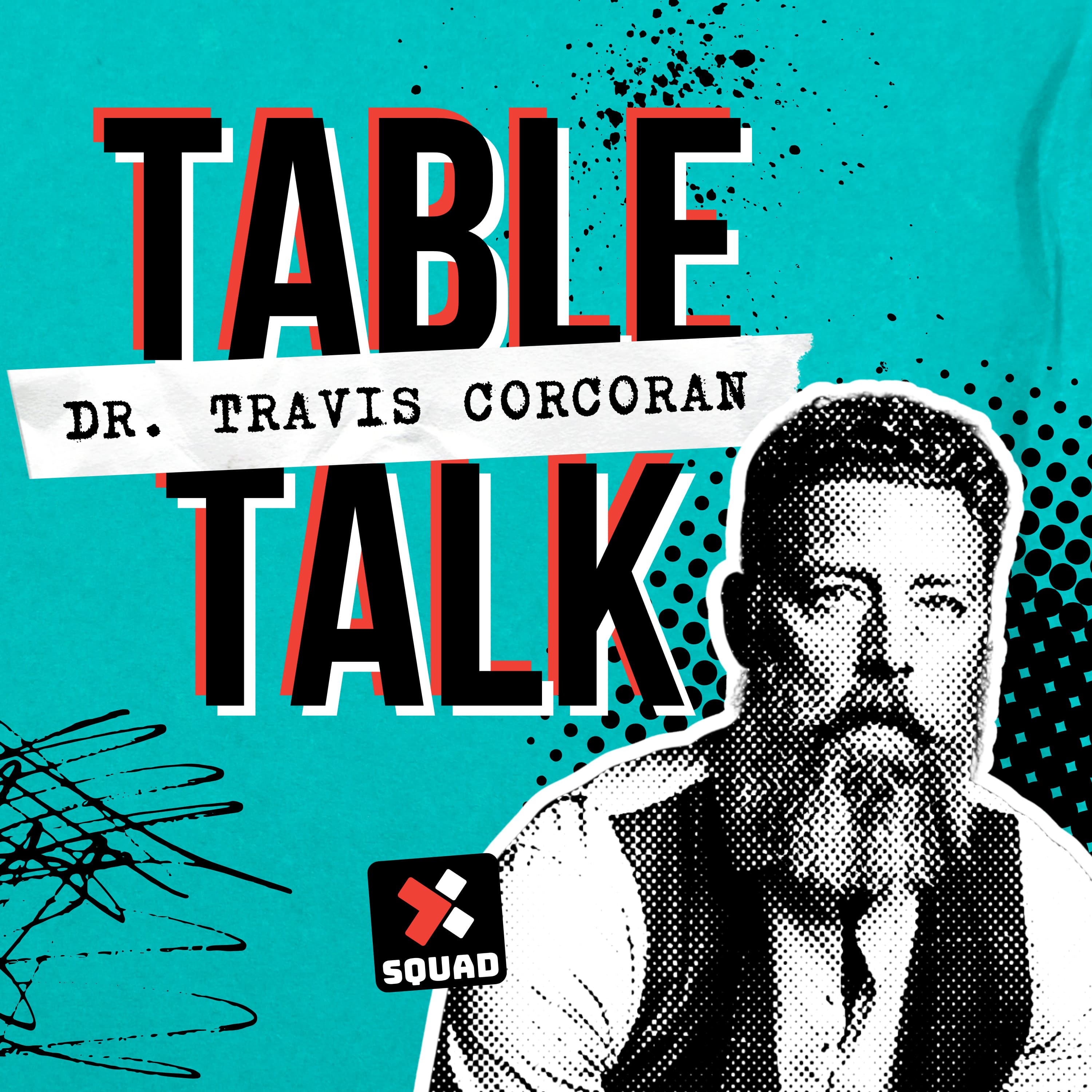
Synopsis
Dr. Travis Corcoran, a chiropractor and practice owner in the Netherlands, discusses how deepening his grasp of chiropractic philosophy shaped his political activism and his approach to scaling a subluxation-focused practice into a larger brand. The conversation covers what is interfering with the profession's growth, why vertebral subluxation must remain its defining principle, and what an unsubluxated profession could look like. It matters to chiropractors weighing philosophy, business growth, and advocacy as interconnected parts of the profession's future.
Dr. Travis Corcoran shares his perspective on the role of reason and disciplined thinking in a profession often driven by strong emotion and conviction. He reflects on how rhetoric, exaggeration, and reactive communication can unintentionally weaken credibility, even when the philosophical foundation is sound. Drawing from chiropractic history and current cultural tensions, he emphasizes the importance of distinguishing what chiropractors can be certain about from what requires humility and restraint. Travis ultimately calls for intellectual honesty, measured dialogue, and leadership maturity as essential traits for a profession seeking long-term relevance and stability.
Key takeaways
- 1
Philosophy Deepens Through Study
Corcoran's understanding of chiropractic philosophy grew significantly after completing the Academy of Chiropractic Philosophers, fueling his political engagement.
- 2
Subluxations Limit Practice Growth
Corcoran argues that internal blocks, not just external ones, keep chiropractors from scaling from one office to many, and that the profession needs larger unified brands.
- 3
Vertebral Subluxation Must Stay Central
Corcoran insists that without a clear commitment to vertebral subluxation, chiropractic loses its distinct identity and risks becoming diluted into generic physical therapy.
In this episode
Jump straight to any moment.
If you liked this episode, be sure to check out
Episode 13
The Top Communication Strategies, Branding, & Systems in Chiropractic Today
Episode 32
Why Connection & Community are Vital in Chiropractic with Dr. Paul Reed
Episode 27
The $100K Subluxation in Your Practice with Dr. Josiah Fitzsimmons
Episode 26
The Joy Led Practice with Dr. Jodi Dinnerman
Episode 23
The Three Tiers of Subluxation with James Chester
Full transcript
Made by speech recognition, with names corrected. It may contain errors, so check quotes against the audio. Spot a mistake? Tell us.
0:00Meet Dr. Travis Corcoran
Dr. Steve Tullius 0:00
Great.
Pacha Hornaday 0:00
No,
Show intro 0:05
Every doc wants to make a bigger impact. What's getting in your way? You're tuned into the Subluxation Squad podcast. One squad, one mission. Chiropractic for all.
Dr. Steve Tullius 0:16
Hey, Pacha, good to see you again.
Pacha Hornaday 0:19
Hey, Steve.
Read the full transcript (6,134 more words, 10 more chapters)Hide the rest of the transcript
Dr. Steve Tullius 0:20
My favorite day, Wednesday for another squad cast. And. And today we have a dear friend, one of my favorite people and one of the most staunch defenders of the chiropractic principle and profession, Dr. Travis Corcoran. So, Travis, thanks for joining us today.
Dr. Travis Corcoran 0:37
Of course.
Dr. Steve Tullius 0:40
Yeah. So why don't you introduce yourself to everybody and for those that don't know you, maybe just give a quick, you know, telling of who you are and what you're doing in the profession.
Dr. Travis Corcoran 0:54
I have a. My background goes in biology and philosophy, so I studied in undergrad. I also did nuclear engineering while I was in my military service. And that was all prior to chiropractic. And so it was quite diverse. But once I found chiropractic things, really, I mean, I loved everything I've studied, but chiropractic was the most eloquent thing. And so I've just jumped all in. And like a lot of people, I've probably had similar beginnings where you struggle through school a little bit, get through all the landmarks, and then, yeah, you struggle with an horror associate ships or something.
And then I opened my own and struggled with the horrors of ownership.
Dr. Steve Tullius 1:36
Yeah.
Dr. Travis Corcoran 1:36
And, yeah, every position has its challenges. And so now I, yeah, started my own brands. We've got 19 offices here in the Netherlands. We've got six in the UK, one in Scotland, and five in the England, two in Italy, one in Norway, one in Cyprus, one in Puerto Rico. So we've got a total of 30 offices, I believe.
Dr. Steve Tullius 2:01
Wow, man, I didn't know that. That's. That's amazing. I knew how you must have really expanded in this in the last year and a half, two years.
Dr. Travis Corcoran 2:09
Like, yeah, I keep myself busy, but I'm also, as you know, I'm also busy with the IFCO, current president at IFCO, which is a real pleasure to serve alongside Grant Dennis, dear friend of mine. He's the chairman of the board, and along with Jen Steinberg, it. We've been really hard at it last couple years. And I also sit on the board of directors for the iace. I've been a member of the coalition, I think, since you guys first started, and I try to contribute as much as I can financially to as many programs as possible. And then I started the chiropractic school here in the Netherlands, the European chiropractic Academy.
And this October, we will graduate our first class. I wrote a book at the end of the COVID fiasco. I think you guys have both read it. At least I. You probably told me you have. I have. I know Pacha has for sure. And I guess that's about it. And as you guys know, I'm expecting my first child, like, in, like, the next couple minutes, probably. She's new. She's due any minute, but that's the shortened end of it for me.
Dr. Steve Tullius 3:20
Awesome. I just. I mean, all I can say is thank you. Honestly, like, that's for what you're doing and just that level of services, just incredible. So thank you very much. Pacha, what are your thoughts? You hear that introduction and just what, you know, Dr. Travis is doing here?
3:34From Malaysia to the Netherlands
Dr. Travis Corcoran 3:38
What.
Dr. Steve Tullius 3:39
What questions do you have for him?
Pacha Hornaday 3:41
I think the first question that popped into my head when you were talking was, how did you end up in the Netherlands? I guess because you're American, right? Yeah, yeah, yeah. So I think I'd like to hear that story because I don't know. I don't know it. Like, what? Yeah. How did you come to Europe?
Dr. Travis Corcoran 4:00
I came by plane, but I think they're asking how. Right after chiropractic school, I went to Malaysia. I worked there for a year, and it turned out to be like a sham job. So I got there, got scammed, but I stayed there for a year and worked out of this little fruit village for a year. I was living in a little hut with no bathroom. No, it was really a shack with stray dogs, pretty much. I'm not joking. I could share photos and. But coming out of school, you're all spizzed up and you're like, I think I can heal the blind. You know, I. I wasn't really into the. That deep in the philosophy yet, and.
But I stayed there for a year once I got my passport back because it was being held from me by the lady that scammed me. But it taught me a lot. I'm in this little fruit village, small town in a little valley, and I would have to go to the restaurant to charge my phone. Met lots of great people. And it taught me something really important about chiropractic. And that's what's given me a lot of strength in chiropractic. I really don't have much fear of chiropractic because I'm in this little town. No one knows about it. But with my knowledge and skills, I became immediately a person of value in the. In the village.
And they just took care of me. And I intended to stay there my whole life and dodge, you know, the student loans and all that stuff, because I was really living a good life, you know, complete freedom, totally off the grid. But then the ministry of Health there caught wind that there's a chiropractor working illegally, blah, blah, blah. Turns out was anonymous tip from the lady that scammed me because she wanted me out so she can get another Cairo in and scam them. After a year, the stress was too much and I took a job in the Netherlands and been here ever since. I. I just left the US because I thought, now's the best time to do this.
I can always come back, settle down, but let's go get some experience as a chiropractor. You can work anywhere, so let's do it now. But now I've been here 17 years in the Netherlands. 15 years. We're celebrating our 15 year anniversary for my company this year, and.
Dr. Steve Tullius 6:19
Awesome. So, yeah, that's a really fantastic origin story there. When did you know that? And so when did you know that you needed to do more than have a single practice? What, and what was it that prompted you to do that?
Dr. Travis Corcoran 6:39
A mutual friend of ours was the first one that really dipped me in the car into the politics, and that was Liam. I still joke about that meme of the cowboy throwing the kid in the water, like, you're gonna learn to swim. That's kind of what happened with me. But there was no. Like I said, when you're a student, you're just thinking about, pass the exams, blah, blah, blah, you know, then as an associate. Yeah, do your job. Then when you own your own business, get it, make it profitable. When all that was settled and my mind was settled and I had a good team to support me, then you start that.
That conflict that I was avoiding in chiropractic school, like the subluxation deniers versus true chiropractic. I didn't realize how impactful it was on the profession and my livelihood and what we offer humanity until I was in a place where I had peace of mind to address it. And then the bigger my enterprise grew, the more I really understood the threat. And I just had the capacity and it's the right thing to do. So, yeah, ever since, I've been all in on it, and it's cost me a lot of time, energy, and money, but every bit of it's worth it.
Pacha Hornaday 8:06
I'm. I'm kind of curious, you said I. I'm not. I wasn't that much into philosophy yet at that Point in Malaysia, I guess. When did that shift happen? Like, when did the philosophy become important to you?
8:06Philosophy Versus Principle in Chiropractic
Dr. Travis Corcoran 8:22
Well, let me put it this way. I've always been into philosophy. I just didn't like, I wasn't into chiropractic principles. And I think that's where chiropractic could have done better if we had just said the principle, the principles, science and art of chiropractic. But when we call it philosophy, somehow it's open to debate. But it's based on universal and biological principles. These are the laws of nature. But when we call it philosophy, for. I don't know why, but I don't know when it happened, it's hard to say. But I'm grateful that it came.
And my understanding really deepened when I did the ACP or the Academy of Chiropractic Philosophers with Sherman, that really strengthened it and that made all the political things I was doing. It just gave me more ammunition and motivation to. To get politically involved like I am.
Dr. Steve Tullius 9:27
So you just shared something I've never heard shared before, which is that if it had been named the principles versus the philosophy, that that could have potentially, you know, helped avoid this challenge where people think that the philosophy is there to be interpreted in, you know, any numerous personal ways. I think that's a really great distinction.
Dr. Travis Corcoran 9:55
Yeah, it's not open. There's principles and principles defined as a fundamental truth useful in the system, chain of reasoning. Those just aren't open for debate. They're fundamental. And when we classify those principles as philosophy, that allows our, like the subluxation deniers that, that like, arms them with some semantic weaponry.
Pacha Hornaday 10:24
It sounds like a belief system. Right. It's something you believe or not believe, not something that just is.
Dr. Travis Corcoran 10:31
Yeah, and. And it's not totally the fault of the subluxation deniers because a lot of people on our side still use religious language like expect miracles. You gotta believe in chiropractic. That's nonsense. You don't have to believe in that.
10:49Subluxations That Limit Practice Growth
Dr. Steve Tullius 10:49
One of the, you know. You know, we were constantly asking our guests, you know, what. What do you see as the biggest subluxations in practice? And I'd like to change that slightly for you. And because you're running, you know how your brand is running. There's multiple. There's 30 practices, so. And that's not there. There must be subluxations that interfere with people's ability to get from one practice to two to three to 10, to 30. What has your experience been, you know, in, you know, identifying those subluxations to get there and to correct them.
Dr. Travis Corcoran 11:29
It's probably different for everyone. But there is this magical number. I see. It's not just me. I know a lot of other people with like a lot of practices that they've come to this too. When they get to about five. You find like your capacity for managing chiropractors very difficult. Because chiropractors can be difficult people, right? Because we have such. There's a lot of loosely defined stuff in our technique and which is another distinction. There's difference between technique and system. We practice Thompson system, not Thompson's technique. Right. So like knee, chest, upper cervical is a system. GAD is a system.
But there's many technique seminars where they teach you technical things like how to stand, how to thrust. They hardly teach how to analyze. But for chiropractors, if you can get them to agree to a system, we have a system here. That's the first step. It's very hard to scale. If every chiropractor comes in and they want to do it their way, right. Starbucks isn't going to blow up. If every barista is like, well, I'm gonna make my own blend, roast it my way. There is a way. You joined. That's the agreement. You don't like it, do your own. Great. And it was always my idea.
The bigger we got, like, the more influence we would have on the profession. When I look at like the law, I'm kind of drifting off here. But I want to tell you why we scale and why we try to grow. And that's because we want to impact the profession. When I look at the, the laws on alcohol in the us they're not written by Steve Tullius's microbrewery out of his garage. They're written by Anheuser Busch and Seagrams. Like the two largest distillers, they influence the legislation.
Pacha Hornaday 13:36
Sorry about that. That's the storm warning.
Dr. Travis Corcoran 13:40
So in chiropractic, I think we need big brands like we have in alcohol, like big brands that we have anywhere. Because it's big companies that drive and shift the legislation. So that's why we want to get big. And but the chiropractors themselves, they're the biggest subluxation. They need to get over their ego, do a system instead of a technique. It's not like some self expression. It is a chiropractic is a utilitarian art, not a performative art. And I see like many chiropractors, it looks like they went to a chiropractic school of performing arts wearing the, the hats and the flare and like not very professional. So we.
If you take on associates that are professional, that's going to help you grow. If you take on these, somehow they slip through the cracks and you get these that graduate from chiropractic school, performing arts. That's difficult to grow and scale. Then there's finances. Some people very successful. Private equity. We've never done that. Dave Serio does like franchise model. Liam has like pure ownership. We do franchise as well and combined with licensing.
So in the Netherlands we do franchise outside Netherlands, it's just an annual licensing fee and that puts the, a lot of the responsibility and burden off me and allows them I just gotta track and make sure that they're on brand. Pretty much.
Dr. Steve Tullius 15:18
Yeah. You give them a system to work that's reproducible and so they, they have that system that they know that if they work it then it's going to work for them.
Dr. Travis Corcoran 15:29
Yeah. And they're part of a team. It's always good to have a support system, a network around you. Safety nets. I'm always there to financially bail them out if something happened or. But in the Netherlands I've run the franchise.
Pacha Hornaday 15:45
So.
Dr. Travis Corcoran 15:45
Christian Caswell, I don't know if you've met him, he's a great guy, amazing. He's doing his thing in the uk. He licenses the brand for me in the UK with his six offices and he runs them the way he wants. If he wants to own them all do joint venture, that's up to him. But he's gonna pay like annual licensing fee for each location. So we just kind of distributed the responsibility. That's what I thought was best. I know that would be different for like maybe Sam Wang with 170 offices, Car 1. But this is what I found works for me.
16:25Top Cow's Weekly Philosophy Calls
Pacha Hornaday 16:25
I got a couple questions. One of them was about the branding side because that's my world. But I think what I wanted to know first is I find that really, really interesting and I'm, you know, I love talking to somebody who has, or who's working with multiple doctors and you know, who's really into philosophy. Like I'm, I'm wondering at what point did your philosophy, I guess if you want to call it that of, of chiropractic. Stop being your personal conviction and start becoming your, your, your culture, your, you know, becoming part of your team and how do you transfer that to new doctors? That, that come on. Or do you, do you not do that?
Like is that, is that part of the brand or is it not part of the brand? How important Is the, the philosophy to somebody who joins the top Cairo, it's really important.
Dr. Travis Corcoran 17:21
However, the level of engagement is really very free. Like it. We have philosophy calls every Friday at 1:30 my time. That's every Friday. And they're, but they're not mandatory. Those that want more, it's available. So when people walk away, they're, you know, not everyone stays with Top Cow for a lifetime. But when they walk away, if they walk away saying, I didn't get enough philosophy, well, that's because they didn't take what was offered. Right. It's, you know, you can tell me you're thirsty, but, and I tell you where the water is, but if you don't, if you don't drink it, that's kind of on you.
So the philosophy is available, but it's not mandatory. Everyone knows it's available. They know what we stand for. That's mostly how we recruit new associates is because the current ones that do get involved enjoy it. I would say that about anything. If there's something you're doing, go all in. And those that do, they refer their classmates and colleagues.
Pacha Hornaday 18:28
So how much is that part of the brand? Sorry. And you know, because you were saying you're, you're protecting the brand, make sure that everybody's on brand. Like, what does that, what does that mean? What does that look like on brand?
Dr. Travis Corcoran 18:39
That would be more protocol and procedure. And then when people have questions about it, why do we say this? Why do we do this? Why do we check this? Why are the re evals at this time? Then that's when philosophy would come in if they want to know why. So then that's going to involve ethics and all sorts of other things too, not just, okay, why do we check? Why do we do this?
Pacha Hornaday 19:02
Right.
Dr. Travis Corcoran 19:04
Anyone can be like being a chiropractor is just a very technical thing. If you want to enjoy it and have certainty and clarity, well, then it really helps to know why you're doing what you do instead of just copy and paste. And then you're also better in your, your rhetoric. And when you handle objections from clients, from colleagues, from insurance carriers, medical professionals, whatever, your family, whoever's questioning chiropractic. The deeper your understanding is, the broader and deeper it is. Then you can respond with calmness instead of reacting emotionally.
Dr. Steve Tullius 19:44
So thank you very much for that, Travis. That's really insightful for myself, you know, I'm, I'm in the, of moving down that route. So thank you. I appreciate your feedback there. I'd like to shift gears a little bit and talk about your involvement politically. What? I have two questions. One, has your involvement politically helped advance your chiropractic practices like your, you know, your influence and, you know, even your success financially and why. And then the second question is, what, what do you see as the biggest subluxations politically?
19:57Political Involvement's Impact on Practice
Dr. Travis Corcoran 20:33
Well, first, has it help? Has it helped me in my brands or scale or grow? It does both. It helps and hurts. It attracts the right people and repels the, the wrong ones, I'm sure. You know, like when you stand up for something that there are plenty of people like, they're in alignment with that and they're drawn to you. And then there's the people that I don't like what he's saying. Or worse, they go, yeah, it's right, but I just don't like how he said it, you know, tone policing or they just don't like that you're successful. It's because it, it shows them what they're not doing, I guess. I don't know.
You know, some people, they feel taller when they can cut everyone's head off. So you're going to get haters, but you're also, you're also going to attract people that are in alignment with you. So that's the first part of your question. The second part, what do I see as the biggest. So I, I don't like you guys say subluxation, the biggest interference. I'll say, right? Subluxation is a very distinct thing, but the biggest interference. Roadblock, friction and chiropractic politics. If I had to narrow it down, this is like my pat answer for anything really. But the main thing is a lack of understanding, right?
If people understood simple from point A to point B, like vertebral subluxation is the, that's the fountain we all drink from. It's what fills all our cups. Without vertebral subluxation, there is no chiropractic profession. There's no chiropractic seminars, chiropractic products, chiropractic coaches, chiropractic this, chiropractic that. We all drink from this fountain, even the, the, the mixers, right? God bless them, right? They, they wouldn't have anything without vertebra subluxation.
Chiropractic didn't grow and spread all over the world, the Europe and Australia and all that, because they were so proficient with shockwave and the redundancy of physical therapy and giving nutritional advice. It was the location analysis and correction. Vertebral subluxation, the lack of understanding that is the biggest issue people defending their income, defending their feelings instead of recognizing that the way forward is to be separate and distinct and not to be diluted or blended in with everything else.
The moment you take away vertebral subluxation and if people understand this, you take that away, you are no different than 11 other 11 to 20 other registered professions doing the exact same thing as you. And, and we didn't even invent subluxation. That was a medical doctor Harrison in 1821. You know, this is like 74 years before chiropractic was discovered, long before DD was born. There was this medical doctor in 1821 that was treating subluxations.
21:29Vertebral Subluxation Defines the Profession
Pacha Hornaday 23:47
Anything about that?
Dr. Travis Corcoran 23:49
How do you treat this nonsense? That it's a historical fiction, it doesn't exist. There's a medical def. Dude, yeah. Dee Dee was just using the, the language of the time and I, it's ridiculous that we deny this, that it gets ridiculed. So what? Our understanding of subluxation has grown. That doesn't mean you throw the term out like our understanding of diabetes has grown over the last hundred years. We don't, hey, let's get rid of the word diabetes and the whole concept.
We celebrate what we've learned and are growing depth of understanding somehow chiropractors are like going in retrograde and shooting themselves in the foots because they lack this basic simple understanding. And if they, if they got that together and stopped capitulating to yeah. Insurance companies, medical profession, making sure their parents love them so they can be a real doctor and give drugs. I, I don't know what the inadequacy, the deep self inadequacy or insecurity comes from. I, that's. It's different for everyone, I'm sure.
But when you understand the vertebral subluxation is the most necessary thing for the existence of this profession. And that's how they got all these results and that's how it got spread all over the world. Why are you changing it? In fact, these other healthcare professions are now adopting the vitalistic philosophy that we've been behind the whole time. While they're going forward, we got leaders in our profession going backwards. It's crazy.
And I would say that all comes from misunderstanding, lack of understanding or just downright ignorance because you are actually ignoring this easily, this information and understand it's easy to find, easy to acquire. If you ignore it, that makes you ignorant.
Pacha Hornaday 25:49
So where should that, where should that get fixed? At the school level or
Dr. Travis Corcoran 25:55
at every level but schools everywhere. Yeah, like many schools, they, they Just can't even say the word. Vertebral submixation. I have a call right after you guys. I got a call with some European students for the student IFCO. And it's encouraging that there are students that want this information, that want to be empowered. Because going to chiropractic school now, it's really sad. It's not empowering. Is what it should be like. When I was first heard about chiropractic, I felt very empowered. Is the most eloquent thing I heard in my life. Like, after studying philosophy and biology and being in nuclear, I was very mechanical, analytic.
But I also like to ask questions. I was highly trained to locate fallacies, logical fallacies. Errors and consistency. Right. Poor reasoning. But it's. I remember challenging this chiropractor when I first went to a chiropractor, and I was just dead set on proving her wrong. But ultimately I had to eat humble pie. And eventually I was like, holy shite. I don't know if you can cuss on this.
Dr. Steve Tullius 27:15
That's okay.
Dr. Travis Corcoran 27:16
This is the most amazing, eloquent, reasonable thing in the world. And like most of our clients say, why doesn't everyone know about this?
Pacha Hornaday 27:25
That's literally what I said when Steve introduced me to chiropractic care. It just makes logical sense. Yeah, I totally agree.
Dr. Travis Corcoran 27:34
Yeah.
Dr. Steve Tullius 27:35
If we were on the same page. Right. And we had the same brand. Right. Pacha, then yeah, we'd be a lot further with this thing. So. Absolutely agree with you. Dr. Travis, do you have time for one more question? I know you have another call for this. I'd like to ask this question. We can always come back to it. We hear this often stated from stages. And when I hear this, this stated, I. I just get really frustrated. Let's say we hear this statement that, you know, if we would only just stop circling the wagons and pointing the, you know, and shooting inward, that that would somehow solve all of our problems. What's your take on that? And.
And is that a. Since you're the reason and logic guy. Right. You wrote a book on it. Is that a. Is that a logical statement?
27:48Bad Ideas Chiropractic Must Fight
Dr. Travis Corcoran 28:35
Yeah. Well, it's an analogy. Is it a. Is it an accurate analogy? I don't think so. Right. Because we're not. We're not shooting inward. I. I like. I'm not shooting inward. I'm shooting at. And I'm not even shooting at people. I'm shooting at poor ideas. I'm shooting at misunderstandings. I'm shooting at misrepresentations. I'm not shooting at anyone or inside or whatever. It's just the analogy doesn't track. That's the thing. The people that are. I guess by this analogy they mean stop fighting with each other. And that is flawed conflict. I mean, B.J. said conflicts clarify. So what are we supposed to do?
Just all hug each other and no conflict. Okay, then no clarity. That's not a way forward. Right. What needs to be killed and where we need to focus and shoot our guns? Is it bad ideas? And to turn chiropractic into our reading this in the chat, glorified physical therapist, like turning chiropractic into that. That's an idea that needs to be shot. We need to circle around that and shoot at it. The people confuse their ideas with themselves. I saw this.
There's this show that red robots and blue robots or whatever, and they fight you or teams of like blue engineers and red engineers and they build a machine and they put their machine in the ring, and then the other team puts their machine. The best machine wins. That's what we should do with ideas and let the best idea win. And then what you'll see is both teams come out smarter. Ah, that design. That was the better design. Instead of like, I just want to win. When both teams want to know what the best method is, what the best idea is. Put the ideas in the ring, let them compete. We don't have to step into the ring.
Our ideas should be in there. It's. That's why that doesn't work, because you're not detaching yourself from the ideas.
Pacha Hornaday 30:46
I feel like they wouldn't. They wouldn't agree on how to measure what's working and what isn't working. Like, you know, like, how do you define it's working? I guess it would always start there. And then how do you. How do you say what. What actually worked best? You know, like, what does best mean is like, it's like already I. I can see, like, how there's different interpretations of that.
Dr. Travis Corcoran 31:13
I would measure whether it's working or not based on results. And like, physical therapy, just great. It's great and everything, but it doesn't get the results that chiropractic gets. Right. Medicine doesn't get the results that chiropractic gets. These things don't get the same result as the correction of vertebral subluxation. So is it politically working when we try to remove our right to locate, analyze, and correct vertebral subluxation, or to dilute it with prescribing medicine or doing more shoulder Rubs and all this other stuff, to me that's an indication. It's just not, that doesn't work.
That's a failed political strategy, it's a failed legal strategy to try and blend in just so we can get the approval of insurers or the medical community or other healthcare providers. We, we, we don't need to hate on them, but we need to stand up for ourselves and like set some boundaries. But we seem to like, dismiss those.
32:21Standing Up to Save Chiropractic
Dr. Steve Tullius 32:21
Yeah, I think we, the, the conversation around results is one that we really want to keep bringing to listeners because it's, it's objective as much as possible. And you know, if we look at our results as a profession, you know, I often ask this when I'm in stages. You know, what, what grade would we get if we looked at things like our utilization, our. And, and in that conversation, the utilization, which is always around 8.5 to 10%. It's not in vertebral subluxation centered care. You know, it's, it's very much in musculoskeletal, acute low back pain, neck pain, headaches, you know, care. Right.
So, so we're, if we just base our results upon that, we can see that we're clearly failing. And so if we, if we continue doing what we're doing and what we've always done, then how could we expect anything different in that?
Dr. Travis Corcoran 33:15
Yeah, how do we expect anything different too, when no one stands up for the profession? Right. The profession can't stand up for itself. It's comprised of people, just like my body's comprised of cells. If they all just decide not to cooperate, it's done. So this organism of chiropractic, this profession, is just done until the individual cells or chiropractors stand up and do something. And, and I've heard so many ridiculous ideas about this is what we need to do to save chiropractic. And if you want to know what helps chiropractic, look at what's destroyed chiropractic, it's been, it's been legal and political action.
And so when I ask people, why aren't you legally and politically involved? No, the way to do it is to tell the story. No, you just got to see more people. And it's if more people practice straight carpet. Dude, it's ridiculous. I know Jen Steinberg, she's not a chiropractor. Cat Frazier, not a chiropractor. They do more for chiropractic to save chiropractic, protect chiropractic than that straight chiropractor who's seeing a thousand a week, a day. But they do more for chiropractic, and they're not chiropractic. They don't practice straight. What about all the defend us, Bill Estep, Keith Wassong, other advocates?
They're doing more for the profession that they don't even practice because they understand its impact. I want, I would like more of that from chiropractors who make their livelihood from this.
Dr. Steve Tullius 34:52
I think, you know, I think it goes back to understanding. Right. And logic. For me, it's. If you truly understand the impact of chiropractic and the big idea, then the only choice for an ethical and moral person is to think, throw their body into the ring, their ideas and the body. And, and not to sacrifice everything.
Dr. Travis Corcoran 35:15
Right.
Dr. Steve Tullius 35:15
Not to sacrifice family, not to sacrifice all those things, because I've done that too. But to do it in a united way. Right. So that it doesn't all end up on the shoulders of the few.
Dr. Travis Corcoran 35:29
Yeah. That's the one thing we can all get behind. Like, I, I don't know what system you practice, gonstead dumps, whatever, but I think the one thing we can all get behind is vertebra subluxation. That. That is the fountain that fills all our cups. So despite, like, if I like you or don't like you, it doesn't matter. We all drink from that. And why aren't we, like, just protecting that?
Dr. Steve Tullius 35:57
Amen. Love it.
Pacha Hornaday 35:58
Where's. Where's the button, Steve?
Dr. Travis Corcoran 36:01
Oh, yeah, yeah.
Dr. Steve Tullius 36:02
We didn't, we didn't get to the applause button in time here, Travis.
Pacha Hornaday 36:06
Somewhere.
Dr. Travis Corcoran 36:07
Forgive me.
Dr. Steve Tullius 36:08
Right. Why don't we, why don't we move on to the, the rapid fire round here? So we have some rapid fire questions for you, Travis. What conversations in the profession is not happening. That should be proof.
36:14Rapid Fire Questions for Travis
Dr. Travis Corcoran 36:26
Proof, I think. Why are the schools failing the students?
Pacha Hornaday 36:34
That's like a whole nother conversation. What's the price we're paying for trying
Dr. Travis Corcoran 36:41
to be acceptable at the loss of this profession?
Dr. Steve Tullius 36:48
What's one thing that all the people
Dr. Travis Corcoran 36:50
that benefit from it? Yep.
Dr. Steve Tullius 36:54
What's one thing no one knows about you?
Dr. Travis Corcoran 36:58
Let's keep whatever that is, keep it that way, huh?
Pacha Hornaday 37:04
Okay. What, which three people should we interview next?
Dr. Travis Corcoran 37:12
Donald Trump.
Pacha Hornaday 37:13
No, you can get one.
Dr. Travis Corcoran 37:16
Get a lot of views, I'm sure. Putin, Zelensky in chiropractic. Who should you interview? I. I would say Jen Steinberg. I would say Cat Frater. I would say some of the people who aren't necessarily chiropractors, but. Yeah, why are they so they're not a chiropractor. Why are they so adamant to protect this profession? I would have them on here.
Dr. Steve Tullius 37:37
Yeah, yeah, I think that's great. What does an unsubluxated profession look like to you? Or what's a profession without interference look like to you?
37:41Picturing an Unsubluxated Profession
Dr. Travis Corcoran 37:48
Oh man, I tell you what, for me it would be a lot less stress, freedom to practice and yeah, once you get rid of like the political subluxations, then you have to get rid of the subluxations in the state and national associations. But first it would just be great if we got rid of the subluxation deniers or not get rid of them but fix it somehow. That would be, I would certainly be more parasympathetic.
Pacha Hornaday 38:29
I'm really curious, like, I think that's a conversation we should have. Like what's the right approach to this? How do you, can you, you know, do you reason with them? Like they have all the facts that you have too, don't they? Like I don't, I just don't understand, like how, how there's a way forward because they're claiming their space and you
Dr. Travis Corcoran 38:50
know, I, I have way more success. I, I split the profession into like very mechanistic and very spiritualistic, like materialistic and spiritualistic. And I can tell you I have, I personally have way more successful bringing in the rational, these pro science evidence based that deny subluxation. I have way more success bringing them over than I do to the spiritual extreme who they have their head in the clouds and just think about it like the mechanistic subluxation denier is miserable in practice, truly. And so they're grateful when you lift them up and put them on their feet.
The chiropractor who's living in dream energy, spiritual peace, love, hippie, dippy stuff in the clouds, they want to stay there. They, they're going to resist being pulled down to a foundational core.
Dr. Steve Tullius 39:55
Right.
Dr. Travis Corcoran 39:55
A stable fundamental principle, you know, truth principle. That's difficult for them. So it's not impossible. But you, I personally have more success communicating with the person who wants to identify as a rational, scientific. They're listening. It's just a matter of how skilled you are at rhetoric, which is something, it's a lifelong skill, man. The Art of rhetoric, which happens to be the third liberal art. A great book about that.
Pacha Hornaday 40:26
Yeah, speaking of that. So we got your book for anybody that's listening that wants to go a little bit deeper, learn more from you. Where, where can people find you what you got?
Dr. Travis Corcoran 40:38
You can all go to restoring Reason.com or you can just message me on Facebook, I'm usually almost always available or email me personally tc the dcgmail.com and if you're a student and you're struggling, please reach out or if you're considering abandoning or leaving this profession, please reach out. I can't think of anything that make me more sad if I couldn't help you.
Dr. Steve Tullius 41:05
Absolutely. Thank you so much, Dr. Travis for spending your time with us and sharing with all our listeners and we definitely would love to have you back. And we've been toying with this idea of having, you know, bringing on people from these different viewpoints. Right. And and you would obviously be one of those people we'd love to have in a discourse. Right. Which we feel is really missing from this profession right now. So thank you so much and have a great rest of your day everybody.
Pacha Hornaday 41:31
Until next time. Thanks, Dr. Charles.
Dr. Travis Corcoran 41:34
Ciao.
Dr. Steve Tullius 41:35
All right. By.
Subscribe and review
If this hit, help another chiropractor find the show.
If you love this episode, please take a moment to subscribe and leave a review on Apple Podcasts or Spotify. Your support helps us reach more chiropractors who need these insights. Thanks for tuning into the Squadcast. See you next week.