Episode 27 | Jun 8, 2026
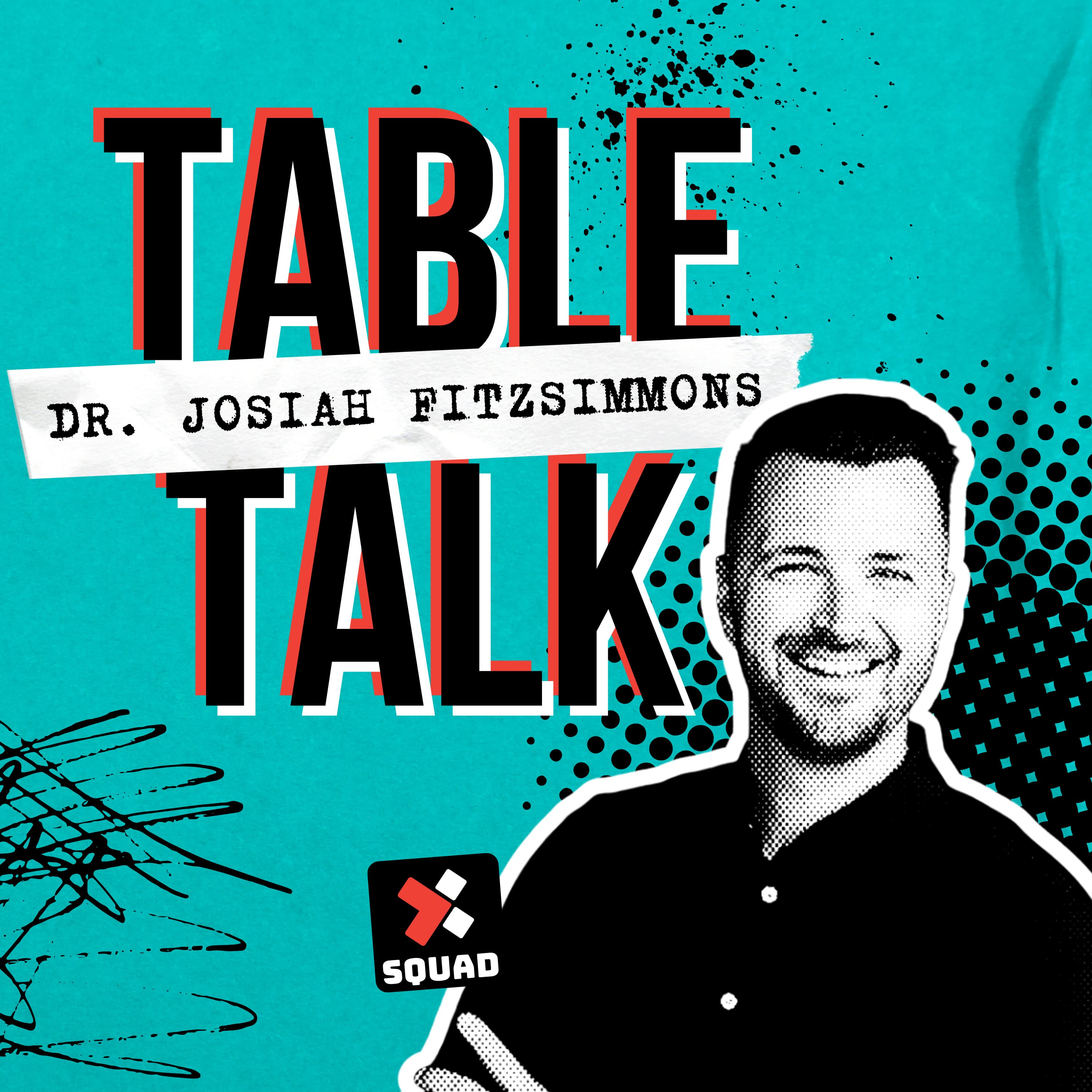
The $100K Subluxation in Your Practice with Dr. Josiah Fitzsimmons
Synopsis
Dr. Josiah Fitzsimmons joins The Squadcast to break down why so many chiropractic practices underperform financially despite delivering a genuinely life-changing product. Drawing on Lucro's 2026 Industry Report, he explains how most practices are paying for far more capacity than they use, and what it takes to build real structure, teams, and leadership to close that gap. The conversation gives chiropractors a practical financial and operational lens for scaling their business without losing sight of purpose.
Dr. Josiah Fitzsimmons shares what he believes is one of the most overlooked subluxations in chiropractic practices today: the gap between a clinic’s capacity and its actual utilization. Drawing from financial data, operational benchmarks, and years of consulting experience, he explains how many offices leave significant impact and profitability on the table not because they need more resources, but because they are not maximizing what they already have. The discussion digs into capacity, team performance, compensation, and key metrics, reframing business data as a tool for identifying interference rather than simply measuring revenue. What becomes evident is that when doctors understand the numbers behind their practice, they can make better decisions, serve more people, and create greater alignment between mission and execution.
Key takeaways
- 1
Practices are overpaying for unused capacity
Lucro's industry data shows most chiropractic offices are paying for far more overhead and capacity than they actually utilize, representing a hidden six figure opportunity.
- 2
Structure is the missing piece in chiropractic
Josiah argues that scaling a practice requires real organizational structure, delegation, and elevation of team members, not just clinical skill.
- 3
Financial clarity drives better decisions
Lucro provides chiropractors with structured monthly financial reporting so doctors can make informed business decisions and ultimately serve more patients.
In this episode
Jump straight to any moment.
If you liked this episode, be sure to check out
Episode 26
The Joy Led Practice with Dr. Jodi Dinnerman
Episode 22
The Scaling Subluxation: Adjusting What Breaks When You Try to Grow with Dr. Austin Cohen
Episode 18
Restoring Reason in Chiropractic with Dr. Travis Corcoran
Episode 13
The Top Communication Strategies, Branding, & Systems in Chiropractic Today
Episode 9
Keeping Chiropractic Real (Without Losing Yourself) with Dr. Richelle Knowles
Full transcript
Made by speech recognition, with names corrected. It may contain errors, so check quotes against the audio. Spot a mistake? Tell us.
0:04Josiah Fitzsimmons on his path into chiropractic
Show intro 0:04
Every doc wants to make a bigger impact.
What's getting in your way? You're tuned into the Subluxation Squad podcast.
Dr. Steve Tullius 0:09
One squad, one mission. Chiropractic for all. Hey, everybody. Welcome to another episode of the subluxation squad. I'm Dr. Steve Tullius and I have the pleasure of having a friend and colleague here, Dr. Josiah Fitzsimmons, who I know lots of you have are either working with him or you've heard of him. If you're not working with him, you're going to understand by the end of this why it's a really good idea to be Dr. Josiah. Welcome to this podcast today.
Guest 0:41
Awesome. Thank you for having me.
Dr. Steve Tullius 0:43
Absolutely. So I think it'd be best, we always like to ask our guests just to introduce yourself versus me. Trying to do that for you. It makes a whole lot more sense just to tell your story and how you got into chiropractic and know what your journey has been like.
Guest 1:01
Absolutely.
Read the full transcript (8,216 more words, 9 more chapters)Hide the rest of the transcript
Dr. Steve Tullius 1:01
Yeah.
Guest 1:01
Thank you so much for having me. You know, my journey, you know, going all the way back. I was born in Florida originally, but my dad actually taught tennis at different hotels, and so we traveled around. They originally met in Iowa, so by the time I was in third grade, I'd lived in six states. We ended up settling in Iowa and my parents ended up getting divorced and had very low income. Growing up, nicest car we ever had was $500. I was one of nine kids right in the middle, five out of nine. Nicest car we had growing up was, like I said, 500. I would always get steel pop cans out of my neighbor's trash to turn them in for nickels.
Iowa State University is where I is the same town that I grew up in. And so when college students moved out, you know, we'd always go furniture shopping for what they put on the curb. And so, you know, grew up just humble beginnings. But I started getting pretty good at sports when I was in high school, and I was like, oh, man, I know I'm not going to be able to afford, you know, have my college paid for.
I need to start working hard and really just dedicated myself to learning nutrition, learning, you know, exercise, learning, weightlifting, all these things that just weren't as mainstream at the time and really focus myself and end up getting a full ride Division 1 scholarship to play football. And that's really when I realized, holy cow, if I put my mind to something, I can make it happen. And went to college really interested in something with health and something with athletes. And so I thought, you know, medical Doctor was what I thought was the pinnacle of society for healthcare at the time. And so I went down that route.
I was pre med. I wanted to be an orthopedic surgeon. Shadowed a bunch of surgeries. I thought they were cool. But then I got a job working at a hospital, and I was like, holy cow, these guys don't seem very happy with what they're doing. And I even asked a couple of the medical doctors, and they're like, don't be a medical doctor. Like, it's not the funnest. You're just prescribing drugs, doing surgeries. You're not, you know, really changing people's lives. You're just giving temporary fixes. And it was really eye opening. Well, simultaneously, I had got hurt playing football, and I went to this local chiropractor, and he said the opposite.
He said, hey, you should be a doctor and an entrepreneur. You know, chiropractors are amazing, get such incredible results. We do things naturally, holistically. I really love that insight. But he said, you also need to learn how to run a business simultaneously. To be the most successful, you need to be an entrepreneur. And I was like, entrepreneur, what? You know, where are you saying? At that time, my dad was waiting tables at Red Lobster and my mom was delivering newspapers, you know, in the morning. And so I really had no understanding of what an entrepreneur was. And so he kind of painted this cool picture.
And so with that all in mind, I shifted gears. I said, hey, I'm going to be a chiropractor. I love the natural holistic approach. Really big. Always been big on my faith, you know, And I felt like chiropractor was really connected with. That's how the body was designed to heal from the inside. That's how God made our body. He didn't make a mistake and forget to make ibuprofen, you know, when he created our bodies. And. And so I said, okay, I'm going to go become a chiropractor, but I also want to be an entrepreneur. And so decided to go to Palmer.
And when I got there, I learned, wow, there's really not a lot of opportunities to learn from a business standpoint. They had the business center, but it really didn't give me lots of good insights. So I said, I got to find the best chiropractors in the country that are being really successful that I can shadow and learn from. And so, of course, thankfully, being in Palmer, at Palmer, all the conferences, all the seminars, all the speakers come through Davenport, and I'd go to as many of them, I couldn't. I just go up afterwards, say, hey, you know, that was awesome. Can I ask you a few questions?
You know, maybe can I come shadow your office? And so that's really how it started. I started shadowing different offices, and then a lot of them asked me if I would work screenings or do marketing events for them. And so I ended up becoming really good at doing screenings for doctors. And so I ended up going to over 50 different clinics while I was a student, multiple of them, numerous times back to the same clinic. And pretty much every weekend for the next three years of chiropractic school, I was traveling to some other clinic around the country.
And that's really how I learned communication sales, got to go into the office, learn a lot of the inside information of how they were running their office operations. I brought my wife with me so she could help learn all the back office and finances and everything involved with insurance and compliance and all of those things. And so that was really the learning curve that I had while in chiropractic schools. Also the president of, you know, ICA and very into, you know, subluxation based, you know, chiropractic. And so when I graduated, I had already negotiated my lease for my, my building.
And four months after graduated, I had scheduled over 400 prepaid appointments before my first day opened. And the first year in practice did over a million dollars. Second year practice did over two million dollars. Third year in practice was Covid. And so, you know, I like everybody, you know, things slowed down and I like, hey, how do I keep growing? I gotta go back to what I did in school. Let me go find all the top clinics, you know, that I can go learn from and shadow and get to the next level.
And honestly, I had a really hard time finding lots of clinics, you know, around the country that were over $2 million, you know, that I could learn from. And I was like, man, I'm only two years out of practice. How am I already, you know, at the top of the profession? I felt like there's got to be something missing. We have the greatest healthcare product in the world, right? Why are we not having way better successful businesses being ran? And so I'm like, okay, well, if it's not happening in our profession, we have a great product, we must be missing something from a financial numbers business standpoint.
So I really started studying businesses, you know, what separates successful businesses from average companies. And so then the next year, I did over five and a half million dollars in 1800 square feet. And then you know, just last year, my client did over $7 million in our one location here in Iowa. And so that's really why I started Lucre, which I know we'll get into, but really just understanding numbers and data and understanding how to grow and scale your practice, because we have an amazing, amazing product that can change people's lives. I always tell people, who else gets called a miracle worker more often than a chiropractor?
The only person I know of is Jesus, you know, and so I think that's such an amazing gift that we have to change and impact people's lives, you know, and it's just not as well known, it's not as well into the market. We haven't reached that proverbial tipping point that we've always been talking about as a profession. And at the end of the day, I think it just becomes being better communicators, running better businesses, understanding the numbers and the finances behind, you know, scaling a successful practice.
6:15Why chiropractic businesses underperform their potential
Dr. Steve Tullius 7:39
Amen. Amen. A couple things. We get a lot of students that watch this. We've had student panels for all you students that are listening right now. Go back to this. You know, start this over. Listen again to what he just shared. Listen to his story of how he got to where he's at, because it was not by accident, and not just students, but, you know, because we all should be perpetual students. And that's what I'm hearing from you. And I've seen that from you, too. You're a perpetual student.
7:42Josiah's journey from football injury to chiropractic
Guest 8:13
You're.
Dr. Steve Tullius 8:13
You're always like, how do I. Okay. And, you know, humility. With the beginning of your story, by the way, your story, actually, I didn't realize this. Our stories are very similar. I started with humble beginnings. Our family car was a pent up, not Datsun. I don't know if you people even know what a Datsun is. Look it up. And anyway, you know, but I. I got taught really strong principles. I. I played football. I was going to. I was going to become a medical doctor. Football injury led me to a chiropractic. I was already in a chiropractic office, but it. It led me to see the juxtaposition between the medical system and chiropractic.
I was like, oh, this is. Makes total sense. So I have a bunch of questions for you. First question, though is what position did you play?
Guest 8:58
Defensive line.
Dr. Steve Tullius 8:59
Okay, cool. Did you weigh a little bit more back then?
Guest 9:02
I weighed about 80 more pounds than I do now.
Dr. Steve Tullius 9:05
Yeah, that's fun. See, I. I played a defensive line as well. I Played in linebacker. I was 50 pounds more than I am today. So, yeah, we have another thing we have in common.
Guest 9:15
Yeah, that's awesome.
Dr. Steve Tullius 9:17
Unfortunately, I didn't do what you did. I didn't in terms of one size and chiropractic college, I went to a school where I was told to go there because it was close to me. I wouldn't learn chiropractic. So just get through. You learn chiropractic after. That wasn't the best approach. You absorbed information, you went to as many seminars, you went to as many offices where people were successful. And now I love your ultimate, you know, endpoint. We have this thing that is so amazingly valuable and why is it not reaching the masses yet? And, and so that's what I think you've been obsessed with.
How do, how do we get this thing that's massively valuable, should be in mass consumption. Why is it not? And then now you've done that in your own practice, obviously through, you know, for what you've created. How, how are you? Okay, so now with all this experience and all these people you work with Lucro, with which I think maybe that's a good segue, you have all this data, you have tons of data. I know you're going to go into that on what makes, what are the most successful practices doing. So the question we always ask our guests is this, what's the biggest subluxation in chiropractic practices right now from your vantage point?
10:29Lucro's 2026 report reveals the biggest financial subluxation
Guest 10:39
Yeah, so we just finished producing what we call the 2026 Lucro Industry Report. I'll get a link that you can put in the podcast description for people to download, but it's a 30 page report on the profession from a financial perspective. And I think that's nothing like this has ever been produced in the profession's history, ever. Most people have just been relied on surveys or he said, she said or Cairo math, you know, made up guest s inflated numbers. You know, we actually have the real hard Data for about 500 clinics. But from last year we had total of 374 total clinics that we had for the entire 12 month cycle of data from 2025.
And so that combined they totaled $363 million in annual revenue. And of those clinics, they've had about an average of about $800,000 in annual revenue per clinic. So a little higher above a standard chiropractic clinic. But what we did find is that on average, even those successful clinics were leaving $97,000 a year in profit, almost $100,000 a year in profit on the table based on not maximizing the expenses that they already have. And so the easiest way I explain it to people is, you know, let's just say you have a thousand people lined up outside your front door next week, right, Ready to come in for their initial appointment.
They want to come in your office. You know, how many of them could you actually process in your office? You know, let's just say for easy math, you could do, you could process 20 of, you know, 20 of them in your office, you know, and so that comes out to about 80amonth, right, that you could, you know, new patients that you could process. Well, how many are you averaging? Well, I'm only averaging 20 new patients a month. Well, you know, that's only 25%.
You're, you're paying, you know, for the staff, you're paying for the rent, you're paying the utility bill, you're paying all the expenses, you know, of 80 new patients a month, but you're only seeing 20 new patients a month. Right? And so that's what we found is, is that most people are paying for a much higher capacity than they're actually utilizing. And so that's where that $100,000 comes into play, is that if they, if clinics just were to maximize what they're already paying for, they make 100,000 more in profit, not top line revenue.
This is bottom of the line profit for, you know, the owner, $100,000 more if they maximize the capacity of what they already have. And so that's what we're really big proponents for at Lucro is, hey, the next, you know, big thing you do in your office isn't adding in more services. You know, it isn't increasing more hours, it isn't hiring more team members. You know, it's not all these things that people think of, oh, that's going to take a lot of extra work to do this or that. What it is, it's, it's just maximizing what you are already, you know, paying for. Right.
And most things in life, hey, if you're paying for something, you want to get the most value out of it, right. And if anything you want to do that for, it's definitely, you know, your business, you know, that's your lifeline.
Dr. Steve Tullius 13:29
Yeah, absolutely. And how do you, so, you know, what do you, what do you give to your, the people that work with you so that they can see this number? Because most of the time, I mean, this, I think you recognize this, this is one of the biggest challenges in practices Is one, they don't see it as themselves, as entrepreneurs. That's a big supplication in chiropractic and difficult too for healers, you know, providers. Most providers don't necessarily have to do that. Our profession is unique.
We don't have a line of people that thousand, you know, number waiting for us because they're being funneled in through drug ads or, you know, the system that's already designed for that. So how are you helping your members see that and act on it?
Guest 14:18
Yeah, well, first of all, it's just realizing that potential. So that's in our initial strategic planning session. We evaluate their pricing, their protocol, their marketing, their team, their overhead, you know, how much they're paying every single team member, what's their revenue generated, how much are they charging, you know, for every single adjustment for X rays, all the different services.
And we're trying to figure out, okay, where are the bottlenecks, where are the opportunities, where are the leverage, you know, points, what's the lowest hanging fruit, you know, what's that one thing that's going to have the greatest impact on your practice? That's why I always tell clinic owners all the time, it's like if you had one thing that you put on a note card that you put on your mirror, that you put on your computer, it should say, what is the number one thing that I can do today that's gonna have the greatest impact, you know, on my practice?
And so it's so easy to try and juggle a thousand different things, you know, especially, you know, with a small business. You're, you're the head of sales marketing, you're the head of operations, you're the head janitor, you're the head of it. You know, you know, you're doing all these different things in addition to being a doctor. And then you gotta go home and be a, a husband, a wife, a friend, you know, a spouse, a father, a mother. You know, there's just so many things that you're trying to juggle and so really trying to identify what are those number one leverage points. And so most commonly what we find is it's team members.
You know, being in a service based business, you know, payroll, team expense is by far the number one expense on a P and L on a consistent basis. And so if people are number one expense, well, we need to shift our mindset. They're also our number one assets and they're definitely the number one thing that we want to maximize to help us have a bigger impact on our community. If we want to serve more people, if we want to change more lives, if we want to have a bigger impact in our community, then it starts with, you know, ourselves and all of our team members, you know, within our organization.
And so really helping our team members understand, you know, the impact that we have, you know, the capacity of the clinic and how we're trying to maximize and get everybody rowing the boat in the same direction to get excited around that vision and mission of changing more lives and maximizing the business to do that.
16:19Building and leading teams around core values
Dr. Steve Tullius 16:19
So I keep hearing you because I definitely want to dive into teams, like building teams, leading teams, because obviously we're hearing that that's a crucial piece, right. And so often that's a piece that providers neglect. I know I personally did because it was uncomfortable and so I, you know, avoided it. Right. So I want. We're going to dive into that in a second. But, but what I keep hearing, which I think is a huge, huge piece which I want to highlight it is you keep bringing back to the mission, right? The, the mission of service and serving more lives, making an impact in lives. And so how important is that to leading the team?
And, and how do you, how do you personally make that part of the culture?
Guest 17:10
Yeah, big part of our weekly routines is we close the whole clinic down every Tuesday from 9am to 4pm just for team meetings and team trainings. And so every single week we have a section in there that we call motivation or inspiration. We have different team members that will share, you know, different topics that are inspiring to them. You know, whether it be about work ethic, it could be about excellence, could be about Corvette. Some of our core values, you know, communication, accountability, taking, initiative, constantly growing. You know, those are our company, some of our company core values.
And so how do you get team members that are excited genuinely about that? So first and foremost, you got to try and find the right people in the first place, you know, and so, you know, you need to understand and define your core values first and foremost before you can find people that align with them.
Dr. Steve Tullius 17:55
Right.
Guest 17:56
If you don't have defined core values to begin with, then you don't know who you even want on your bus in the first place. So that's the first step. One is defining your own mission, vision, core values for your organization and finding people that are aligned with those and being just very transparent about who you are and what you want to accomplish and people that are excited about that mission.
And then once you find people that are alignment with the vision and the core values, then you need to Figure out, okay, what's their skills, talents and abilities that line up with specific roles in your organization, whether it be at a doctor or front desk or back office or whatever it may be. You know, do they have, one, the core values of the organization? Two, do they have the skills or talents, you know, or abilities for that specific position? Right. And then, you know, just like anything, it's consistency and repetition.
You know, you can get excited about anything for a few hours or a few weeks or go to a great conference and be pumped for a week or two and then it slowly fades. Right? And so there needs to be that intrinsic motivation for sure, that they're in the right seat and they're the right person to begin with.
But then there's also that just continual, you know, consistency where you're talking about your core values, you're talking about your mission, you're sharing, you know, those testimonials of, you know, Susan came in and she'd been having headaches for 30 years and just had her first, you know, month of her life that she can remember without, without a headache. And, and you know, Sally was in here and she'd been struggling to have, you know, kids and tried all these infertility treatments and she just got pregnant for the first time, you know, after coming under care in her office.
And Wyatt, you know, has been, have, you know, 11 years old and he can't go to recess because his allergies are so bad. And now, you know, we've helped him with his allergies so much, he's able to play with other kids at recess. You know, those are life changing, you know, stories and impacts, you know, that you need to get the team member, team members, you know, jazzed up around to, to continually to reproduce those.
Dr. Steve Tullius 19:44
Yeah. And, you know, I 100% agree. You know, I have my marketing agency and we're, my team is virtual, right. And we were putting on these workshops and there's so many steps, so many tedious steps to make sure, you know, those people arrive and so they don't get to see what happens after when those people come in for care. And so we make it a point every team meeting to talk about those, you know, those transformations and to remind them of what's at stake if their work isn't precise and, you know, just how much value to so many people's lives that's happening. So the mission is so critical.
I want to make sure that I heard this correctly and highlighted. Did you say that every Tuesday you close the clinic from 9am to 6pm for team training.
Guest 20:35
Nine to four.
Dr. Steve Tullius 20:36
Nine to four.
Guest 20:38
Okay.
Dr. Steve Tullius 20:39
So every week, guys, you know, and I. Because what I'm hearing is that, that you're, you see that as one of the greatest investments that you can make into your company, into your practice to get the greatest return.
Guest 20:55
Absolutely. Yeah. One of the, one of the things that I've really loved, that I've heard over the years that maybe people have heard before, but it's like, you know, what if you invest in people and they leave and it's like, oh man, you put all this time and effort and then this person just leaves. Like, what if you don't invest in them and they stay? You know, and, and I think that's a great adage, you know, to really have your mindset shift, you know, around, around that.
Yeah, you know, there, no one's gonna stay forever, you know, most likely, you know, there's some people in your life for a reason, a season, you know, very few of them are in your life for a lifetime, you know, but the impact that we can have, you know, on their life or on the people that come into our practice lives is just so monumental, you know, and there's a lot of complexity, you know, in our, in our businesses, you know, whether you take insurance or not. It's a topic that you have to have communication about, right? Malpractice, you know, compliance, you know, in, in person service based business, hands on business.
There's a lot of subjectivity that can happen. You know, he said, she said, you know, did this or that, you know, symptoms. People are in pain, they're grumpy, they might not be happy when they're coming in. You know, if you're working with, you know, you know, intensive neurological cases, autism, you know, pans, you know, adhd, I mean, some very really intense, you know, symptoms that people can be coming into your clinic for.
And there can be lots of emotions around that and being able to properly communicate about that and to calm people down and help explain what we do and, you know, convert someone into an understander of what you do, you know, and people think that we're quacks and the list goes on and on. Right? So if you don't, if you don't do those training things, you know, you're, you're practicing on patience, you know, you're, you're making mistakes, you know, on people's lives that are dependent on you.
And so, you know, one of my personal favorite quotes that I wrote actually on the frame of my door underneath my drywall in my clinic is, you know, if I don't close them for chiropractic, I'm closing them for medicine, which equals a lifetime of pills, drugs, surgeries, and early death. And, you know, you just need to have that mindset that we are impacting lives, we are changing lives. And if we don't do our job, just like you said, they're going to be inundated with all these medical ads, all these advertisements, free vaccines, free flu shots, you know, discounted this, discounted that.
Before they know it, you know, they're on, you know, six different medications with all these different side effects, and they're dependent on those. And then, you know, the spiral of downwards health and the medical model, you know, is just taking over their life and their family. And. And it's just this downward spiral that we want to obviously be on the forefront of trying to prevent and stabilize people and help improve them, or they've already gone down that route and we're the last, you know, hope that they finally feel like someone's actually can give them real answers.
Dr. Steve Tullius 23:35
Right. I mean, you're talking about what's at stake, right, for those, for those people, for their families, for their lineage. Right. It's, you know, you obviously have extreme certainty and conviction. Right. Which. And when we talked with our guests, when we did an analysis of the first 12 episodes of this show, that was the number one thing was clarity and conviction. The second was communication. The third was systems. Right. And the more I train and coach chiropractors on speaking, and I realized that communication is absolutely one of the most essential pieces. If we're not able to transfer our certainty.
Well, one, we have to have the extreme certainty. If we don't have the extreme certainty, you're not going to sell anyone on anything. You'll get some of the people, but they won't stay very long. So asking ourselves, where is our clarity and our certainty? And then you're trying to get to as close to 100 as possible to embody it. I hear a lot from you, what you're saying. Sharing is like embodying this. You embody it and then your team will embody it to the depth that you do, and then the depth that you share that and lead them into that same experience. And so it's just a transference of certainty, and that's through communication.
And if we don't do that, then, like you said, we're just leaving it up for chance. And people's lives are at stake.
Guest 25:10
Absolutely.
25:11Reconnecting to purpose and vision as a chiropractor
Dr. Steve Tullius 25:11
So, you know, you. My experience of you is that you're, you're a very well rounded individual. You are in multiple areas of your life and business and where. And you weren't always that way. Right. You, you said that there are certain things you didn't know. Right. Obviously you didn't know all these things, you know, from the beginning. For the people out there who are having a challenge with one of these areas and they're neglecting it or they're pushing it off or ignoring it, what advice do you have to help them overcome that and to, to, to realize that they can become proficient in that area that they need to become.
Guest 26:02
Yeah, well, I mean, it's again, kind of another cliche, but, like, how do you eat an elephant? Right. One bite at a time. Right. And so I think you hit a nail on the head, Dr. Steve, of, you know, certainty Communication systems. I mean, that's an incredible list that you said. If, you know, of your top guests on the podcast, and I think that you're spot on with those, and I would, I would go right to the top there of certainty. Because if you have certainty, you know, in what we do, then, you know, if you have the, if you have the why, then the how is going, it's going to happen. Right? And so I think that you have to start there.
If you just jump into, hey, I got to figure out how to do sales or I got to go figure out how to do marketing, I got to go figure out how to run operations or finance or, you know, all these different things, you know, one at a time, but you don't really have the reasoning behind it. You don't have the confidence, you don't have the certainty.
You have to, you know, of the value of what we're providing, then why are you going to, you know, dive into accounting or dive into sales or marketing or something that really is forward to you or not fun or uncomfortable, you know, you're not going to dive in full steam ahead, you know, and take the bumps, take the bruises, take the, take the shots, take the losses. If you don't have something that's really pushing you forward and stronger. So that's what I would really say first and foremost is reconnect to your. Why, Reconnect to your purpose, your vision of, you know, why are you a chiropractor?
Why, if you're a student, why do you want to become a chiropractor? And tie yourself back into those, you know, testimonials. If you've been a part of people's lives being changed, you know, how can you recreate that on a higher scale. How can you have, you know, one person that you've helped with infertility to 100 people, one person that you've helped with autism, one person that you've helped get rid of their headaches, you know, one person that you've helped avoid surgery, turn that into 20 people or turn that into 100 people and really have that greater impact, you know, and create a legacy.
But I think that's where people need to start, is they have to have that vision and that purpose and that certainty first and foremost. And then like I said, whether it is marketing or whether it is sales or whether it is operations or whatever that next step is, you know, then that's going to come as a result of first and foremost having that certainty, you know, in what we do and the impact that we can have on people's lives.
Dr. Steve Tullius 28:08
Amen again. Yes. It's just such so many gems that you're sharing with us. Josiah, is there one book that you would recommend for people who aren't feel like they're not an entrepreneur yet? They're, they're not. That they don't treat their business as is as a business or practice as a business. What, what one book would you recommend or two or three if you can't pick just one?
28:13Structure as the missing piece for scaling
Guest 28:32
Yeah, I mean for business. For business. I'm a big fan of Eos Traction is the book by Gino Wickman. I mean that was really revolutionary for me that I read that about three years into practice and that was a big part of my growth from 2 million, you know, clinic to 5 million dollar clinic was really understanding the different parts of parts of business. You know, I was really, really focused in on systems. But what I didn't understand was structure. And that's what I think is a big missing piece in the chiropractic faction is structure.
You know, oftentimes like I said, you have one person doing one thing and to really scale to the next level, you need to understand how to delegate, how to elevate, how to create accountability, how to have key performance indicators or KPIs, you know, for people. And so that's that next level. Like I talked about core values first and foremost. But then what's the right person, you know, what are the right skills, talents and abilities you need for each position?
And then, you know, how can you objectively track, you know, the success and the performance of all the different roles within your organization, you know, so that people can have benchmarks and targets or how they can grow and Scale. You want your organization, you know, to be a vehicle for other people to achieve your dream, their dreams, right? I have goals, visions. You have goals, visions, dreams. Right. But then we bring on team members and they need to be able to see that, hey, I can accomplish my own vision, I can accomplish my own Dreams. Within Dr. Steve's organization, within Dr.
Josiah's organization, within your company, how can you help those other people accomplish their dreams and their goals within your company? And so I'm a big fan, you know, of, of traction for that standpoint. You know, if you, if you're not a big reader and you know, you don't, you don't read a lot, then I, I really like the book called Rhinoceros Success. Really short, simple book. It's written like for a third or fourth grade reading level, but it just goes through the basics. You know, what do you need to do to be successful in life? And it kind of breaks them down in very simple, basic terms.
And so if you're just looking for something, you know, a little bit of a kick to kind of just get your mindset right and all the different things and keep it simple, right? When you get too deep in the weeds, you can be like, oh, that's too complicated, or that's, that's too much, or I can never do what that person did and you get too deep, right? And so like I said, one bite at a time, one step at a time. You know, start simple. Start simple. You know, and then you can always get more complex. But if you can just master some really basic, basic habits to begin with, you know, then you can always build upon them from there.
Dr. Steve Tullius 30:58
That's awesome. Thank you. Now for, for offices that are wanting to really understand their metrics and treat their business as an actual business and see. And you know what, Tell us a little bit more about, you know, what, what is, what does Lucro actually do? Because I know people have heard about lucre, if they're not already using it, their friends are using it, they see you guys at seminars because you guys are always at the seminars too. So for those people that don't know what you guys do, can you share more about how you solve these subluxations and practices on the financial side?
30:59How Lucro helps doctors use financial data
Guest 31:29
Absolutely. Yeah. So, like, as I said, I was growing my own clinic and I just didn't know how to get to the next level. How do I scale? I didn't know what I didn't know. And that's what I've talked to so many doctors. It's like, hey, they've only had their own practice. We never worked at these Fortune 500 companies. We weren't C suite executives. And then we branched off and became chiropractors and decided to open a business, right? They've never owned businesses, they've never been the CEO. You know, as the clinic gets bigger, that's the biggest business they've ever owned, the biggest thing they've ever been a part of, right?
And so as you get to each level, there's new devils. And so you all understand, you know, what is that next bottleneck? Do I need to focus on sales? Do I need to focus on marketing? Is it communication? Is it, is it culture? You know, what are all the different aspects of growing and scaling a business? And how do you actually know what that bottleneck is? And, and so I didn't know what the answer was for myself. And so I went on a mission to discover that. And so that's how Lucro was created, is we do that all for you from a financial standpoint.
We do all your bookkeeping for you on a weekly basis, but on a monthly basis in our software, we provide you with a report and say, hey, based on your numbers this last month, compared to your goal, compared to all the top performers in our database, these are the action steps that you need to take. These are the things that you need to look deeper into that are going to have the greatest impact on your business, that are going to take the least amount of work and have the greatest impact on your next 30 days. And then like I said, then it's just consistency of every single month. You know what to focus on, you know where to go.
I think of us, we're like your financial gps, right? If you're driving in your car, you got your GPS going, you make one wrong turn, rerouting open finds traffic up ahead. Oh, take this right turn here. You know, this is going to save you one extra minute. Automatically reroute. You know, that's really what lucre is where your financial GPS trying to always stay ahead of you, understand where you're at, where you want to go, and then give you the insights. You know, where you need to reinvest the money that you're making, where you're overspending, you know, where your capacity isn't being utilized.
And so again, we want to help the greatest healthcare product in the world reach more people to serve and make a bigger impact. And by doctors understanding their financial data, they can make much better decisions, know to head in that direction and like I said, impact more lives. In their community.
Dr. Steve Tullius 33:40
I mean, it make, I think it makes total sense. I mean, it's a service that people already need. They, they already need to have their bookkeeping, you know, for their tax purposes. And, and you guys take it to the degree to provide very structured monthly reporting specifically for the chiropractic industry with, with all that experience, knowing what leads to the greatest success. I know that. I mean, I've seen some of your, you know, reporting and how you help them understand, okay, what the next hire is too.
Even like, you know, I've worked with your team and they explain, okay, you're spending this much here, really the next, next hire is this position, you know, to help you grow based upon that data. And even like when it comes to marketing, helping understand the actual return on investment and what the minimum needs to be. I see so many people stop investing in marketing way too early or just, they just stop for no reason when it's producing revenue for the clinic. So such a valuable service that you guys are providing.
Guest 34:52
Yeah. We just launched inside our software, we have a pricing guide. So all the 500 clinics, like, we know what they're charging for every single one of their services. So if you want to compare, you know, what you're charging for an adjustment versus everyone else in our database, you know, you can narrow it down per state. You know, if you offer any other services outside of adjusting, you can compare all those other services, what everyone's pricing, and then we have a whole compensation guide. You want to see what everyone else is paying their associate doctors. You want to see what they're paying their front desk.
You want to see what they're paying their back office, their office managers. We literally have a compensation guide for every single individual position. You know, what's the average, what's the high, what's the low? Based on individual states, what are the key performance indicators that they're tracking for those different positions in their clinics? You know, how are they judging, you know, that a front desk team member is great. Here's the, you know, the key performance indicators they're tracking for their front desk team. Here's their associate doctor versus a lead lead doctor. And so we have that all broken down.
So really valuable insights of actual real data of what, you know, average clinics are doing, top performing clinics, you know, are doing, and what's the separation factor between the two so you can really understand where you're at, where you want to go, and like I said, really have some good benchmarks, you know, to help you make healthy and smarter decisions.
Dr. Steve Tullius 36:06
So so great. So great. Awesome. Well, I, I would absolutely love to have you back multiple times because I mean you just have a wealth of knowledge, information, principles and gifts to share, Josiah. So thank you for being on the show. Before we leave though, we always like to end with a rapid fire round of questions. So we're gonna go ahead and start into that. So what's something that people. Now you already shared a lot about things that people may not have known about you, but what's, what's something else that people just don't know about you that, that you could share with us?
36:22Improving the team and service mindset in chiropractic
Guest 36:41
Yeah, I mean I would say, you know, if you have, if you couldn't get it, take it away from. I'm very competitive, but I'm also, I coach all my kids sports. So just my kindergartener, flag football. We he preschool, we went undefeated, won the championship. This last weekend we went undefeated again, won the flag football championship. So I would say coach all my kids Sports. I have three kids, 10, 6 and 2. And that's just been a lot of fun. I've really enjoyed that a lot. So push all my kids sports. I'll say.
Dr. Steve Tullius 37:12
Awesome. If chiropractic was an animal, what would it be and why?
Guest 37:17
Okay. Okay. I like this man. I would say I don't know what animal is the best animal that doesn't know it's the best animal? Some type of animal that's extremely powerful but lacks awareness is what I would. Is I don't know that the exact
Dr. Steve Tullius 37:39
answer to that, but I get what you're saying though. Let's, let's, let's work on changing that for sure.
Guest 37:44
Yeah. We have all the power, we have all the abilities, but we don't know that we have those power.
Dr. Steve Tullius 37:50
Almost, almost like a gentle giant that's, you know, could, could do so much more, but it's playing small.
Guest 37:57
Yeah, yeah.
Dr. Steve Tullius 37:58
What, what's the conversation that is not happening in the profession that should be happening?
Guest 38:06
I like these, these are, these are, these are good, good, good thinkers. You know, I, I like, I just talked about a little bit about team. I really think the mindset around team needs to continually be improved in our, in our profession. Changing team members, you know, to think of them as assets, not as liabilities. You know, being in a service based business, the way you make a front desk person make someone feel when they walk in the front desk is so important. You know, and I just think that we just need to have a greater emphasis, you know, on the service and customer service. We've, we have an amazing product Right.
And we have, we get fantastic results and even we can have all sorts of infighting on what's technique is the best and you know, how you should adjust and you know, upper cervical versus diversified versus, you know, these different dialects. You know, at the end of the day I think that we provide the greatest care. And so how can we wrap that around that with an amazing experience for the public to really be unified around. In our clinic, we call it the Disney experience. We're trying to find all the little minor details that add up to a magical experience, you know.
And so I would say, I think as a profession, if we can continue to focus on all those little small details, then it's going to provide us more opportunities to, you know, to provide the life changing care that we do.
Dr. Steve Tullius 39:32
Awesome. And which three people should we invite next to the show?
39:33Guests to invite next and where to find Lucro
Guest 39:38
Okay, I'm gonna say Dr. Justin Brown, good friend of mine. He has the largest Nuca Nuca practice in the world. If you haven't had Dr. Justin on,
Dr. Steve Tullius 39:50
that's a great suggestion. We'll invite him. I know him well. Great doc, great individual.
Guest 39:54
All right. I mean, Dr. Dan Bai, I don't know if you've had him on before.
Dr. Steve Tullius 39:57
Not yet. We almost did and then we had a change of schedule and now he's holding a big grudge against us, so. No, he's not actually, but yes, absolutely.
Guest 40:05
Okay. Yeah, I mean he's been a big mentor of mine. I mean I didn't really understand, you know, communication very well until I went to him as a student. And really he's had a massive, massive impact, you know, on my, on my life. Oh man. Number three. Number three. I'll say. Dr. Bobby, he's a coach with remarkable practice. Been one of my best friends now in the profession out of Australia for a long time and Great suggestion. Yeah, he's just a great, great communicator and doing some really big things.
Dr. Steve Tullius 40:40
Absolutely. No, I love his social media too. He's crushing it there. Awesome. Well, thank you so much, doc. How can people find you? How can they work with you? How can they learn more?
Guest 40:50
Yeah, absolutely. More lucro.com. you know, I would love to book a call with one of our Lucro doctors and so you can understand more, you know, about your clinic. We do a whole strategic planning session, evaluate your practice. What's working, what's not working? You know, I'd highly recommend looking the description for, of this podcast and download the lucre report so you can really understand the benchmarks of the, of the practice. And you can look me up, you know, just type my name in on any social medias, love to talk with anybody one on one that I can help, you know, like I said, get to the next next level.
Because we have such a great opportunity with this profession. And I just feel like we've been. We, the true people in this profession, know that, you know, and we've known that for so long, but it's just not been capitalized. And I think it's. Like I said, it's a volume thing. You know, we can only. We can have a few successful practices. We can have thousands and tens of thousands of successful practices. That's really when I get to the profession elevated to the rightful place it should be in health care.
Dr. Steve Tullius 41:46
Yeah, love. I love where you stand, you know, in this profession and as an individual. Just thank you so much for who you are and what you bring to our profession and to humanity. And thank you so much for being on the show.
Guest 41:58
All right, thank you for having me.
Dr. Steve Tullius 42:00
Absolutely. All right, thanks, everybody for watching and stay, you know, make sure you come back. Get the links that he just talked about. If you're watching live, we'll have them posted next week and. And we'll see you next time. Bye.
Subscribe and review
If this hit, help another chiropractor find the show.
If you love this episode, please take a moment to subscribe and leave a review on Apple Podcasts or Spotify. Your support helps us reach more chiropractors who need these insights. Thanks for tuning into the Squadcast. See you next week.