Episode 25 | May 25, 2026
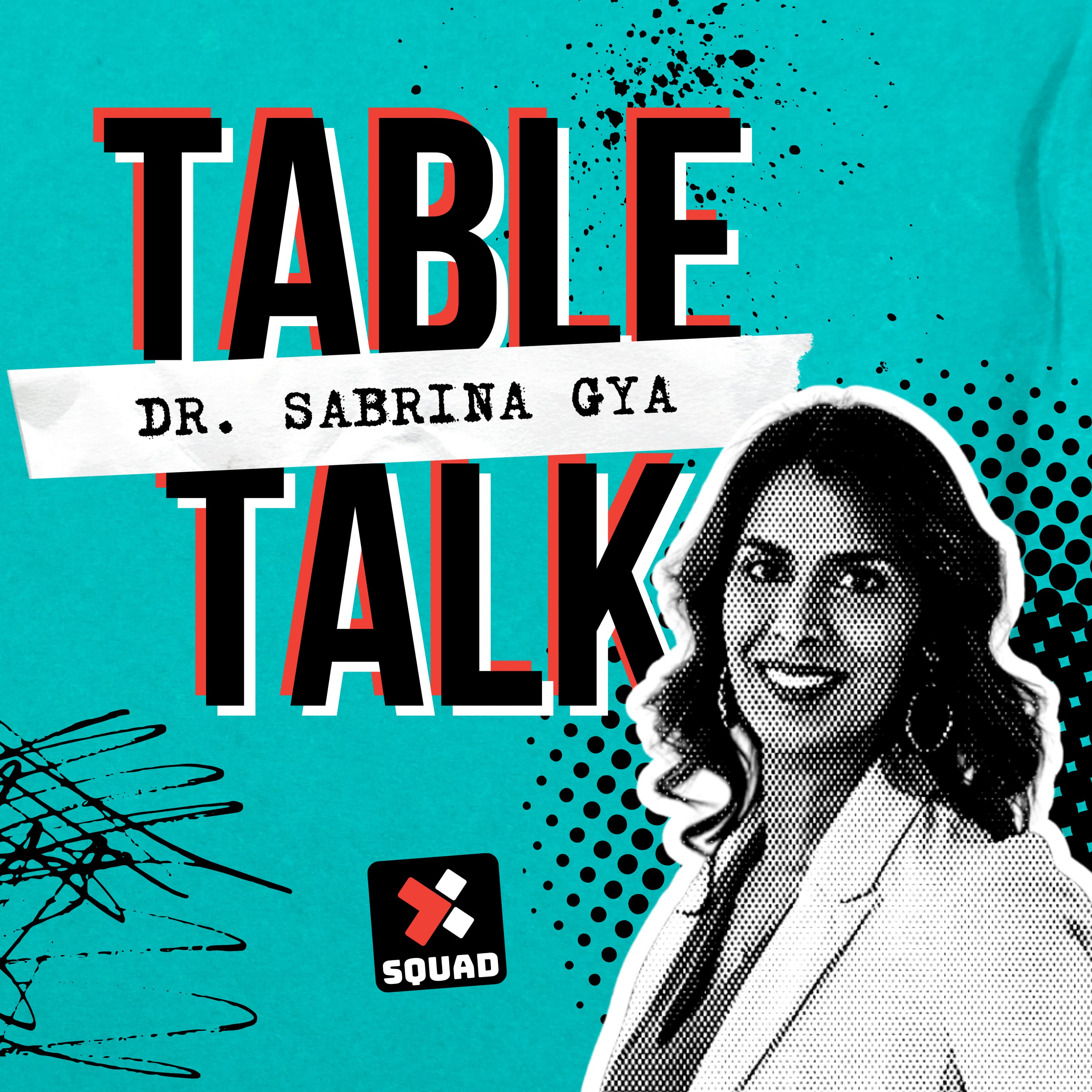
Translating Beliefs and Vision into a Successful Legacy Driven Practice with Dr. Sabrina Gya
Synopsis
On this episode of The Squadcast, host Steve Tullius sits down with chiropractor Dr. Sabrina Pacha to discuss the personal and practice level subluxations that keep doctors from living out their vision. They cover self care, congruent core values, and how to build a legacy driven practice around clear beliefs rather than fear based habits. The conversation offers practical steps for chiropractors who want their practice to reflect their true vision and values.
Dr. Sabrina Gya shares how building a lasting chiropractic practice requires more than passion or philosophy alone, it demands the ability to consistently translate beliefs into communication, leadership, and action. She explains how vision must become operational inside the practice through culture, systems, and daily interactions if doctors want long-term sustainability without losing alignment. The discussion also highlights the tension between growth and congruence, especially when external pressures begin pulling practices away from their original objective. The message is clear: legacy is not created through intensity alone, but through repeated alignment between vision, communication, and the way a practice is actually lived out over time.
Key takeaways
- 1
Practice Owners Must Steward Their Own Health
Dr. Pacha argues that neglecting personal energy and self care is one of the biggest hidden subluxations among practice owners.
- 2
Your Practice Is an Extension of You
A practice reflects the physical, emotional, and spiritual state of its owner, so misalignment in one area shows up in the other.
- 3
Core Values Must Become Actions
Vision, mission, and core values only matter if they are operationalized into daily behavior and clear care plans, not just written statements.
In this episode
Jump straight to any moment.
If you liked this episode, be sure to check out
Episode 33
Why Telling the Story is Hurting your Practice and the Profession with Dr. Martin Harvey
Episode 19
Inside Out Care. Outside In Business.
Episode 14
Optimizing Your Practice and Life with Dr. Liam Schubel
Episode 10
Taking Chiropractic to the Masses with Dr. Joe Borio
Episode 46
Making Progress Visible with Dr. Brock McCurdy
Full transcript
Made by speech recognition, with names corrected. It may contain errors, so check quotes against the audio. Spot a mistake? Tell us.
0:0027 Years in Chiropractic Practice
Show intro 0:06
Every doc wants to make a bigger impact. What's getting in your way? You're tuned into the Subluxation Squad Podcast. One squad, One mission. Chiropractic for all.
Dr. Steve Tullius 0:17
Hey, everybody, welcome to another edition of squad podcast. I'm Dr. Steve Tullius. We have with us, of course, my co host, Pacha Hornaday. How are you doing, Pacha?
Pacha Hornaday 0:30
Hey, how's it going, Steve?
Dr. Steve Tullius 0:32
Fantastic. Great to always chat with you. And today we have a real special guest, Dr. Sabrina Gya, who both of us have known and worked with. So which I always love these. You know, I love meeting new people, but I also love just the opportunities to connect with good friends and colleagues who are making a really big difference in the profession. And so, Dr. Sabrina, welcome to the show today.
Dr. Sabrina Gya 0:57
Thank you for having me. Yeah, it's fun. I feel as if I'm meeting up with two old friends.
Read the full transcript (6,418 more words, 10 more chapters)Hide the rest of the transcript
Dr. Steve Tullius 1:03
Yeah, absolutely. So we always start by, instead of me introducing you, we always like to have our guests just share more about themselves and what they're passionate about. Their story in chiropractic.
Dr. Sabrina Gya 1:17
Yeah, well, I've been in practice actually. Next month will be 27 years. I started in the UK and then I fell in love with another chiropractor and moved to America all for love. And in 2007. So I've been here in the US for all that time, but the accent still, still remains. And now actually I've had multiple practices. I've had practice in Europe and in. And I scaled my practice, I sold my practice. It was, it was beautiful. And actually, yeah, Steve, you'll appreciate this. My practice was built on workshops and on educating. Always, always educating. I always had cash practices. I never did insurance.
So I actually still, even though I've been here all these years, I still don't know how all of that part works. No idea. So over the years I, I shifted where I think I was much more black and white at the beginning of practice and I shifted into just really knowing and understanding that practice is spiritual practice. You know, it's, it's a spiritual journey when you're in practice because we are here to help heal and save lives. So that was my chiropractic story. I then since moved into having two virtual businesses. I have a longevity practice now where I help high performers.
In fact, actually most of my patients are doctors, which is funny. Most of them are chiropractors too. And then I have a coaching business as well where I coach practices, natural healthcare practices. So chiropractors, but not exclusive to chiropractic. Now, so I've got a few things going on and yeah, I love it. I love digging into these conversations with passionate chiropractors and Patcher, who's actually an honorary chiropractor.
Pacha Hornaday 3:28
Thank you.
Dr. Steve Tullius 3:30
I need to get you an honorary dc.
Dr. Sabrina Gya 3:35
I want to make a certificate for you, Patcher.
Pacha Hornaday 3:40
I probably have to pass some kind of test.
Dr. Steve Tullius 3:44
Yeah, I'll vouch for you. And I know Dr. Sabrina, you know, she already has. So I, I mean that's two people.
Pacha Hornaday 3:50
I, my chiropractor, I got checked on Monday and he asked me, so how would you as a non chiropractor define the subluxation? And I was like, oh no, here it goes.
Dr. Steve Tullius 4:04
Yeah, well, I can pretty much guarantee that whatever test that we give you will be more valid than most of the testing out there. Legal and regulatory space there. Anyway, that's not what this show is about. This show's about Dr. Sabrina, what you feel are some of the biggest subluxations holding the chiropractor and the chiropractic profession back from our full potential. So what are your thoughts on that?
4:29Stewarding the Health of Practice Owners
Dr. Sabrina Gya 4:32
Yeah, well, I mean that's a loaded question. I think we could go on for hours for each the individual chiropractor and the whole profession. So I don't have one single answer. I think it's a multi dimensional question. I've had the opportunity to, because the majority of my own clients are chiropractors, I get to see the other side. I get to see actually what's going on personally for us as chiropractors in practice. So on that end, health wise. And so what I see, I mean maybe by the time I get to see people, they're pretty burnt out.
So I, you know, and then I think that one of the main missing pieces for practice owners is they are not stewarding their health, their energy states, they're not keeping themselves up and high enough. And although we always say that, that once we free, innate, innate, does the healing, the body does the healing, there is something to it where we have to be living at our truest potential because we're instruments of God like we, we work with our hands, we need no other assistance. Our instrument needs to be kept clean and clear in order to deliver God's plan for us above, down, inside out for us as practice owners.
And so, so I think there's a stewarding of our health, our energy states, making sure that our vision is kept in that we're reminded of our vision. Our vision doesn't come from us. And this is what I Meant by. I really think that practice is a spiritual journey. Our vision comes from God, not from us. We work as God's people doing his or, you know, whatever it is your beliefs are, universe or whatever you would call it. And higher power has brought us to this planet to do the work, to actually set the captives free and to actually allow for people to live to their full potential. But if you want to enlarge, I'll put it like this.
I'm Christian, so I'll put it like this. If you want to enlarge the kingdom of heaven, or in other words, if you want to do God's work, you need to be. You need to be that. So it's all about your being before all the doing, you know, so stewarding your energy states, looking at your belief systems, constantly reminding yourself of your vision and I mean several times per day, and your team having everyone in alignment with that and your values.
7:13The Practice as an Extension of You
Dr. Steve Tullius 7:13
Sabrina, can I interrupt you on that? I think there's some really valuable teaching moments in what you're sharing here. Right. Because I personally have experienced this and I know others have probably too, and can identify with what you're sharing. And Pacha was a patient in my practice. I don't know if Pacha, if you even recognize because you stayed in the practice at the time. I know this because you were still coming in. But there was a moment in my practice where there was massive stuff happening on the personal side which were also impacting, obviously the spiritual side, because you can't, you know, disconnected to.
And my practice went from seeing 250 per week down to 112. Right. I remember it vividly because. And that was within a few short weeks. Like it was, it was wild how fast it was. And I think sometimes this, this concept is so overlooked and, and that was a dramatic, you know, that was a dramatic shift that allowed me to like, okay, I, I gotta shift my energy. I gotta shift my, you know, I gotta work on this thing that's happening and shift my energy. Because you can only attract people if you're. If they're at a lower or, you know, your energetic state has to be so powerful, like to be able to attract people, to help them.
So what are your thoughts when I share that, like, for other people out there, like to be able to recognize this without the necessary, that massive shift?
Dr. Sabrina Gya 8:51
Yeah, I mean, I think that it's important, as you said, that we call this out, you know, that your practice is an extension of you. No matter what, you're always responsible for every single Thing that happens in that practice, whether it's a team member, whether it's training, but really, yeah, your physical, emotional, spiritual, energetic state costs a field, a field of attraction and frequency. And. And it. It just is like the. The practice is almost like a. An organism that responds to your frequency and everybody else does too.
And, you know, I went through a similar time as you did, Steve, where had different personal challenges happen in my life. And. And, yeah, practice dropped very, very, very fast. Like, you know, different emails, phone calls, texts coming through. I think I want to. I'm going to discontinue. And I couldn't get on top of the handling of all the different reasons and objections, you know, that were coming in. But, yeah, you. You actually have a response. We have a responsibility, and it's such a big responsibility to keep ourselves as well and vibrating, our frequency has to vibrate in a way that's expansive and attractive.
We have to literally walk in and be the light, you know, and. And people will feel that, whether they're physically in your space or whether they're actually at home. They will feel it. And we. And you know, energetically, too, we have to actually have that power Come. Come within, come through us. And again, this is us living our principles above, down, inside out, where. Where we have to overpower the messages that they are getting from the outside. The drugs, the. The commercials, the pharmaceuticals, all the things that. All the little things that their friends are whispering, you know, and tickling their ears with.
We have to be so strong and so on. And. And, you know, if you can. If I say it in the sales way, if you can sell suffixation, you can do anything. You really could do anything because it's a. It's an alien word. So, yeah, you. As much as you think you have a choice, you don't have a choice. If you want to serve, you must take care of yourself. There's no option.
11:26Why Chiropractors Skip Their Own Adjustments
Pacha Hornaday 11:26
It's actually surprising to me how often I hear chiropractors say, you know, that they haven't been adjusted even themselves, you know, and how often I talk to people who are so stressed out, like, on the verge of burnout, really. And I'm wondering what effect that must have on, you know, on their practice in general, but also on the, you know, like. Like, how are you actually. How does this translate into your care? Because it must. Right. Like, that energy must transmit it somehow.
Dr. Sabrina Gya 12:03
It translates into every part of life, not just your practice and your care at your marriage, your children, the way that you are organizing your personal life. And you Know, I, I, I have the benefit of, I've seen the actual spinal scans and X rays of these doctors, plus I've now seen their lab work as well. And I can tell you, hormones are down, brain functions down, pituitary, a lot of systems are physically down and they're not getting adjusted too, so. And you need both, you need everything all together. And it takes, it takes, it's not that people aren't trying.
I just think that we need more people to speak out and to help and to, I think we need people to, I think we just need to support each other and love each other and call each other out and go, are you, are you taking care of yourself enough? I know that you're healing everybody else. You're helping heal everybody else. What about you? Like, how's that going?
Dr. Steve Tullius 13:03
Yeah, I mean, so it goes back to communication. Right. Which our profession is entirely all about, you know.
Dr. Sabrina Gya 13:09
Yeah.
Dr. Steve Tullius 13:10
Making sure there's no interferences, communication, that the right questions are being asked, that the information is being transmitted. And so this is such a great conversation, you know, about burnout. Like, you know, I think people sometimes are afraid to admit that to their peers because we potentially believe that, well, we're supposed to always be healthy and always be on and always have these things.
And I know I personally tried to put on that mask in my practice and I think it might have been that event that I was telling you about that really kind of woke me up to that because I also had the realization that that's not realistic and it's also doing our patients a disservice by giving them a model to try to achieve that's not attainable. This perfection thing that I think a lot of times in chiropractic we do this, this, this and this. We're so healthy, we're so great, we're so all these things when the reality is we're very much human.
Dr. Sabrina Gya 14:16
Yeah, yeah, A hundred percent. It's, it's just not part of its ego. A big part of it is ego that we can't be seen to be less than. You know, there's, there's that part, part of it is us trying to set an example. But the, yeah, the example should not be that we're perfect because not one single person on this planet is.
Pacha Hornaday 14:43
What's crazy to me is like when I, you know, what I see online is that it's like almost, it's sort of shifting, you know, like self care is important. And now you see like all those people that are running successful practices, plus they're working out. Plus they're, like, doing all those things with their family. And, you know, like, it's all online. You're like, holy shit. Like, I'm like, so, like, such a loser because I'm barely keeping it together in my practice. Like, I spent not enough time with my family. I don't have time to work out. And, you know, it's like, it almost makes it worse.
Like, the awareness that, you know, we need to take care of ourselves, and now there's, like, more pressure. I feel like. I don't know. Do you see that, too?
Dr. Sabrina Gya 15:24
But I'm one of those people. I'm one of those people. I don't put it online, but I'm one of those people. And it's because. Because I learned the hard way. Yeah. I've got so many. So many wounds from practice from not doing those things, but I'm. I actually am one of those people. Like, now, as well as getting. Making sure I'm getting adjusted, I stay on top of my lab work as well. I'm checking multiple different. Multiple systems in my own body all the time. And I'm constantly measuring my health. So. So I'm. I want those. Those p. Those people, however. Yeah.
Pacha Hornaday 16:05
And I didn't mean it. I didn't mean it as a. You know, it's like, you shouldn't be doing this, but, you know, it has
Dr. Sabrina Gya 16:11
to be done in a way that's doable. Right. That's not stressful. Where. Where it's special time for you, where it doesn't feel like a chore, it feels like you're giving to yourself. I mean, for me, those times of the day when I work out every single morning, I'm one of the 5am type people. I meditate, I work out, I pray, I read my Bible. But to me, that's like. I'm giving myself a vacation every single day. And. And just. But it doesn't have to be as big as that. Like, I'm pretty obsessive because this is what I do. I have a longevity practice on constantly wanting to beat my. There's. There are lab.
There's a lab work that tells you what your age is. And there are different hallmarks of longevity. And so I'm constantly. You're talking to someone that's extreme. I'm wanting to beat myself.
Pacha Hornaday 17:00
Scores.
Dr. Sabrina Gya 17:01
I want to be there with my children and my grandchildren and hopefully my great grandchildren because I think they need people from our generation because things are changing and then, you know, with. With the family. I. Yeah. I end. I know what you're saying, because I sometimes I used to feel that way, but there are pockets. It's like framing. This is good for practice owners, for everyone, really. Framing your structuring your day around parasympathetic events and all the chiropractors are listening. We'll know what I mean by that.
So maybe just doing three five minute meditations a day at lunchtime, at dinner time in the morning, or stretching, making sure you just pop out for a walk for 10 minutes at lunchtime so that you'll. Physical movement isn't just when you're adjusting. Because for many of us, that's where we think that we exercise because we went and we gave adjustments, but we didn't. So there are different ways to do it. Patch. And where it doesn't have to feel like a chore.
17:25Building Parasympathetic Habits Into Your Day
Pacha Hornaday 18:09
I totally get it. And I didn't mean it, you know, I didn't mean it like that, but I can see it because I see like some people that I follow, it's like, holy cow, they're like, they're just overachievers and performance type of people, you know what I mean? Which, you know, if you push it too far to the extreme, then, you know, it's kind of has the opposite effect too, right? But like, I recently got a chiro ring, so, you know, I'm like, oh, I get, you know, my, my hrv, okay. I have like, I'm trying to get like my score, like you said, you know, like trying to beat my own scores.
And like, you know, I go walking more and you know, so it's just like you can get addicted to it. You're like, okay, how can I optimize this a little bit more?
Dr. Sabrina Gya 18:47
And this, this ties into the practice, the question of what can practice owners do? You know, we need to design our practices, design our care plans, design our fees, design the structure of our practice so that they're supportive for us to have a healthy life and a healthy family as well. And so, you know, you might want to charge more so that you can see less. You might want to scale up with your system so you can have associates and to give you freedom. Like, you can do it in different ways, but it's important.
Like, it's important even little snippets of doing, of doing that, like I'm saying things that are extreme because that's what I do for a living now, you know, but, but we're chiropractors, so we align hopefully with nature.
Dr. Steve Tullius 19:33
So, Doc, you mentioned, you know, you Started off talking about beliefs and how they're so important to get, you know, that vision to get to the practice, you know, that of your dreams and this is all possible, and now you're talking about steps. So I think it's a perfect time to maybe talk about maybe alignment around belief, because a lot of chiropractors. But what do you see coaching all these docs? Are they living congruently with their beliefs and that vision that they set out with? Where's the disconnect? Is it. Is it operationalizing that? Like, what.
19:49Living Congruently With Your Vision
Dr. Sabrina Gya 20:10
Where.
Dr. Steve Tullius 20:10
What are you seeing that where? You could give some quick tips for docs that are having challenges with their beliefs and vision and taking that, translating that into successful outcomes.
Dr. Sabrina Gya 20:26
I mean, the first part of that is that I would say 90% of doctors that I've met, and maybe I'm just meeting different doctors, but the 90% of doctors that I've met haven't even sat down and looked at what they wanted and what their beliefs are, what their values are. So I would say the biggest beautiful thing to do is to go somewhere that is gorgeous, maybe nature or a pretty hotel or go somewhere lovely that make. That inspires you so that your energy state is high, so you're in a rested, inspired mode where you feel joy and pleasure from within and from that place. Dream. Like, just sit there and dream. Forget about what anyone else says.
No coaches, no one else's vision has anything to do with yours, because there's only one you. God only made one you. And you have this one life and sit there and dream about your whole life. And you have a section for your practice. You have a section for your family, your marriage, your. Your. Your health, your. Your spiritual health as well, those are two different things. And so first of all, having just that one document, which is a living document that keeps changing as you change and you get into. You go into major detail, you know, very, very refined detail all the way to. I want to feel like this. I want to. I want to look like this.
I want my body to be like this. I want my body to be. And then writing down the next step of that is writing down that version of you. So then. So that version of Patcher or that version of Steve, what are their behaviors? Like, what would they do? What would they say? What would they wear? What would their day look like? That first, that comes first. And then you go into the practice, you know, God, health, family, mission. That's how I organize the flow of all this. Mission comes last. Everything else comes first. And it has to be in that particular order. And then you bring it to the practice, and you operationalize it.
You bring it to the team, and you have core values, mission statements that actually are practical, not just airy fairy, that no one can understand. So, you know, instead of saying something like a core value for the team, saying something that doesn't resonate and doesn't seem practical, you know, I want a team member. I want my team to have hustle. Same things like, I want freedom. I want this, I want that, you want. I want hustle. I want someone that has a heart of service. I want. You know, so you want practical things, not just airy fairy.
23:25Turning Core Values Into Real Actions
Dr. Steve Tullius 23:25
Can I just share one thing? I know.
Dr. Sabrina Gya 23:27
Yes. I knew.
Dr. Steve Tullius 23:32
So your suggestions that you got me inspired here. I'm already thinking I'm gonna go do exactly what you said. I'd love to own entire life. Then come to the practice.
Pacha Hornaday 23:49
You're picking up a little bit, and
Dr. Steve Tullius 23:51
then develop your brand guide, right?
Pacha Hornaday 23:54
Which.
Dr. Steve Tullius 23:54
Which. This was created by Pacha and myself. You know, walking. You're walking through and having the vision. This is 68 pages. Do you think that the vision for my practice was. Was pretty dialed in? You know, it's actually not only the dialed in, it's in hardcover. And then we could hand that to our team members. And. And I'm pretty proud of that document because we put in a lot of work into it. So after you go to the mountaintop, go see Pacha to help you get.
Pacha Hornaday 24:30
I love that. I love that you said that. That's definitely one of, like, my most repeated sentences as well, that, like, core values need to be actions. They're not, like, pretty words you put on your website or your wall or whatever. They need to be actionable. Right? Like, people like anybody on your team, including yourself, need to know what they have to do when they read them. It's not just, you know, something fluffy. It needs to be something like, this is what I need to do if I want to bring this value to life, if I, you know, want to bring it into the. Into the practice. So I totally agree with you.
I really like the idea of, you know, how you talk about energy and how that translates into how you show up for your people, you know, your practice members and. And even for your team. Really? I'm wondering. So when, you know, it's like. It's like this quick step. So we go to the mountain, to the mountaintop and think about, like, how. How we want our life to be. And I love that that you, like, take it Take, Take your whole life, not just your practice. I was actually talking to a doctor yesterday about, you know, what I call the brand essence. So your vision, your mission, your purpose and your core values.
And we were talking about his mission and his vision and he kind of, he had worked with ChatGPT on trying to figure this out before and he was kind of stuck because it sounded somewhat generic and what, you know, after some talking and some digging, we came to a point where he was, he was frustrated because I think he felt like he had to create something bigger than he wanted. Like, you know, vision has to sound like something really big. And some. I know a lot of people who have big visions and, you know, I'm all for that, but I think I like, we got to a point with him where he was like, I don't want something big.
Like right now, I just want. Because he's one of those dogs that's on the verge of burnout. Like, I just want to be a better, A better doctor. And I can only be a better doctor when I take care of myself.
25:41Defining Vision, Mission, and Purpose
Dr. Sabrina Gya 26:45
Right.
Pacha Hornaday 26:45
So when I protect that energy for myself. So the vision actually has to become smaller so that I can, I mean, you know, depending on how you look at it. I mean, taking care of yourself isn't a small vision, if you ask me. But as far as your, you know, practice goes, like, he doesn't want to hire associates, he doesn't want to open second or more locations. He wants to have a small practice so he can protect his energy and live the life, you know, the way he wants to live it. And I think that that is important that we make it clear that this is okay too.
Dr. Sabrina Gya 27:18
Yeah.
Pacha Hornaday 27:19
It doesn't have to be this huge thing for everybody.
Dr. Sabrina Gya 27:23
No. And every single person's different. You know, everyone's got. This is what I mean, like, don't borrow someone else's vision.
Pacha Hornaday 27:31
Exactly.
Dr. Sabrina Gya 27:32
I, I mean, for myself, I can tell you this, that I had a high volume practice and actually now I've gone the other way where I have more of a concierge level practice because I don't know whether it's that I'm going to be 50 in a few months or whatever it's going to be. But I'm. Yeah, I'm. I'm going towards more simplifying my life and really enjoying those parts. And I like working with an intimate team, whereas I had a big thing going on before and I. Everything's, Everything's okay as long as it's yours. That's how I feel. Everything's okay. As long as it's your vision.
Dr. Steve Tullius 28:11
Yeah. And that's a tough thing, I think, in our profession because so much of the judgment, self judgment, outer judgment happens around, you know, numbers per week, collections, all these different things and those, you know, I assume you're. And that those numbers. Except to what it means to you.
Dr. Sabrina Gya 28:36
That's right. What it means to you. I mean, my, my, my idea of what my vision is for my life is going to be different to yours. Is that Steve going to be different to yours? Patcher? I used to, I might, you know, I can, I'm only going to give myself as an example because it's the easiest thing right now. But I remember when was it maybe 15 years ago when I was like 11 years into practice. I was going to open multiple locations. I wanted uk, Europe and US going. And then I had the kids and then I was homeschooling.
And then things change over the, over time because you change and it's supposed to, you're supposed to evolve and, and yeah, I mean, you're right. I mean, I, I know exactly what you're talking about. People talking about their volume and their numbers, et cetera. As long as it's right for you, then it's right. As long as you're actually fulfilling your vision and your mission, whatever that may be, then it's right. We just want to make sure that you're in an energized, healthy state when you write your vision so that you are not under, under serving yourself and what God's plan was for you.
Pacha Hornaday 29:54
So once you have that vision and that your mission and your core values, like how do you actually take it into practice? Like, what do you do with it once it's written down and you know, on paper?
Dr. Sabrina Gya 30:06
Oh, gosh, everything changes. Everything changes. You use that to organize how you want to practice, who you want to see. You want to know your niche as well. So you need to know that part and then you will filter that through the languaging throughout your, let's say your new patient forms, your languaging with your team, the scripts, what they, what they're going to say, what kind of care plan. So for me, I wanted to have a practice that was a legacy practice where I wanted to know that multiple generations would be seen and that the grandchildren of the people that I was, were seeing would know about chiropractic and want it. Yeah.
So I spent a ton of time educating. That was part of, that's one of my core values, is that I want to be Educating, always be educating. That's where conversion happens. It's through educating. And so you translate all of it throughout. It goes all the way through into detail. Even when you are making a sale, which people don't like talking about sales, but we're always selling because we're business owners and but we're doing it for the right reasons to save lives, you know, so it, the conversation even goes through that way. So you have to know what you want in order to know how to work it through.
And then yeah, there are practical steps for each one and, and every time you do anything, you need to sit with it and go, is this aligned? Is this aligned?
Dr. Steve Tullius 31:45
I love that. You know, which is in total alignment.
Dr. Sabrina Gya 31:48
Right.
Dr. Steve Tullius 31:48
With what we're saying as chiropractors. So I mean all this really sounds like we're not living according to our own principles a lot of times. So where, where's the drop off that you see the most? Because you know, it sounds wonderful to, to go to the mountaintop to get the branding really locked in, to now systematize it, put it into your languaging. But when we look at the environment, the landscape, we don't always see it get to that end point. Where do you feel the biggest drop off points, the biggest subluxations in that are?
31:58Biggest Subluxations in Patient Care Plans
Dr. Sabrina Gya 32:32
Yeah, well, first of all you have to be measuring everything, right? So you have to be keeping your metrics. So your metrics of once someone signed. Some people are doing pay by visit, which I don't recommend ever. Always have a care plan that is directed towards the patient's health goals. So we need to, first of all, we need to be looking at the patient's goals and their clinical findings, putting them together to create a plan for them that's personalized. Right. So about the patient, not about us. And then the drop off that I find is in the. There's a mismatch of expectations and agreements, there's a mismatch of understanding.
So you do want to take the patient from on a journey. There's no bait and switch going on. They're coming in usually because of a symptom. We're here philosophically going, okay, we want to free innate and let them and have them be their very best for the rest of their lives. So that's, that's a process. So over that course of the first few months we need to bring them from a place of symptom based care to actually an understander of what we're doing.
And there's a process to that that you make your Little video modules in my practice, they weren't, they were not getting on my table for their next visit until they watched their one or two minute video about whatever the next part was that I wanted to teach them. Then once they got on the table I would ask them, I would ask them to explain it back to me. I go, you know, what is a subluxation? Why is next, next video will be why is it important to clear subluxation? Next video is why is it important that your family receives care? So it would be like that. So there's, there's, there are systems all the way through.
So the drop off is when that doesn't go well. And you know, at the end of the day it's always up to the individual as to what they're going to do, as to whether they're going to continue or not. However, we have to know that we did everything that we could possibly do to get them there. And then, and then you let it go, then you surrender it.
34:43Automating Practice With Video Education
Pacha Hornaday 34:43
I'm curious about the video education that you were talking about. Like when, when, how do you give them those videos and when do they watch them? Like before, like in the waiting room or how does that work? I'm curious.
Dr. Sabrina Gya 34:56
Well, so I actually had it. I, I automate as much of my practice as I possibly can. So it was an automation between Review wave. Actually I used review wave. So it was review wave automation synced with platinum. So I had those two. And so it automatically would send them a video before their next visit and a questionnaire and then if they hadn't watched it because my CAS would be on the front desk and they'd have to ask them, did you watch video number 10, whatever it was? No, I didn't. Okay, just, it's really quick. Just watch it now while you're waiting. And we do always make sure that people came in.
We, we had lots of terms and policies in our office and one of the agreements with our patients is they would have as, as much as we could possibly get them to show up 10 minutes before the appointment. Because your appointment time is your time on the table, not your time to walk into the office. So, So I mean it's a pretty tightly run, well oiled machine, I would say it that way. So.
Dr. Steve Tullius 36:08
And so I love that. I think that's another conversation for another time. Is simply policies and expectations, agreements and being confident enough to have those things in place. I think so many offices out there, individuals are operating out of fear. Yeah, right. And out of lack and out of, well, what if they don't like it, what if they. Instead of creating the brand and the experience and the value around. Well, hey, this is the, the way it is here in this practice. If you want to be a part of it, here's the agreement. So yeah, I mean that's a whole can of worms.
Dr. Sabrina Gya 36:51
That's another conversation and you have to be bold enough to, to do it and to be able to have that and you have to. It's a self, it's partly a self worth conversation. It's a fear and self worth conversation and not living in a lack mentality conversation.
Dr. Steve Tullius 37:12
Yeah, let's have you come back another time for. I mean that and many other things. We could keep going on and on and on. I'm sure it would be tremendously valuable for everybody. So let's do it another time though. And, but before we go, Pacha, do you want to go ahead and start off our rapid fire round?
37:34The Over Medicalization of Chiropractic
Pacha Hornaday 37:34
Let's put it on the spot. All right, let's see, where do we start? What conversation in the profession is not happening right now? That should.
Dr. Sabrina Gya 37:47
It may be happening a little bit, but the over medicalization of chiropractic needs to be talked about a lot more.
Dr. Steve Tullius 37:55
Absolutely. What's one thing people don't know about you?
Dr. Sabrina Gya 38:04
That I'm shy. I'm actually shy. I make myself do things so that I can help people, but underneath I'm actually quite shy.
Pacha Hornaday 38:14
I hear that from so many people. It's really funny. That's true. What belief did you hold strongly five years ago that you now think is wrong or, you know, just different, you don't believe as strongly anymore?
Dr. Sabrina Gya 38:36
Yeah, I think it's that I'm worth it. It's my own value. I'm worth it. I've got, I've got the skills, I've got the knowledge. I've got the gifts to transform thousands of lives and help many people and get paid well for it.
Dr. Steve Tullius 38:53
Awesome.
Dr. Sabrina Gya 38:58
Oh, Steve, your microphone went. Say it again.
Dr. Steve Tullius 39:01
Oh. Who are three, Three people that we should interview next? Can you hear me?
Dr. Sabrina Gya 39:05
Yeah, yeah. I always like Chris Zano interviews. I think that they're really. I love listening to him. Let me think, who else? Gosh, I don't have a quick. I like Pete Camiolo. Dr. P. Amazing. Always, always inspiring. Dr. Terry Harmon, he'd be amazing. I don't know if you know him, I can connect you, but he's, he's amazing. Amazing.
Pacha Hornaday 39:36
Cool.
Dr. Steve Tullius 39:36
Yeah, no, we're always looking. We're always, you know, this, the whole purpose of this podcast is to give many ideas, many opinions on these subluxations in our profession. And so, yeah, absolutely. We love that.
Pacha Hornaday 39:50
Cool. Show us something in your workspace that has meaning to you and why.
Dr. Sabrina Gya 39:55
Let me see. Okay. You see this? It's B.J. palmer quotes.
Dr. Steve Tullius 40:04
Yes.
Pacha Hornaday 40:05
And I.
Dr. Sabrina Gya 40:05
And I look at it a lot, and so do my kids, and so do this. That. That little thing has followed me around in every single practice I've ever had. If I could turn my whole computer down, you'd see this chair, which is really meaningful because every single patient I've ever had is sat in that chair. UK and Europe and us. I took that chair into every practice. And when I have, like, the deep conversations it is with people sitting in that chair.
Dr. Steve Tullius 40:39
Yeah. Talk about.
Pacha Hornaday 40:42
Yeah, for sure.
Dr. Steve Tullius 40:44
What does an unsublicated profession look like to you?
Dr. Sabrina Gya 40:49
Oh, it looks like the planet just turned up its light. That's what it looks like.
Dr. Steve Tullius 41:02
Nice.
Pacha Hornaday 41:04
I love that. So for listeners who want to go deeper with your work, who want to connect with you, what's the best place? Where do they find you online? Where should they get started?
Dr. Sabrina Gya 41:14
The best places to go to my website and to connect from there. Dr. SabrinaGaia.com. awesome.
Dr. Steve Tullius 41:24
Well, Dr. Sabrina, we'd love to have you back again another time. I absolutely loved our time together. So many great pieces of information. Jim's for all our listeners. So thank you very much. And Pacha, thank you as always. And until next time, we'll see you there.
Pacha Hornaday 41:41
Yeah. Thanks, Sabrina. Thanks.
Dr. Sabrina Gya 41:43
Thank you.
Pacha Hornaday 41:45
See you guys.
Subscribe and review
If this hit, help another chiropractor find the show.
If you love this episode, please take a moment to subscribe and leave a review on Apple Podcasts or Spotify. Your support helps us reach more chiropractors who need these insights. Thanks for tuning into the Squadcast. See you next week.